Portuguese
  Spanish


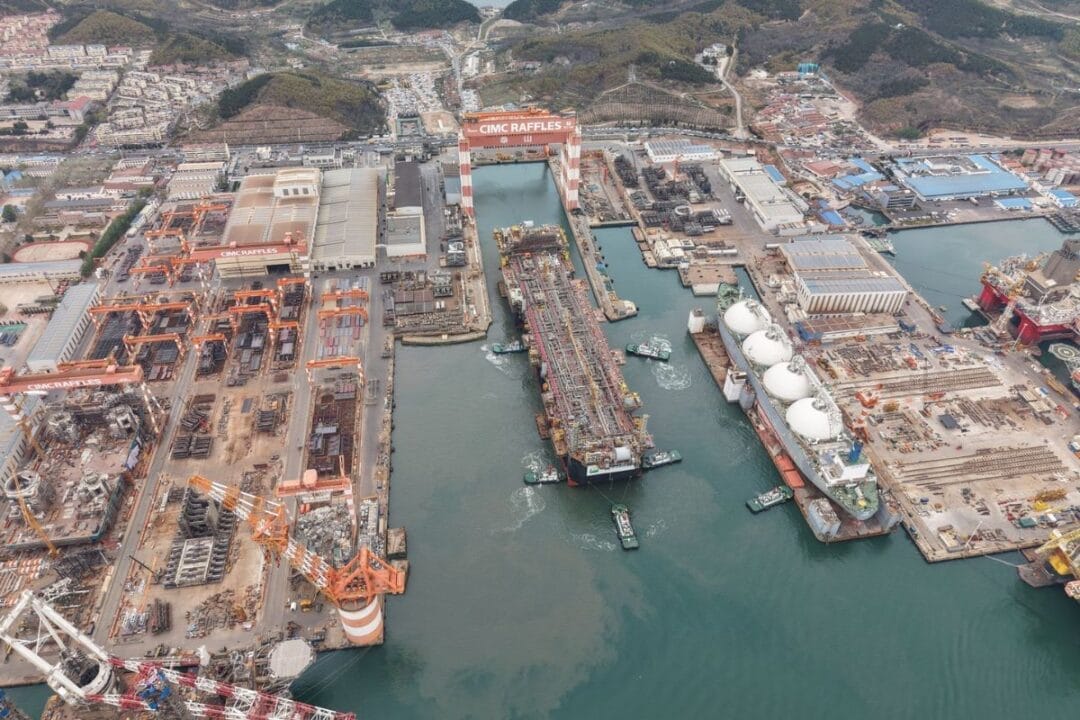

The Structure of Platform P83 Was Transferred to the Sea After a Critical Stage and Begins Testing Essential Navigation Systems.
Last week, Platform P83 reached a decisive milestone: it completed the “Dock Out” process and was transferred to open waters. According to Gustavo Klein, Commissioning Supervisor, this stage allows for the final commissioning of the hull, with tests on systems such as F&G detection and electrical control. The goal is to ensure safety for the journey to Singapore.
What Does “Dock Out” Mean for the Construction of Platform P83?
The “Dock Out” marks the platform’s exit from the dry dock to the sea. It is a crucial stage in the construction of offshore structures. For P83, this means starting the final commissioning phase, where operational systems will be tested under real conditions.
Next Steps
With P83 already at sea, the technical team will focus on commissioning tests. These tests evaluate the functionality of critical systems, such as fire fighting (CO2 and Deluge), water treatment (Sea Water and Sewage), and hydraulic operations.
-
A 24,200-ton oil platform is removed from the North Sea in just 10 seconds and taken to be scrapped on land, in an operation where more than 97% of the Brent Delta structure was reused or recycled.

-
Ocyan takes AI and data to the FPSO Brazil Congress 2026 to showcase how digital technologies can enhance safety, integrity, and performance in next-generation FPSOs.

-
Sodexo debuts unique maritime hospitality on Seagems ship to transform the well-being, food, and comfort of offshore professionals.

-
European ship will transport captured CO₂ to be stored under the North Sea as the Greensand project prepares the first industrial offshore storage in the European Union to operate in 2026 with an initial target of 400,000 tons per year in Denmark.



The tests include:
- F&G (fire and gas) detection systems;
- Fire fighting with CO2 and Deluge;
- Sea Water and Sewage systems;
- Hydraulic and mooring operations (Pulling and Mooring);
- Electrical and control systems.
Importance of Testing for P83’s Operability
These tests ensure that the platform operates safely during navigation. Failures in systems such as gas detection or electrical control can compromise the structure and crew. Validation is mandatory for international certifications.
Towards Singapore
After the completion of the tests, P83 will head to Singapore. The operation requires that all systems be integrated and stable, as the platform will face variable maritime conditions. The success of the commissioning determines the final schedule of the journey.