Portuguese
  Spanish


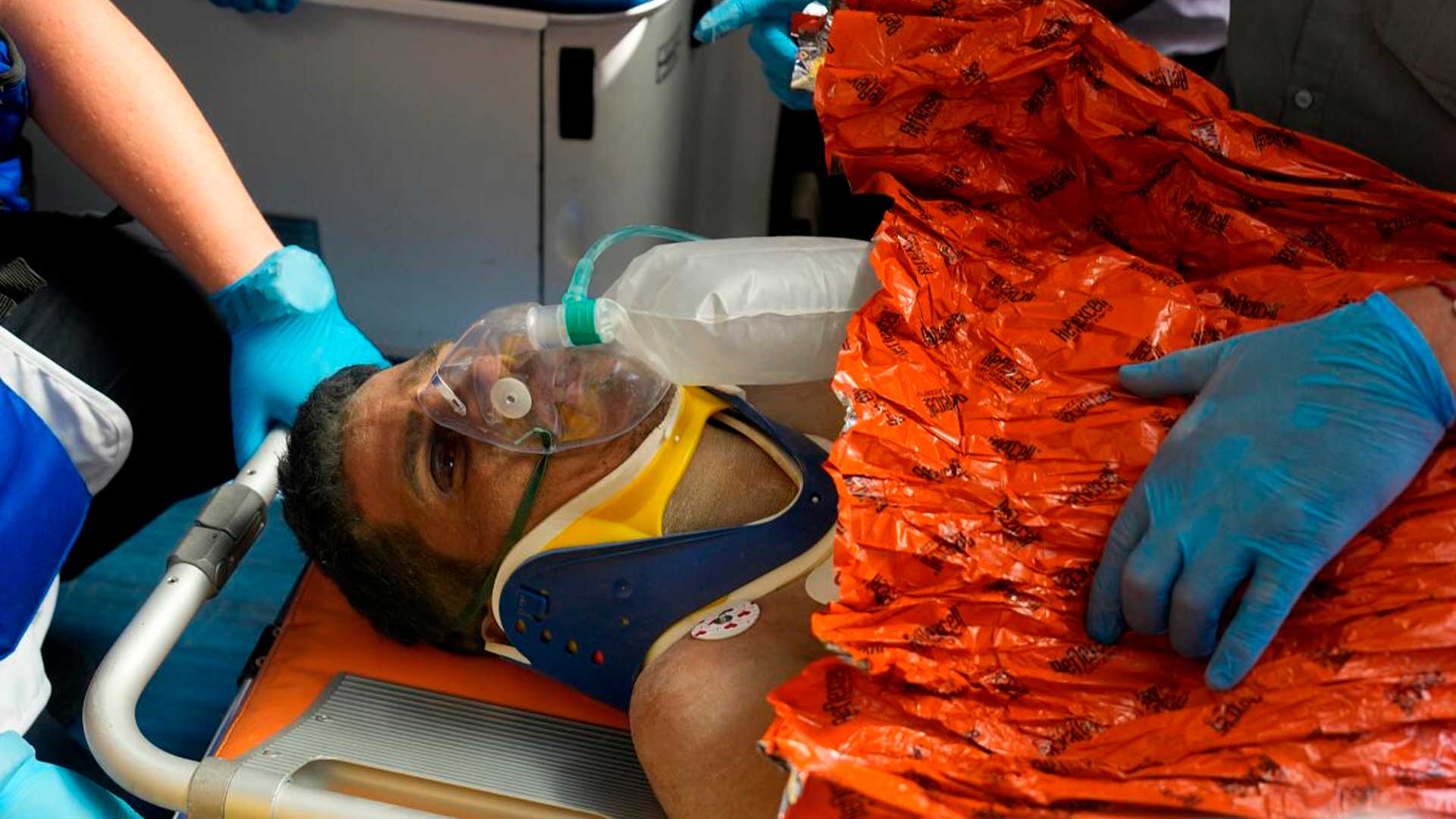

Hernán Alberto Gil Flores was trapped since June 24 under the rubble of Galerías Playa Grande in La Guaira and was rescued alive on July 2 after an international operation carried out amidst rain, aftershocks, and risk of further collapse
The Venezuelan Hernán Alberto Gil Flores, a 43-year-old security guard, was rescued alive on Thursday, July 2, after being trapped for more than 150 hours under the rubble of the Galerías Playa Grande shopping mall in Catia La Mar, in the state of La Guaira, one of the areas most affected by the earthquakes that hit Venezuela.
He was in the basement of the shopping center since June 24, when two strong tremors shook the north of the country. The rescue took place after days of slow excavation, communication by camera, and sending water and nutrients through a narrow opening.
According to the Associated Press, the security guard was brought out on a stretcher, covered in dust, wearing an oxygen mask, and surrounded by rescue teams who worked for more than 100 hours to reach him in an unstable structure, under heavy rain and new aftershocks.
-
Mystery of the Crooked Forest: Hundreds of Pine Trees in Poland Grow with Identical J-Shaped Curves

-
Chinese Buildings Use Mist System to Combat Extreme Heat, Cooling Surfaces by Up to 8°C; Water Consumption Limits Use in Drier Cities

-
German Shepherd Fails Guide Dog Test Due to Attachment to Plush Elephant, Viral Moment Captured at Train Station

-
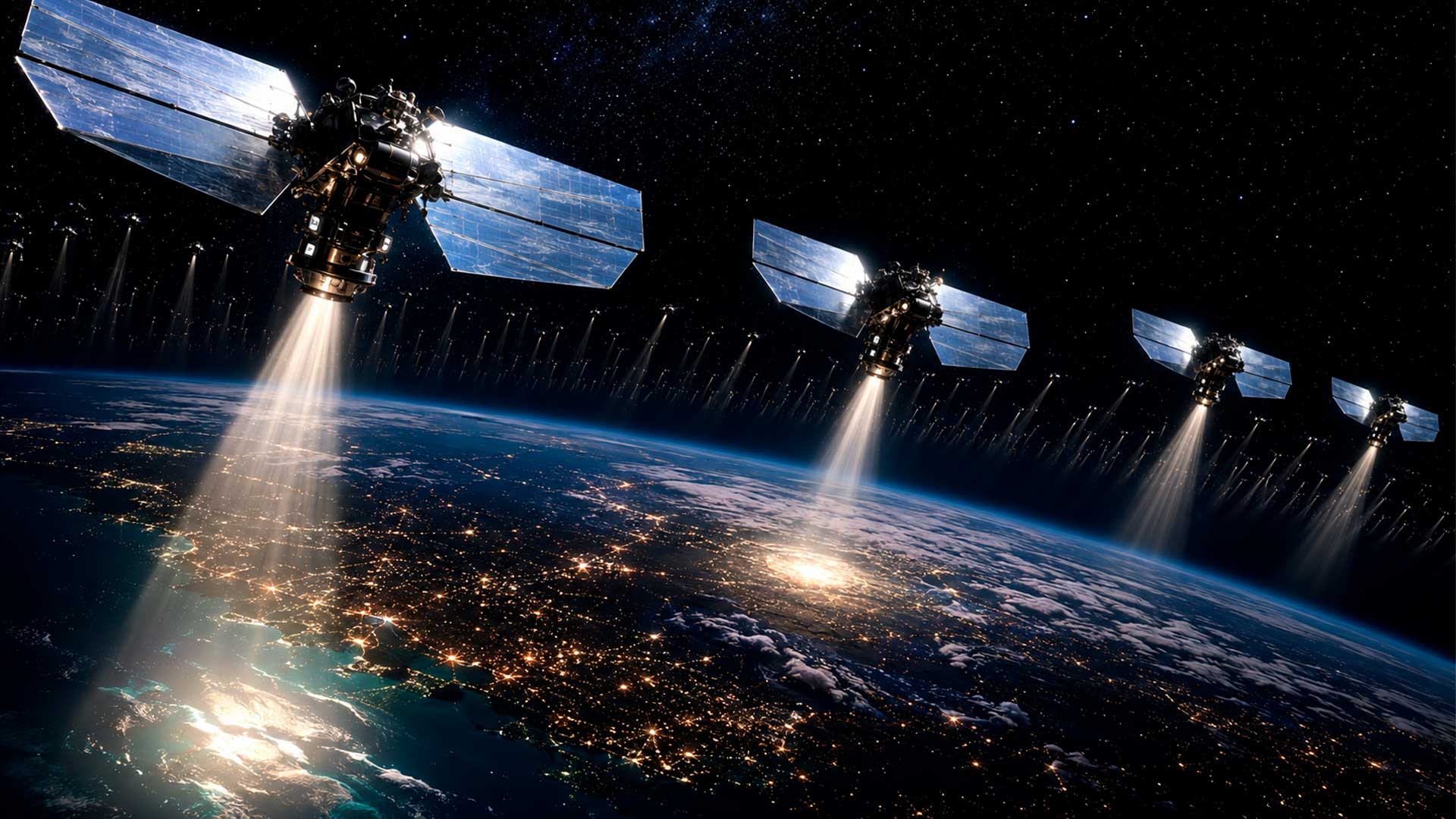
50,000 Satellites with Giant Mirrors: Solar Light Sold via App Sparks Controversy Among Startup, FCC, Astronomers, and Environmentalists in the US

The case became one of the symbols of survival amidst the tragedy. While families are still searching for missing relatives, the scene of Hernán being taken to an ambulance prompted applause among firefighters, volunteers, and residents who followed the operation from outside.
Two tremors hit Venezuela and left La Guaira at the center of the destruction
The earthquakes occurred on June 24 and had magnitudes of 7.2 and 7.5, according to the United States Geological Survey. The agency reported that the tremors occurred in northern Venezuela, west of Caracas, and also indicated a risk of significant landslides after the tremors.
La Guaira, a coastal region near the Venezuelan capital, was among the most destroyed areas. Residential buildings, shopping centers, and old structures suffered partial or total collapses, which complicated the work of the teams in the first days.


In Hernán’s case, the collapse occurred at Galerías Playa Grande. He was working the night shift and was in a small security booth when the structure around him gave way. This booth ended up functioning as a protective space, creating an area with enough air to keep him alive.
The security booth turned into an air bubble under tons of concrete
The detail that changed the outcome was Hernán’s position at the moment of the first tremor. He was not directly crushed by the concrete, according to rescuers’ reports, and remained in an area where he could respond to calls.
The Costa Rican Red Cross team was one of the first to detect signs of life. Terra reported that rescuers managed to establish contact with Hernán and conduct a safe extraction, after an operation involving teams from various nationalities.
Communication was decisive. Through a telescopic camera, rescuers were able to monitor the security guard’s condition, talk to him, and send hydration. In recent days, liquids and nutrients passed through a narrow opening while the access tunnel was reinforced.
This type of rescue requires patience because any abrupt removal of concrete can kill both the trapped person and the rescuer. In unstable structures, the path needs to be shored up, measured, and reassessed with each advance.
More than 100 people from various countries took turns in the operation
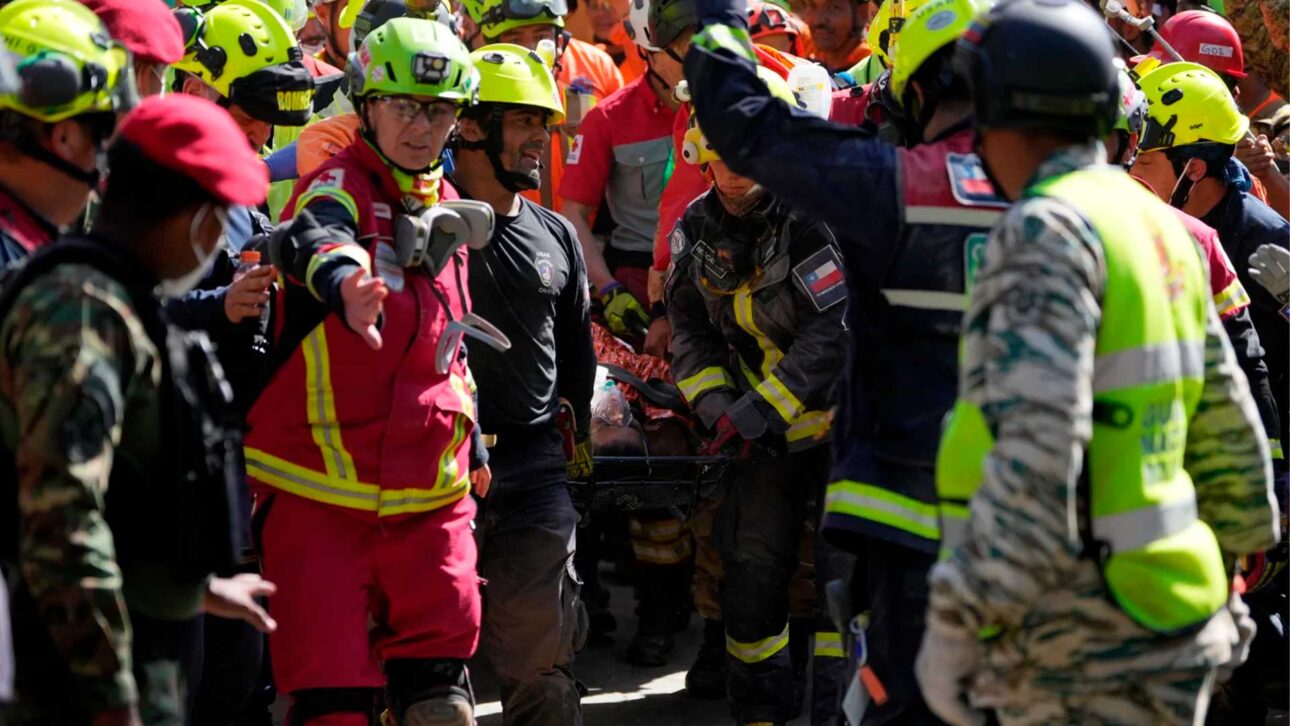
Hernán’s rescue mobilized teams from Venezuela, Costa Rica, Chile, Mexico, Portugal, the United States, and other countries. El País reported that about 100 people from ten countries participated in the operation, conducted in a constantly risky scenario because the building was still moving and parts of the ceiling could fall during the excavation.
The work began with few rescuers and gained reinforcements after the presence of a survivor was confirmed. From then on, urban search specialists, firefighters, paramedics, and volunteers began to work in shifts.
Hernán asked rescuers not to inform his wife immediately, fearing he might not survive until the end of the extraction. The decision shows the level of tension within the operation, even after rescuers already knew he was alive.
Outside, family members awaited news while other teams continued searching for missing persons in nearby buildings. Every hour, Hernán’s successful rescue shared space with the pain of families who still had no information.
Surviving for so long under rubble depends on air, water, and less severe injuries
Cases like Hernán’s are rare, but not impossible. Experts consulted by AP explain that survival under rubble depends on several factors, such as access to air, temperature, water, and the absence of severe injuries. The chance decreases as days pass, but people can endure for a week or more when they are in a protected space, without direct crushing.
The medical risk does not end at the moment the victim is rescued. People trapped for many hours may suffer from dehydration, hypothermia, muscle injuries, and crush syndrome, a condition associated with prolonged compression of tissues and severe changes in circulation.
A medical review published in the Turkish Journal of Emergency Medicine describes that the response to earthquakes involves search, triage, stabilization, and evacuation, and warns that crush injuries can cause rhabdomyolysis and dangerous metabolic changes after the victim is freed.
Death toll rose while teams were still searching for missing people
The tragedy is still being updated. The initial source cited by Terra recorded 2,295 deaths and more than 11,000 injured, but a later report by Reuters, based on the Venezuelan government, raised the death toll to 2,595 by July 2. The agency also reported that searches were ongoing and that thousands of people were still being sought.
The difference in numbers shows how the situation is still changing as new bodies are found, survivors are located, and lists of missing people are revised. In disasters of this magnitude, official figures are often updated for days or weeks.
Hernán’s rescue does not diminish the scale of the tragedy, but it explains why teams still insist on looking for signs of life even after the initial 48 to 72-hour window. In Catia La Mar, a security booth, a small air opening, and the persistence of rescuers were enough to turn a destroyed basement into a survival story.
Do you believe rescue operations should continue for longer even when the chances seem minimal? Leave your opinion in the comments and share if you have followed another similar survival case after earthquakes.