






 Portuguese
  Spanish


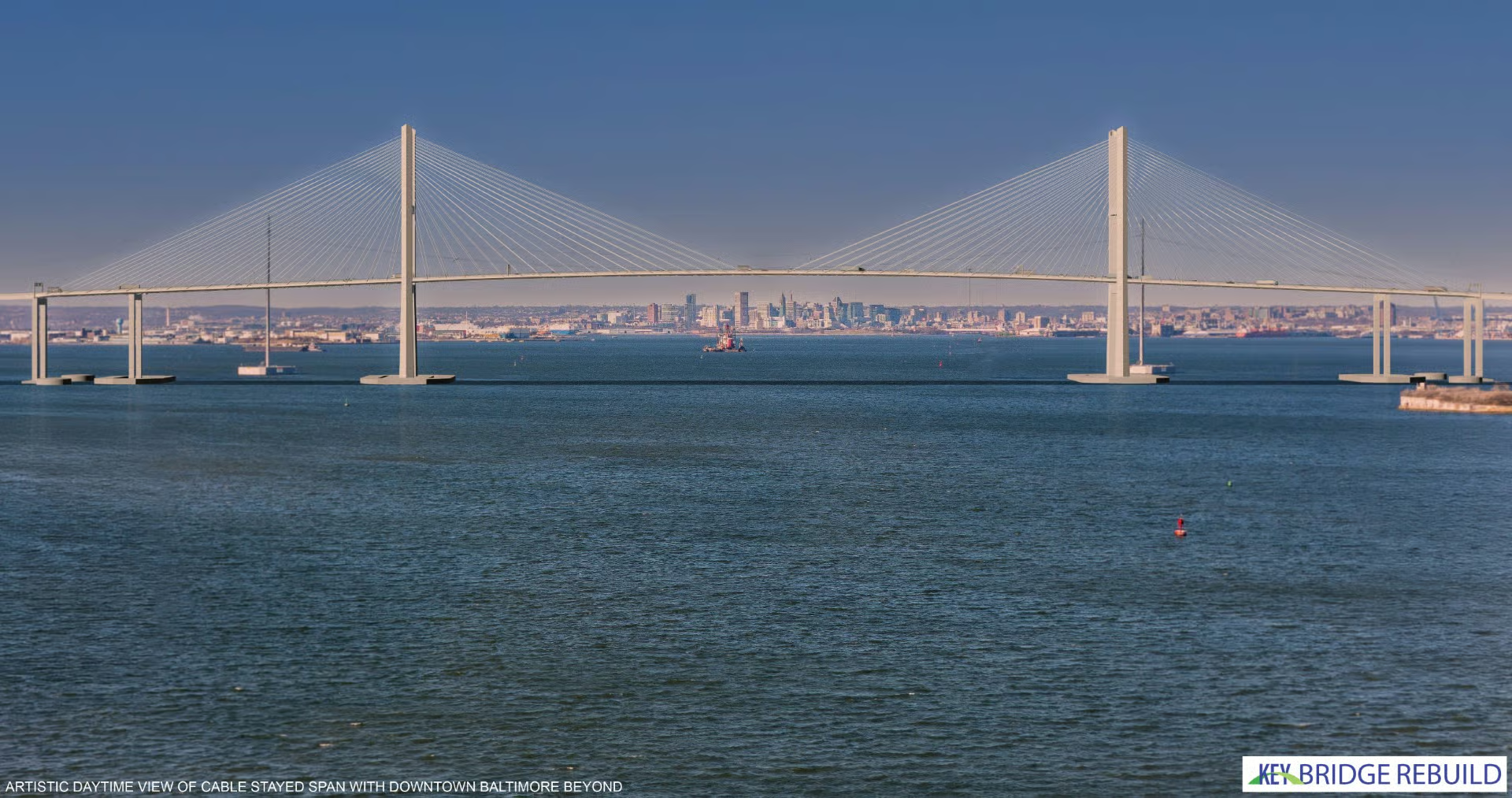

The Baltimore New Bridge Project Promises 100 Years of Durability, with Modern Design and Reinforced Infrastructure to Support Heavy Traffic and Climate Change
Following the partial collapse of the Francis Scott Key Bridge in Baltimore in early 2024, caused by the collision of a container ship, Maryland Governor Wes Moore announced the project for its replacement.
The new plan, recently presented, brings significant changes and aims to ensure greater safety and efficiency for crossings.
The government chose not to proceed with the proposal made by Carlo Ratti Associati, instead opting for a design from the engineering firm Kiewit.
-
Prefabricated Home Assembled in Days Offers Cleaner, More Efficient Construction with Factory-Made Panels, Requires Technical Design to Prevent Moisture Issues

-
Single Mother Working Three Jobs Receives 111 m² 3D-Printed Home with Concrete Walls Built in 12 Hours, Featuring 3 Bedrooms, 2 Bathrooms, and a Printer for Replacement Parts

-
Simple Technique to Restore Rusty Metal Window Grilles Gains Attention for Revitalizing Old Structures Without Full Replacement

-
Couple Transforms Suffolk’s Last 1891 Windmill into Luxurious Four-Story Home with Zinc Observation Room in England



What the New Bridge Will Look Like
The company emphasized that the renders presented are just a rough idea and that changes may still occur. Even so, some features have already been defined.
The new bridge project will feature a cable-stayed design and will maintain four lanes, like the original structure. One of the main changes will be the increase in height relative to the water, going from 185 feet (56 meters) to 230 feet (70 meters). This will allow for greater clearance for the passage of ships.
Another important change is the increase in the gap between the primary support pillars, from 1,209 feet (368 meters) to 1,600 feet (487 meters), facilitating safe navigation in the waterway.
The total length of the bridge will also be extended, from 1.7 miles (2.74 km) to 2 miles (3.22 km). The main cable-stayed span will be 3,300 feet (1,000 meters). These changes aim to provide a much safer crossing, with an expected lifespan of 100 years.
During the project presentation, Baltimore Mayor Brandon Scott emphasized the importance of the project. “Moments of tragedy bring forth the true spirit not only of leaders but of communities,” he stated.
He highlighted that the new bridge will serve as a vital connector between the city and the world, as well as a symbol in memory of the six workers who lost their lives in the accident.
Pre-construction assessments are already underway. The expectation is that the new Francis Scott Key Bridge will be completed by 2028, marking an important step in the city’s recovery.
With information from New Atlas.


