Portuguese
  Spanish




Huajiang Canyon Bridge Emerges in China at 625 Meters High, Conquering One of the Most Extreme Canyons on the Planet, Using Drones, Giant Cables, and Halving Travel Time, Becoming a Global Icon
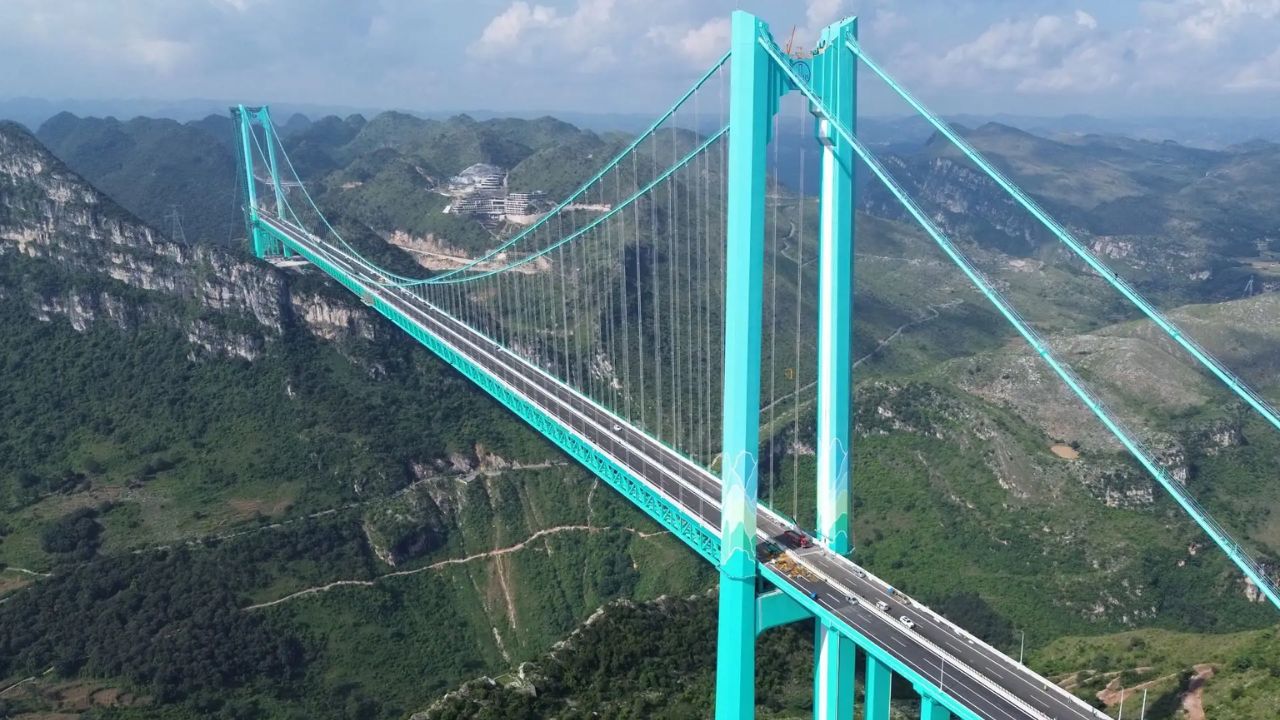
The Huajiang Canyon Bridge is not just the highest in the world. It represents a technical, human, and logistical milestone in one of the most challenging regions of China. With the deck suspended 625 meters above the river, the structure literally crosses clouds and changes the relationship between mountains, people, and mobility.
Since its inauguration, the Huajiang Canyon Bridge has come to symbolize how cutting-edge engineering, extreme planning, and perseverance can transform a previously isolated territory into a new axis of economic and tourist development.
A Canyon That Defeated Projects for Decades
The Huajiang Canyon Bridge was built in a region marked by aggressive terrain, constant fog, and deep valleys. The canyon has a V shape and a distance of over ten kilometers between its edges, which made traditional solutions unfeasible for decades.
-
Concrete-filled PVC homes could be cheaper than traditional masonry, UPF research finds; with ready modular panels, less waste, and faster construction, the Concrete-PVC system aims to cut costs and transform affordable housing in Brazil.

-
Brazilian House Built with 32.8 Tons of Construction Debris Offers Affordable Housing Solution
-
Americans Build Entire Homes in a Day Using Compact Sand Foundations and Pre-Made Wooden Trusses, Reducing Construction Costs

-
China’s Largest Floating LNG Plant, NGUYA, Sets Sail for Congo: 2.4 Million Tons Annually for Italy’s Eni


Other types of bridges failed even at the design stage. Only a suspended bridge with an ultra-long span would be able to conquer the canyon, maintaining structural safety and economic viability.
The Choice for the Extreme Challenge
During the planning, engineers evaluated alternative routes with tunnels and long slopes. However, they opted for the boldest solution: crossing the canyon at its highest point.
This decision transformed the Huajiang Canyon Bridge into a world record and drastically reduced regional travel time, shortening trips that previously took about three hours to just over one hour.
Giant Towers Support the World’s Highest Bridge


The structure of the Huajiang Canyon Bridge relies on two monumental towers, one 262 meters high and the other 205 meters high. They were built directly on the slopes of the mountains and serve as the central pillars of the cable system.
These towers support two main cables with over 9,000 tons each. The stability was ensured with high-strength steel and seismic reinforcements, designed for strong winds and earthquakes.
Anchoring Uses the Mountain Itself as a Counterweight
To keep the cables in place, the Huajiang Canyon Bridge employs distinct anchoring systems at each end. On one side, a massive concrete block acts as a gravity anchor.
On the other side, engineers excavated the mountain and transferred the entire force of the cables directly to the natural rock. The mountain itself became a structural element, enhancing safety and saving space.
Drones Helped to Conquer the Abyss
One of the most delicate moments of the project was passing the first guide cable across the canyon. For this, drones were used to transport the pilot line hundreds of meters high.
This method reduced risks and increased precision. From the pilot line, a suspended walkway was installed, allowing workers to construct the main cables of the Huajiang Canyon Bridge.
Cables Assembled Wire by Wire with Millimetric Precision
Each main cable of the Huajiang Canyon Bridge is made up of tens of thousands of high-strength steel wires. The wires were installed one by one, under GPS monitoring, with a margin of error of less than two millimeters.
After installation, machines compacted the wires, forming circular cables protected against corrosion, vibration, and weather wear for decades.
Deck Suspended Over 600 Meters Above the Ground

With the cables ready, the most impressive phase began: the suspension of the deck. The main beam was assembled with 93 steel sections, individually hoisted and connected in mid-air.
During this process, engineers constantly adjusted the tension of the cables and the position of the pieces to maintain perfect alignment, even under strong winds.
Tests Confirmed Extreme Resistance
Before opening to traffic, the Huajiang Canyon Bridge underwent rigorous testing. Ninety-six heavy trucks, totaling 3,700 tons, were positioned on the deck.
More than 400 sensors monitored deformations, vibrations, and tensions, confirming that the structure meets the highest standards of safety and performance.
Sustainability Also Entered the Project
The construction of the Huajiang Canyon Bridge consumed about 439,000 cubic meters of concrete. To reduce environmental impacts, engineers reused rocks from the site, replacing part of the cement with mineral powder.
This solution reduced costs, decreased pollution, and increased the environmental efficiency of the project, something rare in projects of this size.
Immediate Economic and Tourist Impact

With the bridge in operation, travel time was reduced by almost half. This facilitated transportation, integrated trade routes, and opened new possibilities for tourism and investments.
In addition to its roadway function, the Huajiang Canyon Bridge was designed as a tourist attraction, featuring panoramic views, safe areas for visitors, and even internal structures that allow circulation within the steel beam.
A Global Symbol of Chinese Engineering
More than a record, the Huajiang Canyon Bridge has become a symbol of China’s ability to execute extreme projects in hostile environments. It represents long-term planning, technological mastery, and perseverance.
The project not only connected mountains. It connected an entire region to the future, transforming isolation into opportunity.
Would you dare to cross the Huajiang Canyon Bridge at 625 meters high or would you only admire this engineering feat from a distance?