Portuguese
  Spanish


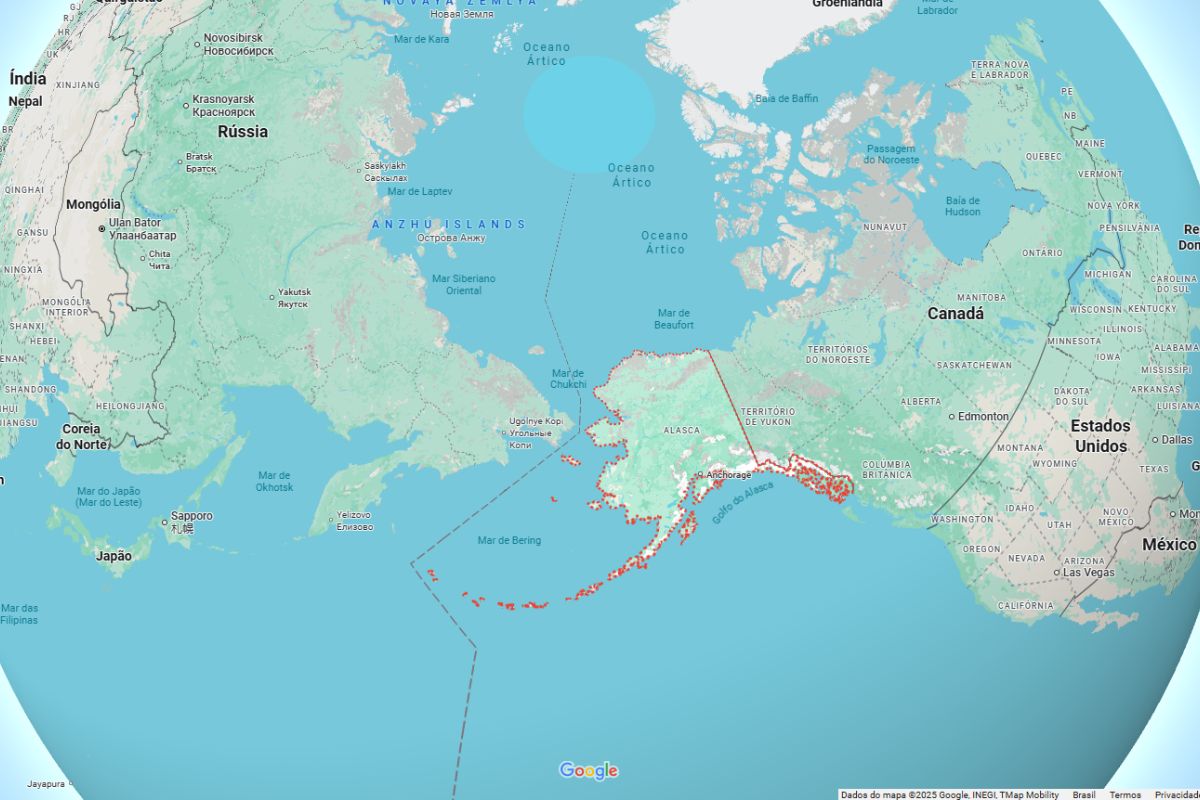


Why Did Russia Sell Alaska to the USA? The Sale of Alaska in 1867 Was Marked by Wars, Economic Pressures, and Strategic Interests. Understand Why Russia Sold Alaska to the USA.
According to a report from Globo 100, the question “Why Did Russia Sell Alaska to the USA?” is back in debate amid new international tensions. The topic connects the past and present, showing how decisions made over 150 years ago still resonate in today’s geopolitical landscape.
The 1867 negotiation involved economic, military, and diplomatic issues, in a context where the Russian Empire sought to alleviate external pressures and the United States saw a strategic opportunity. The agreement of US$ 7.2 million was labeled by critics as “Seward’s Folly,” but became one of the most advantageous deals in American history.
Russian Expansion and the Arrival in Alaska
To understand why Russia sold Alaska to the USA, one must go back to the 18th century. Russian explorers crossed the Bering Strait and established a presence in the territory, exploring sea otter pelts and founding colonies.
-
European Parliament Approves Digital Euro, Aiming to Challenge Visa and Mastercard’s Dominance and Transform Payments Across Europe by 2029

-
Israel finds Hezbollah militarized tunnel over 200 meters long under village, with 4 missile launch shafts, 12 chambers, anti-tank missiles, drones, and weapons depots at a depth of 25 meters.

-
Ukraine launches largest drone attack on Moscow since 2022, Russia claims to have intercepted nearly 200 aircraft near the capital, Kapotnya refinery targeted again, and offensive reignites alert about war reaching the Russian energy heart just a few kilometers from the Kremlin.

-
Truck drivers, freight, and fines from 2022 take center stage in politics: Chamber approves MP with amnesty, mandatory tracking by CIOT, million-dollar penalties, and new minimum wage for those who spend more than 24 hours on the road.



The intense exploration, however, reduced the region’s profitability over the years, and administration became increasingly costly and difficult. Furthermore, there were constant tensions with the British and Americans over boundary delineation and trade.
The Weight of the Crimean War
Another central factor in why Russia sold Alaska to the USA was the Crimean War (1853–1856). Engaged in conflicts against European powers, Russia feared losing distant territories in the event of new disputes.
Maintaining Alaska became a logistical and military risk, as the empire needed to prioritize resources in other regions, especially in the Far East.
U.S. Interests
In the 1860s, the USA was in the midst of an expansion phase. After annexing Texas, California, and winning the war against Mexico, the ideal of “Manifest Destiny” emerged—the belief that Americans should dominate the entire continent.
The purchase of Alaska was seen as a natural step to consolidate this expansion, while simultaneously reducing British influence in the Pacific.
The Negotiation and the Treaty of 1867
The talks between American Secretary of State William Seward and Russian diplomat Eduard Stoeckl culminated in March 1867, with a value of US$ 7.2 million, equivalent to less than two cents per acre.
The treaty was signed in the early morning and approved by Congress, despite criticism from the press questioning the usefulness of a “frozen territory.”
The Legacy of the Sale
Over time, Alaska proved to be rich in natural resources such as gold, oil, gas, and timber. For the USA, it was a historic deal. For many Russians, however, it became a symbol of regret and strategic loss.
To this day, the decision raises debates about the short-sightedness of the Russian Empire, reinforcing the importance of strategic choices in international politics.
The answer to why Russia sold Alaska to the USA involves economics, war, and geopolitics. The Russian Empire sought to alleviate pressures, while the United States saw an opportunity for expansion. The result was a deal considered disastrous for Russia, but extremely profitable for the USA.
What about you, do you believe that Russia would have changed its historical course if it had kept Alaska? Leave your opinion in the comments and join the discussion.