Portuguese
  Spanish




Brazil and Angola Negotiate Agricultural Cooperation with Technology Transfer, Investments of US$ 120 Million and Focus on Grains, Basic Foods, and Food Security
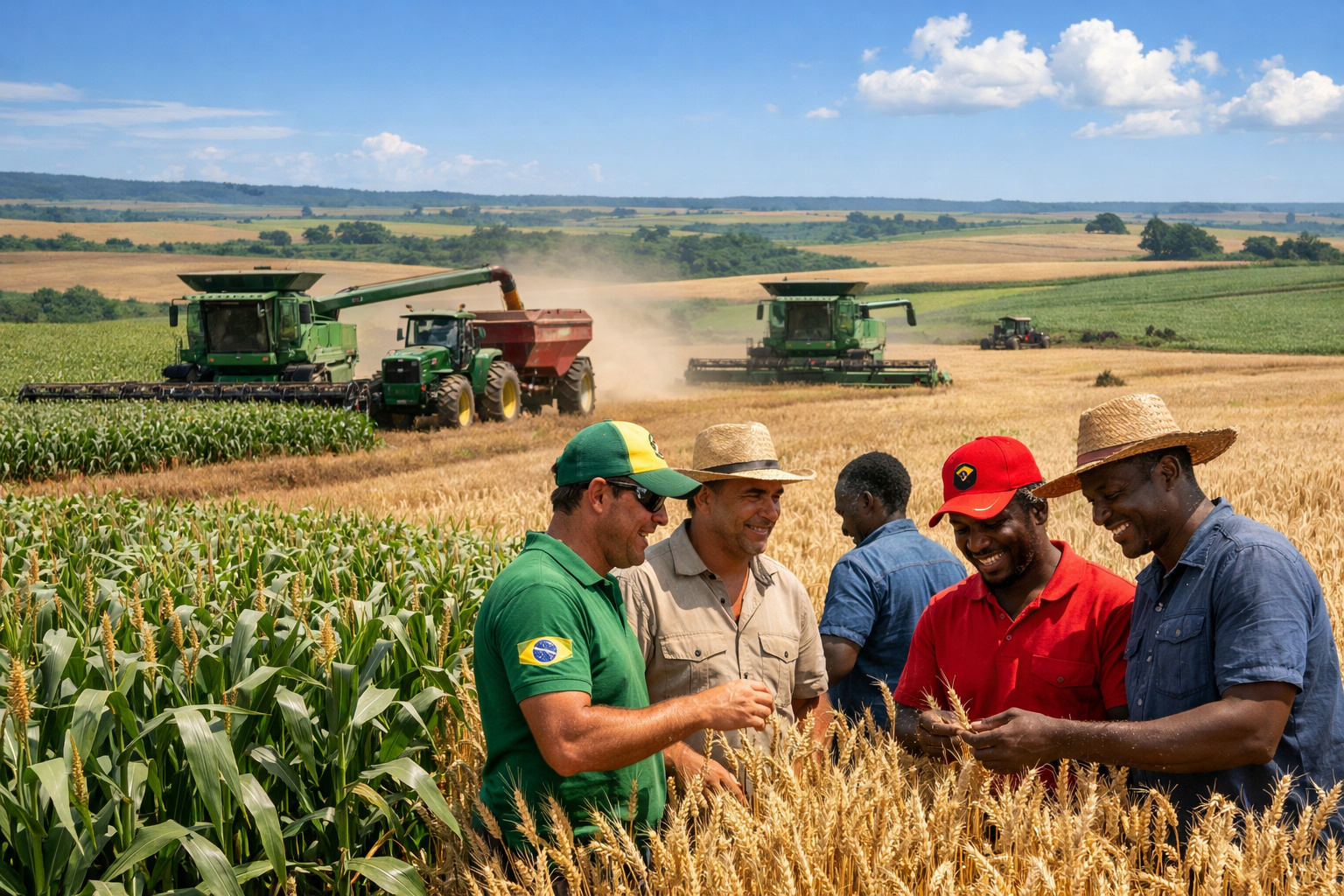
The Brazilian government is maintaining advanced negotiations with Angolan authorities to establish a cooperation agreement aimed at expanding agricultural production in the African country. The initiative provides for the transfer of technology from Brazilian agribusiness, private investments, and institutional support to transform under-explored areas into strategic productive hubs.
The information was disclosed by Valor Econômico, which reported details of the discussions involving ministries, public banks, entrepreneurs, and Angolan provincial authorities. The movement occurs at a time when Angola seeks to reduce its dependence on food imports and increase domestic production to meet a rapidly growing population.
As a central part of the agreement, Angola intends to grant about 60,000 hectares of arable land to Brazilian producers, an area equivalent to approximately 85,000 soccer fields, initially concentrated in the province of Cuanza-Norte. The initial focus will be on the production of grains and basic foods, with potential for expansion into more complex agribusiness chains.
-
Brazilian Cheesemaker Wins European Award for Ant-Infused Cheese with Nutty Flavor Inspired by Indigenous Tradition

-
Brazilian Family’s Cheese, Started with One Cow in 1984, Named Best in the World, Beating 2,700 Competitors from 30 Countries

-
Brazilian Ranchers Use Satellites to Optimize Pasture Management and Prevent Feed Loss in Cattle Farms
-
Russia Follows China in Recognizing Brazil as Free from Foot-and-Mouth Disease Without Vaccination, Boosting Meat Exports and Agribusiness Potential


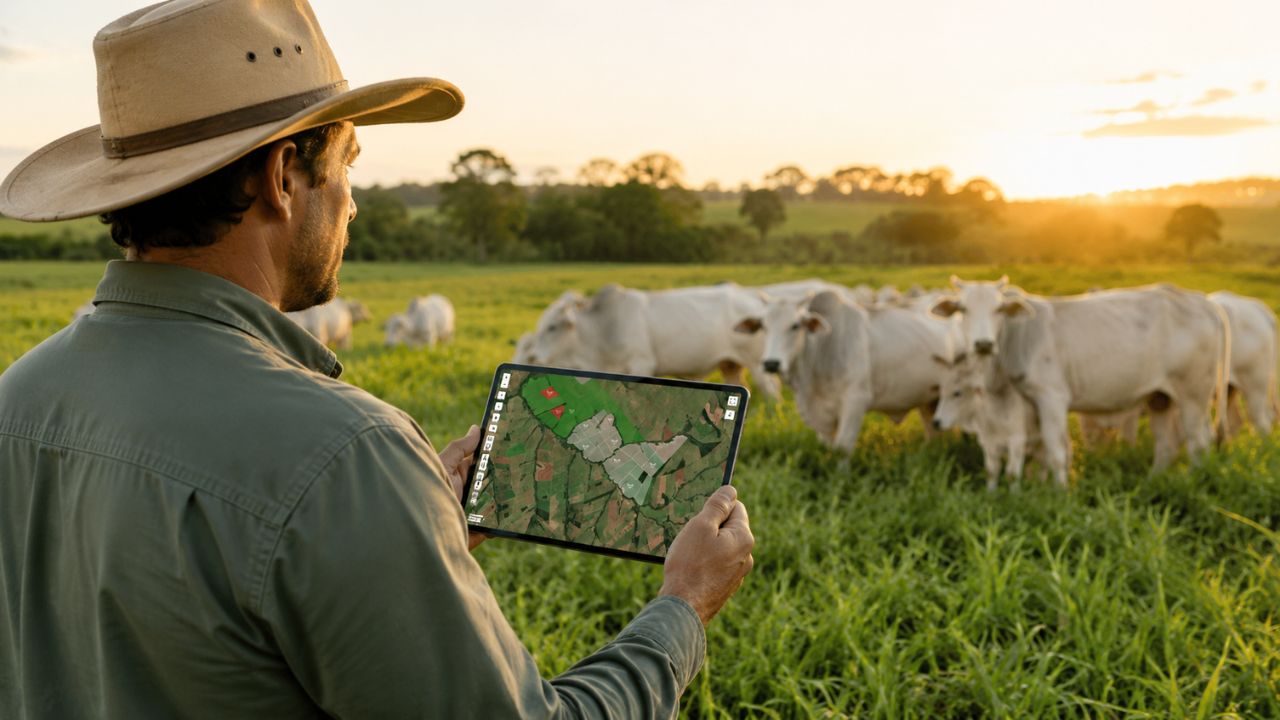

Additionally, the discussed model anticipates partnerships with local producers, technology transfer adapted to tropical environments, and structured financing with the participation of Brazilian and Angolan banks, creating an arrangement considered strategic for both countries.
Brazilian Investments, Public Financing, and Participation of the Sovereign Fund of Angola
The negotiations involve the direct participation of Brazilian entrepreneurs and financial institutions, with projected investments of approximately US$ 120 million in the initial projects. According to local authorities, the proposal was officially presented by the governor of Cuanza-Norte, João Diogo Gaspar, during a meeting with a Brazilian delegation.
From a financial perspective, the model envisions a diversified composition of resources. According to information from Valor Econômico, BNDES is expected to finance the acquisition and export of agricultural machinery, equipment, and inputs manufactured in Brazil, strengthening the national industry and increasing exports.
Meanwhile, Banco do Brasil would participate by operationalizing resources through the Export Financing Program (Proex). Furthermore, the Sovereign Fund of Angola is expected to contribute about 17% of the total amount, reinforcing the Angolan government’s commitment to the project.
The cost of the crops will be covered by Angolan banks, which will contribute around 5% of the total value, assuming the coverage of guarantees. Participating farmers will also need to contribute own resources equivalent to approximately 10% of the total investment, creating a shared risk model.
This financial design aims to reduce uncertainties, stimulate private participation, and ensure long-term sustainability for agricultural projects in Angolan soil.
Brazil Can Increase Exports and Producers Gain Access to New Agricultural Areas
From the Brazilian side, the benefits go beyond diplomacy. For the Minister of Agriculture and Livestock, Carlos Fávaro, the agreement opens significant opportunities for the export of machinery, equipment, seeds, fertilizers, pesticides, and agricultural technology developed in Brazil.
According to the minister, the partnership allows Brazilian companies to increase their international presence while contributing to the productive development of a partner country. During an official mission to Angola in late January, Fávaro stated that the cooperation “benefits both countries and creates real opportunities for producers.”
Moreover, Brazilian farmers and investors now have access to arable areas that are still under-explored, with potentially lower operational costs compared to established regions in Brazil. Opportunities have been identified for the production of corn, soybeans, cotton, beef, and pork, as well as investments in essential infrastructure, such as warehouses, internal roads, and irrigation systems.
During the official visit, more than 30 Brazilian producers expressed interest in investing in agricultural projects in Angola, signaling concrete and immediate demand for the agreement.
Brazilian Cerrado Experience Sparks Interest Among Angolan Producers
One of Brazil’s main attractions for Angola lies in its accumulated experience in the development of the Cerrado. According to Brazil’s agricultural attaché in Angola, José Guilherme Leal, a significant part of Angolan territory presents characteristics similar to those of the Brazilian biome.
The Cerrado occupies about 25% of Brazil’s territory and, until the second half of the 20th century, was considered unproductive. However, consistent investments in agricultural research, rural credit, and infrastructure transformed the region into one of the leading agricultural areas in the world.
This trajectory serves as a direct reference for Angola, which seeks to replicate a successful model based on science, tropical technology, and local adaptation. Nevertheless, experts warn of significant challenges, such as regulatory uncertainties, logistical bottlenecks in regions with limited infrastructure, and the need for adaptation to the country’s institutional and productive conditions.
Despite these risks, the potential for productive and economic gain keeps interest high among producers and investors.
China Also Advances in the Angolan Agribusiness with a Different Model than Brazil’s
The Brazilian movement occurs concurrently with China’s advance in the Angolan agricultural sector. Last year, the Chinese state conglomerate Citic announced large-scale projects for the production of soybeans and corn, with estimated investments of around US$ 250 million over five years.
The Chinese plans include the cultivation of up to 100,000 hectares, with a strategic focus on ensuring self-supply of grains and reducing reliance on external suppliers. Unlike the Brazilian model, led by private companies with institutional support, the Chinese projects involve strong state coordination and direct financing from public banks.
Over the past two decades, the relationship between China and Angola has already resulted in major infrastructure projects, such as roads, railways, and energy projects, often structured in long-term agreements tied to oil production. Entry into the agricultural sector expands this cooperation into the area of food security, deemed strategic by Beijing.
Angola Has Conditions to Become a New Global Agricultural Frontier
Despite the differences between the Brazilian and Chinese models, both converge on a central point: the enormous agricultural potential of Angola. The country has approximately 35 million hectares of arable land that are still untapped, a climate favorable to tropical grain production, and a strategic location for exports via the Atlantic.
With about 37 million inhabitants, a population that can reach 70 million by 2050, Angola currently faces a structural challenge: local food production meets only 37% of domestic demand, forcing the country to import a large portion of its consumption.
In this context, attracting technology, capital, and foreign know-how emerges as a way to increase production, generate jobs, strengthen the agro-industrial sector, and reduce food vulnerability. If the projects progress as planned, Angola could establish itself as one of the new global agricultural frontiers in the coming decades.
Source: Gazeta do Povo