Portuguese
  Spanish




Laws, Driving Culture, and Engineering Explain Why Cars in the USA Have Smaller Mirrors Than Those Sold in Brazil.
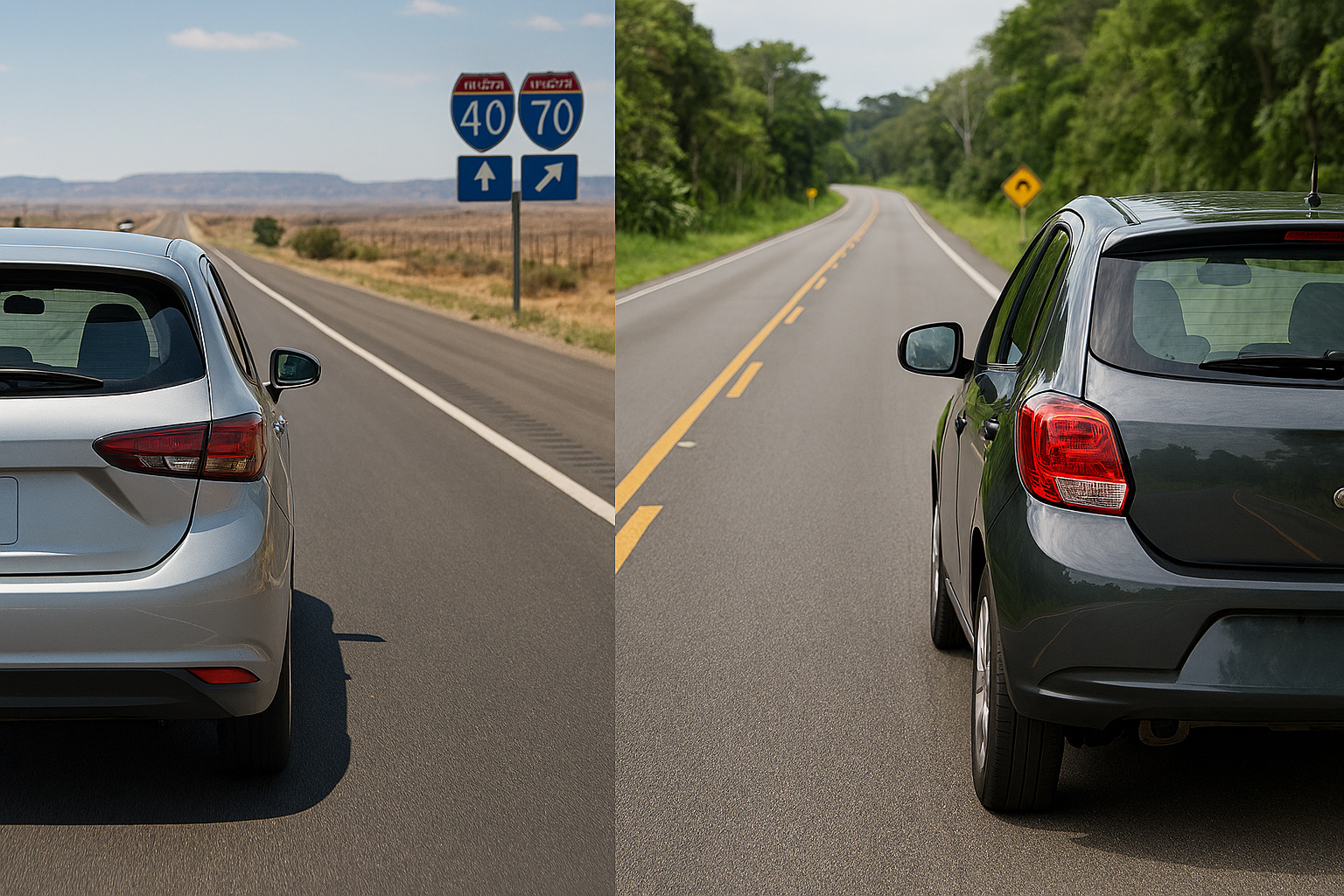
Anyone who has compared cars sold in Brazil and the United States has probably noticed a curious detail: the external mirrors of American cars tend to be smaller, especially the one on the right side. At first glance, this seems like a security oversight, but the explanation is much deeper and involves legislation, engineering, and driving culture. This difference is neither aesthetic nor economic. It is a direct result of different traffic rules and the way each country sees the role of mirrors in vehicle safety.
The American Legislation Does Not Require Convex Mirrors on the Right Side
In the United States, federal vehicle safety standards (FMVSS – Federal Motor Vehicle Safety Standards) do not require the use of convex mirrors on the right side of the vehicle.
This means that:
-
Thinking of Installing LED Headlights? Why Replacing Halogen Bulbs is Still Banned, the Glare Risks Authorities Worry About, and How a New Proposal Could Allow Certified, Safe Installations

-
2027 Toyota Corolla Cross Unveiled: New Design, Enhanced Fuel Efficiency, Reduced Maintenance Costs, Advanced Technology, Connected Services, and Up to 10-Year Warranty

-
Fiat Cronos Precision 2018: Affordable Sedan with Spacious Trunk and Reliable Maintenance
-
Volkswagen to Cut Production by 1 Million Cars by 2030, Reducing Jobs and Platforms, Focusing on More Profitable Models





- the mirror can be flat,
- the lateral field of view is smaller,
- there is no famous inscription “Objects in mirror are closer than they appear” as a legal requirement.
In Brazil, the use of convex mirrors on the right side is mandatory, precisely to widen the field of vision and reduce blind spots.
In Brazil, the Priority is to Compensate for Narrower Roads
The Brazilian legislation was shaped considering:
- narrower streets,
- more chaotic urban traffic,
- motorcycles weaving between lanes,
- higher risk of lateral blind spots.
Therefore, the convex right mirror became standard, enlarging the visual field and helping the driver notice smaller vehicles approaching.
In the USA, this need is less critical because:
- the roads are wider,
- the flow is more predictable,
- motorcycle use in urban traffic is lower.
Driving Culture Influences the Size of the Mirror
Another decisive factor is the way American drivers learn to drive. There, there is a strong emphasis on the constant use of:
- the internal mirror,
- the left mirror,
- direct checking of the blind spot with head movement.
In other words, the right mirror is not seen as the primary tool for lateral observation but as a complement.
In Brazil, the habit is different: drivers rely more on external mirrors to monitor the surroundings of the car.
A Smaller Mirror Improves Aerodynamics and Noise
From an engineering perspective, larger mirrors generate:
- more aerodynamic drag,
- more wind noise at high speeds,
- higher fuel consumption on highways.
Since American legislation allows smaller mirrors, manufacturers take advantage of this to:
- reduce air resistance,
- improve acoustic comfort,
- optimize fuel consumption on long trips.
In a country where driving hundreds of kilometers a day is common, these gains make a real difference.
Why the Brazilian Mirror Tends to Be Larger
In Brazil, manufacturers must meet stricter requirements regarding lateral field of view. This results in:
- larger mirrors,
- more pronounced convex shape,
- greater projection outside the body of the car.
The goal is to maximize visibility, even at the expense of aerodynamics or aesthetics.
Technology Has Started to Reduce This Difference
In recent years, systems such as:
- blind spot monitoring,
- side cameras,
- auditory and visual alerts,
have begun to lessen the dependence on the physical size of the mirror. In the USA, this has further accelerated the adoption of smaller mirrors. In Brazil, even with technology, the legal requirement remains valid, keeping the mirrors large.
A Smaller Mirror Does Not Mean Less Safety
It is important to emphasize: American cars are not less safe because of this. They simply follow a different logic.
Safety is compensated by:
- wider roads,
- predictable traffic behavior,
- active blind spot checking culture,
- embedded technologies.
In Brazil, safety comes more from the expansion of the physical visual field.
What Happens When the Same Car is Sold in Both Countries
A curious detail is that the same model can have different mirrors depending on the market.
When sold in Brazil, it receives:
- larger mirrors,
- mandatory convex curvature,
- adaptation to the Brazilian Traffic Code.
In the USA, the mirror can be smaller, flatter, and integrated into the original design. The difference in size of the mirrors between cars sold in the United States and Brazil is not a cost-cutting measure nor a security oversight.
It reflects: different legislation, different infrastructure, different driving culture, and distinct engineering priorities.
What seems strange to Brazilians makes perfect sense in the American context, and vice-versa.