






 Portuguese
  Spanish


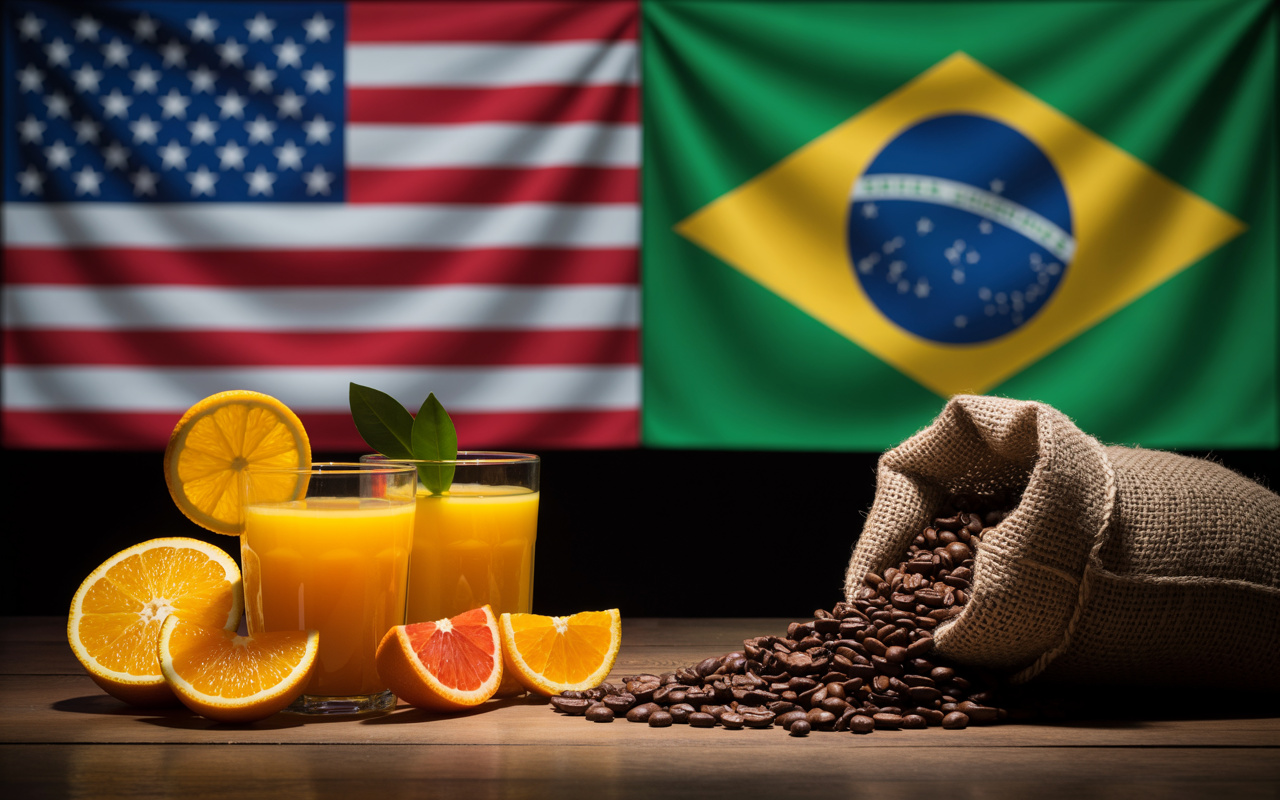


US Saves Orange Juice and Punishes Coffee with 50% Tariff. Billion-Dollar Contradiction Exposes Risks for Agribusiness and Threatens Brazilian Exporters.
The decision by the United States to impose a 50% tariff on various Brazilian products while sparing orange juice and penalizing coffee has generated perplexity among producers, diplomats, and international trade analysts. More than just an isolated measure, the contrast exposes a billion-dollar contradiction with the potential to redefine priorities in Brazilian agribusiness and reopen historical wounds in the commercial relationship between the two countries.
Punished Coffee, Protected Orange
According to data released by industry associations, Brazilian exports of instant coffee to the US plummeted nearly 60% in August 2025 compared to the same month the previous year, precisely after the tariff came into effect.
Companies reported canceled contracts, stalled inventories, and margins undermined by the difficulty of absorbing or passing on the increased costs.
-
Without anyone betting that Amazonian açaí would catch on in Rio Grande do Norte, he brought the seedling from Pará, planted 80 hectares, and transformed the “unlikely land” into a business that harvests 280 tons of fruit and exports pulp to Italy, the Netherlands, and Kuwait, proving that the superfood from the North thrived in the semi-arid region.

-
A company from SC that moves R$ 125 billion in agribusiness is integrated into an international group, maintains its headquarters and jobs in Chapecó, and is preparing to expand software for cooperatives, grain companies, and industries while targeting new markets without leaving the western region of Santa Catarina.

-
Producer receives news and had to cull almost the entire herd, bounced back with the help of compensation, and is now producing 450 liters of milk per day in SC.

-
Quail Eggs Reveal a “Secret Code” on Their Shells Explaining Unique Patterns and Colors

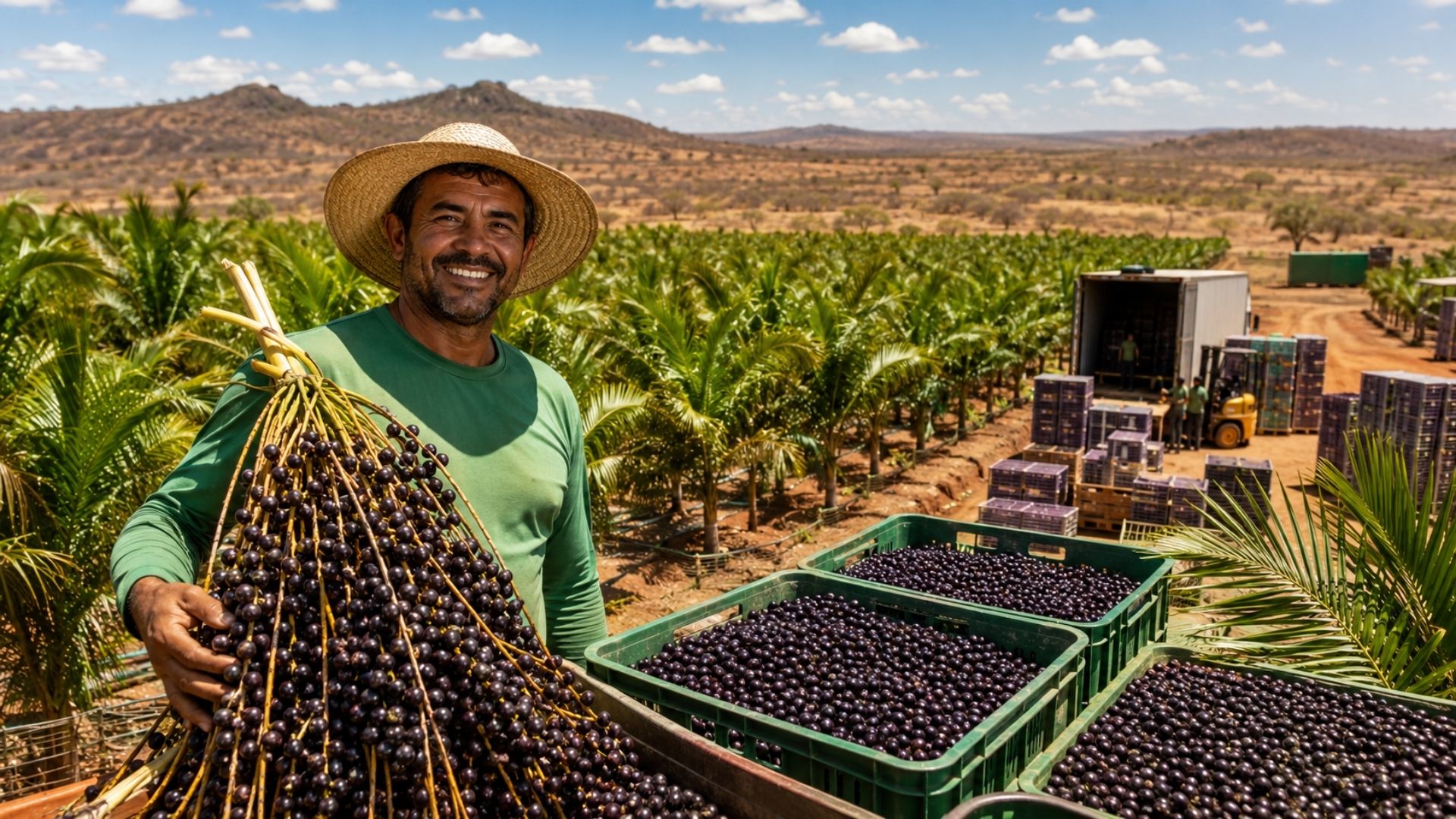


Meanwhile, Brazilian orange juice, a symbol of a historical dispute with Florida producers, was left off the list of tariffed products.
The exclusion was welcomed with relief by the citrus sector, but also with suspicion, as it represents a contradictory political gesture: one of the most sensitive products for the US was spared, while coffee, which always had a consolidated market and without major disputes, was penalized.
The Weight of Domestic Lobbying in the US
International trade experts emphasize that the differential treatment is not random. Florida’s orange juice industry has been facing a severe crisis in recent years, with declining production due to pests and extreme weather events.
To avoid shortages and rising domestic prices, Washington has kept the doors open for Brazilian juice, considered essential to balance supply in the American market.
On the other hand, coffee, although a heavily consumed product in the US, has alternative competitors—such as Colombia, Vietnam, and Central American countries—that can supply the market even at higher costs. This makes Brazil more vulnerable to the application of tariffs, as Americans can diversify their imports without an immediate risk of shortages.
The Billion-Dollar Contradiction
The paradox of protecting oranges while punishing coffee creates a billion-dollar impact on Brazilian agribusiness. Coffee accounts for a significant portion of export revenues, generating billions of dollars annually.
If the nearly 60% decline recorded in August persists, Brazil could lose hundreds of millions in just a few months in this sector alone.
At the same time, Brazilian orange juice continues to generate currency without restrictions, ensuring revenue for a production chain that employs thousands of workers in the interior of São Paulo.
The contrast creates regional distortions and raises the risk of even greater concentration of Brazil’s dependence on certain products, making the trade balance vulnerable to sudden policy changes in Washington.
For Experts, the Biggest Threat Is Instability
Analysts interviewed by Reuters and Agência Brasil state that the greatest threat is instability. If the US decided to spare juice now, nothing prevents it from being included in future rounds of retaliation. Coffee, once penalized, may face a difficult reclamation, with market loss to Asian competitors.
Exporter associations warn that regulatory uncertainty complicates long-term investments, stalls new contracts, and leaves producers at the mercy of political decisions.
In the medium term, the impact may be felt in jobs in agriculture and industry, reducing Brazil’s bargaining power in multilateral trade agreements.
The Role of the Reciprocity Law
In light of this contradiction, the Brazilian government has already activated Camex to analyze whether the tariffs violate international commitments and whether a response is warranted under the Economic Reciprocity Law.
The dilemma is clear: retaliating may protect sectors like coffee, but it also opens the door for the US to harden its stance against other products, including orange juice itself.
Ultimately, the message is that Brazilian agribusiness cannot rely solely on the goodwill of Washington.
The case of spared orange juice and penalized coffee illustrates how internal political decisions in the US, linked to regional lobbies and sectoral crises, can determine the fate of billions of dollars for Brazilian producers.
Without market diversification and greater integration into international agreements, the risk is that other production chains remain subject to the same instability.






Mas os EUA correm risco se houver uma quebra de safra cafeeira por clima ou doenças, nos países que eles não taxaram ou taxaram menos pois ou o Brasil não suprirá por passar a exportar para Europa ou Asia , é um risco que eles também correm ..