






 Portuguese
  Spanish


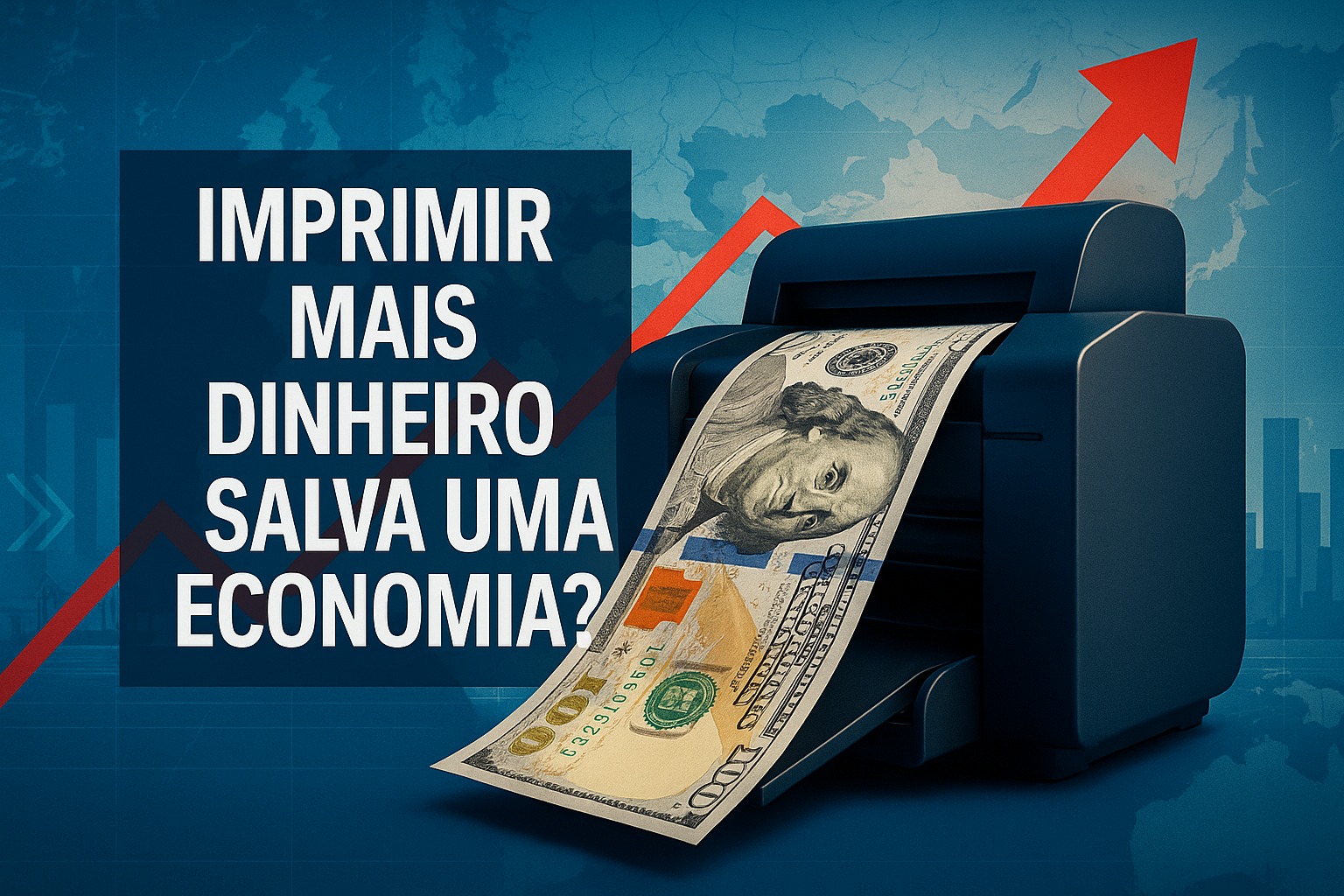

Governments Can Increase Money Supply During Crises, but Printing Money Without Control Causes Inflation, Destroys Trust, and Reduces Economic Growth
The idea of solving economic problems by simply turning on the central bank printers always comes back to the debate. At first glance, it seems like a simple solution: if there is a lack of money, just create more. However, reality shows that this practice does not generate true wealth and often ends in serious crises.
Money Is Not Wealth in Itself
The value of money lies in what it can buy. Banknotes and coins only work because they represent the possibility of exchanging them for useful goods or services.
When a government decides to print more paper, the amount of goods available remains the same.
-
Brazil’s Federal Revenue Auction: iPhone 13 for $95, PlayStation 4 for $80, and Volkswagen Jetta for $2,600 Among 232 Lots Available

-
Tech Giant Oracle Lays Off 21,000 Employees and Invests $70 Billion in Artificial Intelligence

-
Chilean Giant Acquires St. Marche, Expanding from Discount to Premium Supermarkets in São Paulo’s High-End Retail Market
-
After 60 Years of Selling Cheap Milk, Brazilian Family Invests in $4,000 Equipment to Transform Farm’s Milk into Premium Sweets, Producing 2 Tons Daily and Aiming for $6.4 Million


Thus, new houses, jobs, or food do not appear just because more bills are in circulation. The initial result is merely an increase in demand for goods, as more people have resources in hand.
The Temporary Demand Effect
This extra consumption surge may stimulate companies to produce more at the beginning. The movement is explained by the supply and demand model: when demand rises, there is an attempt to meet the market.
But the effect soon loses strength. As prices rise, wages and production costs also increase.
The economy returns to the same point as before, but with everything more expensive. In other words, there is inflation without lasting gain.
Inflation Erodes Purchasing Power
This is the central point: printing money creates only a temporary feeling of growth. In the long term, each currency becomes worth less because there are more bills competing for the same amount of products.
The impact appears in basic prices for everyday items. A loaf of bread that cost R$ 1 may rise to R$ 2, R$ 5, or even much higher amounts in extreme situations. Inflation hits the poorest the hardest, who have fewer ways to protect themselves.
Controlled Issuance in Specific Cases
Some experts acknowledge that, during times of recession, limited money issuance can help.
Central banks, when acting responsibly, use this tool to contain crises and stimulate investments.
However, it is a temporary resource that requires caution. If used excessively, the effect changes from stimulus to distortion, creating dependencies on artificial solutions.
The Risk of Sustaining Inefficiencies
The Austrian School of economics warns of another problem. According to this view, printing money to save companies or sectors weakens the pursuit of efficiency.
The so-called moral hazard arises: companies come to rely on assistance instead of innovating and improving productivity.
Additionally, by interfering with prices and interest rates, the government disrupts the natural allocation of resources. This ultimately reduces innovation and delays sustainable growth.
Lessons from History
The past offers compelling evidence. Germany during the Weimar Republic, Zimbabwe in the 2000s, and Venezuela more recently followed the same script: excessive money printing led to collapse.
In these contexts, trust in the currency vanished. Piles of banknotes could not even buy basic goods.
Populations reverted to bartering or adopted foreign currencies to survive. The promise of prosperity turned out to be a costly illusion.
True Growth Requires Productivity
Therefore, the answer to the question is simple: a country cannot become wealthy by merely printing money. The most that happens is a temporary surge in consumption that quickly dissipates, leaving behind inflation and instability.
Real prosperity arises from factors such as innovation, education, increased productivity, and good resource management. Money can facilitate exchanges, but it does not create value by itself.
The Illusion of the Economic Shortcut
In the end, relying on the printers as a solution is trading solid growth for a deceptive relief. And this illusion always comes at a high price because the bill arrives with interest in the form of lost trust and collective impoverishment.
With information from Nuseconomicssociety.


