Portuguese
  Spanish


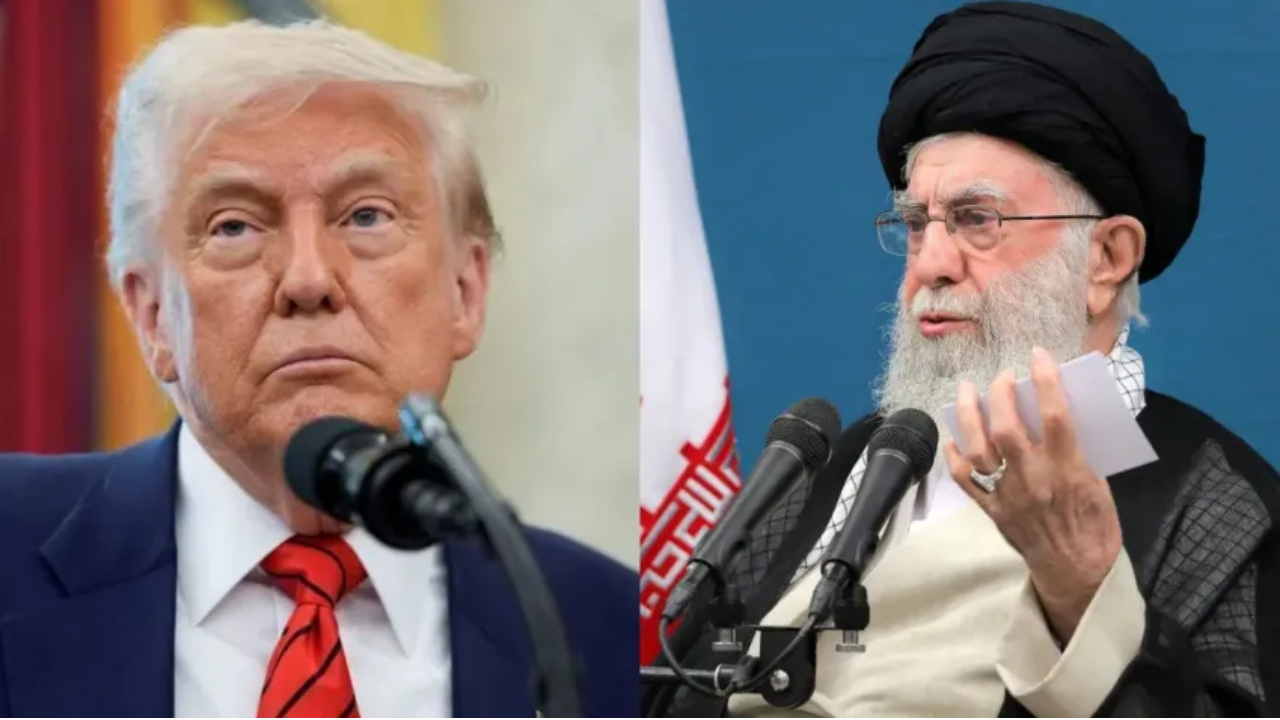

The Escalation of U.S. Threats to Iran Amid Internal Protests and Regional Disputes Puts Oil Back at the Center of Global Geopolitics and Raises Concerns About Prices, Supply, and Security in the Strait of Hormuz.
The recent threats from the United States to Iran have once again escalated the already fragile balance in the Middle East. Washington’s hardening rhetoric occurs in a context marked by internal protests against the theocratic regime and strategic disputes that have oil as a central element.
Thus, analysts assess that any more aggressive move could have immediate impacts on the global energy market.
At the same time, President Donald Trump’s rhetoric has reignited fears of a regional escalation, especially since Iran occupies a strategic position in both oil production and international oil transport.
-
Petrobras Explores Entry into Corn Ethanol Market, Aiming to Become a Biofuel Giant

-
Brazil’s $8.5 Billion Auction Secures New Power Plants to Prevent Peak Hour Energy Shortages
-
Why Gasoline Prices Remain Stable: How Petrobras’ Subsidies and Pricing Policies Control Fuel Costs in Brazil
-
SpaceX Plans 13 km Pipeline to Reduce Truck Reliance and Speed Up Starship Rocket Launches in the U.S.


Consequently, the current scenario is being observed with caution by governments, investors, and countries dependent on the commodity.
Internal Protests Weaken the Iranian Regime
Since the end of December, Iran has been facing a wave of protests that began with economic demands. However, quickly, the protests gained political contours and began to directly question the legitimacy of the government.
International organizations point out that the repression has left thousands dead, which has heightened external pressure on Tehran. In this context, Donald Trump adopted a more aggressive tone, threatening “very strong reactions” if the Iranian regime proceeded with executions of protesters.
Despite this, on Wednesday (1/14), the Republican softened his rhetoric. According to him, recent information indicated that the “killings” in Iran “are stopping.” Still, the change of tone was not enough to dispel uncertainties in the oil market.
Gulf Countries Attempt to Contain Escalation and Protect Oil Flow
While Washington presses, U.S. Arab allies in the Persian Gulf are adopting a more cautious stance. Led by Saudi Arabia, countries like Oman and Qatar have been using diplomatic channels to alert the White House about the risks of direct intervention in Iran.
According to international media reports, regional authorities highlighted that an attempt to overthrow the Iranian regime could have severe collateral effects. Among them, the primary concern is the disruption of oil tanker navigation through the Strait of Hormuz.
This maritime route is strategic. About one-fifth of all the oil consumed globally passes through the strait, connecting major producers in the Middle East to markets in Asia, Europe, and North America. Thus, any blockade, even if partial, would have an immediate impact on oil prices and global economic stability.
Political Vulnerability and the Venezuelan Precedent
According to Professor Fernanda Brandão, coordinator of the international relations course at Mackenzie University in Rio, U.S. threats arise at a particularly delicate moment for the Iranian regime.
“The U.S. threats of a possible intervention in Iran come at a time when the theocratic regime is already quite weakened. This is not only the case militarily, but also politically, with ongoing protests and demonstrations against the government,” she stated to Metrópoles.
According to the professor, recent attacks conducted by Israel, with U.S. support, against targets linked to the Iranian nuclear program have also contributed to reducing the country’s military capacity. Nevertheless, she notes that it is not possible to say at this moment whether there will be a direct intervention.
“The recent precedent of the intervention in Venezuela, with the invasion and capture of Nicolás Maduro, shows that one cannot dismiss the statements of the American president. What Trump says may take time, but eventually tends to materialize,” she said.
Oil is a Key Piece in the Strategic Equation
The energy dimension appears as one of the main drivers of the current tension. Iran possesses one of the largest reserves of oil and natural gas on the planet. However, production is well below potential due to sanctions imposed since the 2000s.
For Professor Alberto Amaral, an expert in international law, the risk to the energy market is real and immediate.
“This scenario is extremely dangerous and risky. The rhetoric adopted by the United States could trigger a significant increase in oil prices in the international market,” he stated.
He emphasizes that, in the event of an attack on Iran, the closure of the Strait of Hormuz would be a real possibility. “There would undoubtedly be a profound impact on the international oil market, resulting in rising prices. This situation could provoke an unprecedented surge in the value of crude, with still unpredictable consequences.”
Market Already Reacts to Tensions, But Sees Risk as Potential
Although the worst-case scenario has yet to materialize, the financial market has already begun to price in some geopolitical risk. Brent crude rose by about 5% over the week, reversing the downward trend observed over the past year.
Macroeconomic analyst Sara Paixão explains that Iran’s weight in the global oil market is significant. “The country has the fourth largest oil reserve in the world, produces about 3.2 million barrels per day, and accounts for approximately 5% of global production. Additionally, it controls part of the Strait of Hormuz, through which about 20% of the maritime oil flow passes.”

According to her, the market still treats the crisis as a potential risk. However, any sign of military escalation tends to provoke more abrupt movements in prices.
Military Limits and the Risk of Iranian Reaction
Despite the tough rhetoric, analysts highlight that there are practical limits to an immediate American offensive. The United States has reduced its military presence in the Gulf over the past year and currently maintains about 30,000 soldiers in the region, along with six warships.
Nonetheless, Tehran has already signaled that it would retaliate against any direct action. Among the possibilities are attacks on U.S. bases in the Middle East, which could quickly escalate the conflict.
In this context, oil remains a central element of the geopolitical equation. The combination of political instability, internal protests, and strategic disputes keeps the market on alert, while governments and investors monitor each new movement on the Middle Eastern chessboard.