






 Portuguese
  Spanish


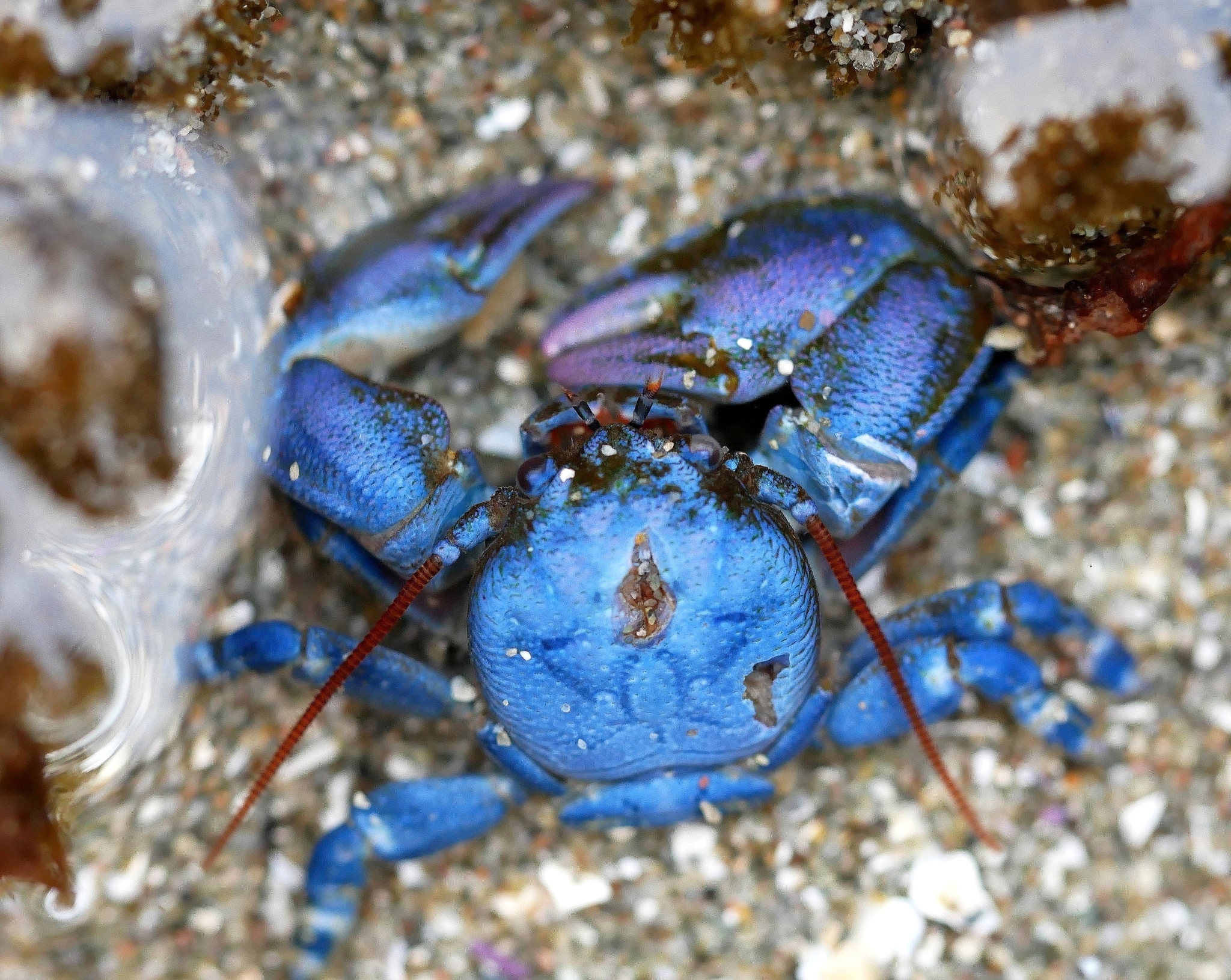


Petrolisthes Crabs Cultivate Microbial Biofilms and Reveal a Rare Form of Subaquatic “Farming” That Intrigues Biologists.
Although it may seem absurd to compare a crustacean to a farmer, science has been discovering that cultivating behavior is not exclusive to humans, ants, and termites. In the marine environment, a small crab called Petrolisthes cinctipes has been surprising researchers by demonstrating something very similar: it “herds” and cultivates microbial biofilms for food, a phenomenon that raises questions about social evolution, ecology, and behavioral intelligence in invertebrate species.
This crab, inconspicuous and common in intertidal regions of the North Pacific, has gone unnoticed in marine biology for a long time. However, as advances in microscopy and behavioral observation have been applied in coastal habitats, what emerged before the cameras was an unexpected activity: the crabs scrape, protect, and stimulate the growth of microalgae and yeasts that cover rocky surfaces, in a process analogous to rudimentary agriculture.
Petrolisthes Cinctipes: The Unassuming Crab That Became a Scientific Case
The Petrolisthes cinctipes is a porcelain crab that inhabits intertidal regions of the Pacific, especially along the west coast of North America. It lives in areas exposed to the ebb and flow of tides, withstanding sharp variations in temperature, salinity, and wave movement.
-
China Develops Custom 140-Ton Electric Mining Truck with 770 kWh Swappable Battery, Deploys 290 Units in Xinjiang’s Largest Zinc Mine

-
Meta to Launch Arena, a New Prediction App Targeting 3.56 Billion Users, Competing with Polymarket and Kalshi

-
Scientist Challenges Famous Human Evolution Theory, Argues Homo Sapiens Evolved Gradually Over Thousands of Years
-
15-Year-Old American Builds Ocean Generator with PVC Pipe and 3D-Printed Propeller for $12, Wins National Prize, Presents at White House, and Makes Forbes 30 Under 30 List






With just a few centimeters wide, it is an animal that often goes unnoticed even by those studying marine biodiversity. However, what really catches attention is its method of feeding. Instead of seeking larger prey, the Petrolisthes uses filtering appendages to manipulate microscopic particles – mainly diatoms, yeasts, and bacteria.
Researchers have observed that these microorganisms are not just consumed — they seem to be managed and cultivated, like a small nutritious biofilm stuck to the rocks. The crab spends a considerable amount of time cleaning and scraping the surfaces where these organisms grow, removing dirt, predators, and competitive organisms that could reduce the productivity of the biofilm.
What Is “Farming” in a Biological Context?
In the biological world, the term farming is not limited to plows and sowing. In behavioral ecology, it is defined as:
“the active management of another organism to increase future food availability.”
Ants, for example, cultivate fungi in underground chambers. Termites do the same. Some fish species in reefs cultivate turf algae in coral notches, removing herbivores and competitors.
What impressed biologists was realizing that the Petrolisthes cinctipes does something similar, only on a micro scale and underwater. It:
- Stimulates the growth of biofilms by keeping them clean.
- Protects against larger scrapers and sediments.
- Consumes only when the biofilm is developed.
The result is behavior that meets scientific criteria for rudimentary agriculture, with management and harvesting.
Biofilms: Invisible Farms in the Marine Environment
Biofilms are complex communities of organisms such as:
– diatoms,
– bacteria,
– yeasts,
– microalgae,
– protists.
They grow attached to rocks, shells, wood, and coastal structures. In the intertidal environment, where water constantly comes and goes, biofilms play an essential role in nutrient cycling, providing primary energy for many levels of the food chain.
The Petrolisthes takes advantage of this. Research shows that it has specialized setae on its appendages that selectively scrape the surface, removing unwanted particles and retaining nutritious microorganisms. This microscopic “herding” prevents invasive species or macroalgae from dominating the surface, ensuring that the biofilm remains rich in diatoms — its primary food source.
Ecological Complexity and Scientific Surprise
This type of behavior is rare among crustaceans. It suggests that farming is not a phenomenon limited to complex social insects like bees, ants, and termites, nor restricted to land environments.
The fact that marine invertebrates exhibit resource management indicates that farming may have arisen multiple times in evolution, under different contexts.
Additionally, this “subaquatic cultivation” has important ecological consequences:
– influences the composition of the microenvironment,
– alters competition among microalgae,
– controls bacteria and protists,
– modifies local primary productivity.
At certain points, the behavior of the Petrolisthes resembles that of territorial fish that cultivate algae on reefs. In others, it resembles ants defending fungi. This convergence draws attention to the behavioral plasticity of organisms, even when small and seemingly simple.
The Scientific Debate Begins When We Look at Evolution
The question that arises among biologists and ecologists is: why did this behavior evolve? There are several hypotheses:
– Energy efficiency: cultivating biofilms may be more advantageous than seeking dispersed food.
– Food stability: intertidal environments are unpredictable; cultivating reduces risks.
– Reduced competition: manipulating and defending biofilms may prevent larger herbivores or filter feeders from consuming everything.
There is still no consensus, and the data is incomplete, but the trend is that the behavior has been favored by specific environmental pressures of the intertidal habitat.
Science Still Knows Little, but Enough to Marvel
Studies on porcelain crabs do not have the same visibility as those involving whales, sharks, or octopuses. But paradoxically, it is in these unassuming organisms that some of nature’s most surprising behaviors emerge.
What makes all this impressive is that we are talking about an animal just a few centimeters long, without the sophisticated cognitive apparatus of mammals or birds, but that has developed a way to manage the production of its own food — a behavioral milestone that was, until recently, attributed almost exclusively to humans and social insects.
In the end, the case of the Petrolisthes cinctipes adds a new question to the field of evolutionary biology:
if a crab can develop microscopic farming under the waves, how many other complex behaviors remain invisible in marine ecosystems? The answer is likely still hidden among tides, rocks, and microscopes.






