





 Portuguese
  English
  Spanish
  4 min of reading
  1 comment





In The 1960s, Expeditions Crossed The Americas By Bus, From The USA To Brazil, With No Fixed Arrival Date, With A Guide, Cook And Months On The Road.
In the 1960s, traveling from one end of the Americas to the other was an experience that hardly resembled today’s tourism. Before the popularization of affordable commercial flights, there was a type of travel that now seems almost unimaginable: road expeditions by bus that departed from the United States heading to South America, including Brazil, with no set arrival date. It wasn’t a regular service or a simple tourist excursion. It was, in practice, an organized adventure on wheels.
These trips brought together explorers, students, journalists, and curious individuals willing to spend weeks, sometimes months, crossing countries, borders, and completely different landscapes, at a pace dictated by the road, the weather, and local politics.
Buses That Functioned As Mobile Homes


The vehicles used for these crossings were not ordinary buses. They were adapted buses or converted trucks, prepared for long journeys in regions where infrastructure was limited or nonexistent. Many functioned as true mobile homes of the time, with space to sleep, cook, and store supplies.
-
Urban birds are using glass, plastic, wire, and even handcuffs to attract females, and scientists have discovered a curious ritual that shows how human trash has become mating decoration in nature.

-
Forget the common asphalt in Brazil: highway is paved with recycled plastic for the first time, incorporating more than 87,000 PET bottles in a technology that could transform roads across the country and potentially retire petroleum from pavement composition for good.

-
FedEx transforms Memphis into an air parcel city: a superhub of 940 acres, 171 airplane gates, 84 miles of conveyor belts, and up to 484,000 packages per hour drive the most frenetic logistics heart in the U.S.
-
As the world opens its eyes to PIX invented in Brazil, Eduardo Bolsonaro joins the USA and suggests replacing the system used by more than 170 million Brazilians; Trump accuses PIX of harming giants like Visa and Mastercard.



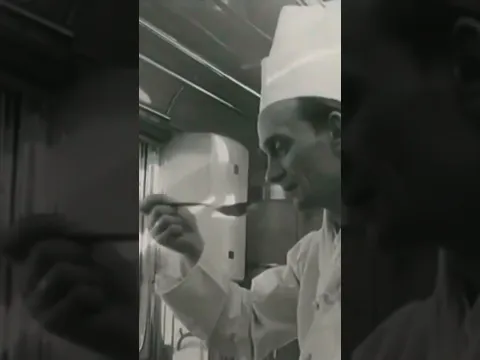
For this reason, it was not uncommon for these expeditions to have a small fixed crew. There was usually an experienced guide, responsible for routes and negotiations at the borders, a driver with mechanical knowledge, and, in many cases, a cook, since part of the route passed through remote areas without restaurants or support stations.
The Pan-American Highway As The Backbone Of The Journey
The main axis of these journeys was the Pan-American Highway, an ambitious project that began decades earlier with the proposal to link Alaska to Tierra del Fuego. By the 1960s, many sections already existed, especially in North America and parts of Central and South America.

However, the road was far from continuous. The biggest obstacle was the famous Darién Gap, the dense jungle region between Panama and Colombia, which still does not have a continuous paved highway. At the time, buses and vehicles were loaded onto ships or ferries to bypass this area, making the schedule completely unpredictable.
This was precisely why there was no set date to arrive in Brazil. The journey depended on authorizations, weather conditions, maritime transport, and even the political situation of the countries crossed.
A Slow Crossing, But Deeply Transformative
While today a direct flight can connect the United States to Brazil in just a few hours, at that time, the land crossing was conceived as an experience in itself.
Passengers crossed deserts in Mexico, mountain ranges in Central America, tropical forests, and, already in South America, vast, little-explored regions.
Reports from that time, published in international magazines and travel books, describe journeys that lasted from two to four months, with long stops in cities and villages along the way. The bus not only transported people but also functioned as a traveling cultural meeting point.
Brazil As The Final And Uncertain Destination
Reaching Brazil was seen as the great milestone of the journey. Many expeditions aimed to reach cities like Rio de Janeiro or São Paulo, but the final stretch within the country was also a challenge. The Brazilian road network was still expanding, and projects like the Trans-Amazon Highway didn’t even exist.
This emphasized the exploratory nature of the journey. Brazil was not just the destination, but part of the adventure, with uneven roads, long distances, and a geographical diversity that impressed foreigners used to standardized highways.
Why This Type Of Trip Disappeared
Starting in the 1970s, several factors made this model practically unfeasible. The advancement of commercial aviation drastically reduced travel times between continents. Borders became more bureaucratic, costs increased, and the Pan-American Highway itself lost its status as an epic tourist route.
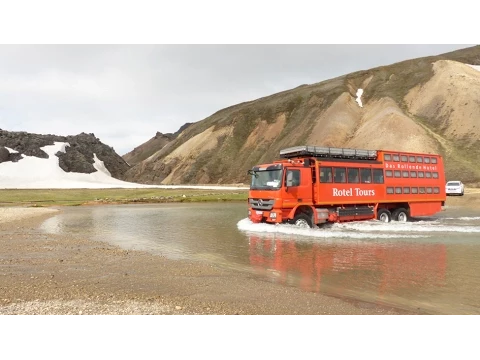
Today, a bus trip from the United States to Brazil sounds almost absurd, not due to technical impossibility, but because the world has come to value speed, predictability, and comfort, while those expeditions were based on time, uncertainty, and experience.
A Way Of Traveling That Became History
What was seen in the 1960s as bold and even visionary now seems part of a distant past. Yet, these expeditions left important records about continental integration, adventure tourism, and people’s relationship with the road.
Few people know, but before airplanes dominated long distances, crossing the Americas by bus was a real possibility, reserved for those willing to exchange haste for discovery.


A transamazonica nao existía em 1960 e hoje… tambem nao existe