Portuguese
  Spanish


The Minister of Defense, José Múcio, announced in Sweden that Brazil intends to acquire 20 more Gripen fighters from Saab, expanding the FAB fleet to 56 aircraft. There is no finalized agreement or schedule, but the purchase is seen as urgent due to an aging and costly fleet.
Brazil wants to strengthen its combat aviation. The Minister of Defense, José Múcio Monteiro Filho, announced this Thursday (4), during a visit to Sweden, that the country intends to acquire 20 more Gripen fighters, manufactured by Saab, in a move that would expand the Brazilian Air Force (FAB) fleet from 36 to 56 aircraft.
The announcement, made in a joint statement with the Swedish Defense Minister, Pål Jonson, is still an expression of intent: there is no finalized contract, defined value, or schedule. Even so, the expansion is treated as urgent, as the current fleet of FAB fighters becomes more obsolete, difficult to maintain, and expensive each year.
What José Múcio announced about the Gripen fighters
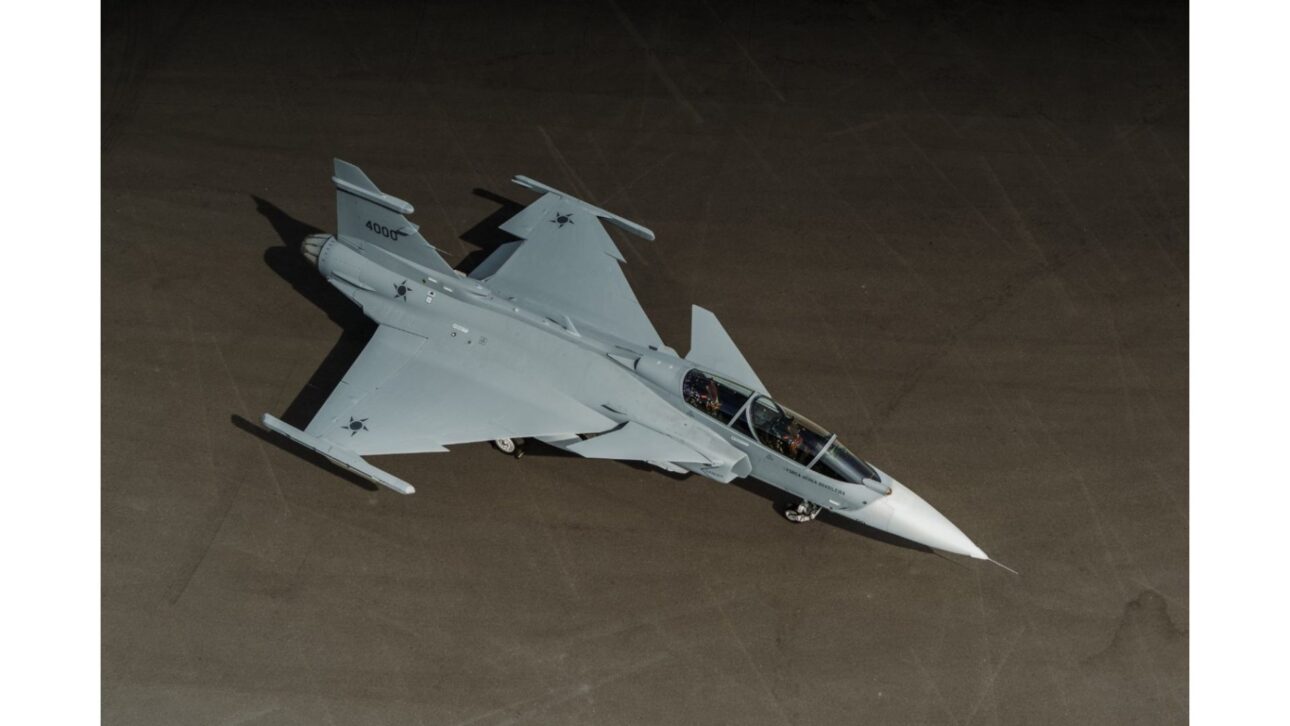
In Stockholm, alongside his Swedish counterpart, José Múcio stated that Brazil is interested in purchasing up to 20 more Gripen fighters, in the E and F versions, which would increase the ordered fleet from 36 to 56 aircraft.
-
U.S. Navy’s Ticonderoga-class Cruiser Becomes a 9,800-Ton Missile Fortress with Advanced Aegis System Capable of Tracking Hundreds of Targets

-
France’s Charles de Gaulle: The Sole Nuclear-Powered Aircraft Carrier Outside the US, Weighing 42,500 Tons and Equipped with Two Atomic Reactors

-
The military spaceplane that almost took the Cold War into orbit: Boeing X-20 Dyna-Soar was designed to re-enter above Mach 20, fly for up to 40 hours, land like a plane, and transform Titan rockets into a gateway to a new era of orbital warfare.
-
FAB bets on national drones and increases investments to strengthen the Brazilian aerospace industry



However, the two governments did not commit to deadlines. “In Defense, everything is slow,” summarized the minister, making it clear that it is an intention, not a finalized deal.
One point caught attention: according to the ministers, these new Gripen fighters should be manufactured in Brazil, which would require the expansion of national production capacity.
The revelation surprised those connected to the program, especially since the budget scenario is tight. For now, Saab, the Swedish manufacturer of the aircraft, and the Brazilian government have yet to disclose how much the second batch would cost.
The current FAB contract and production in Brazil
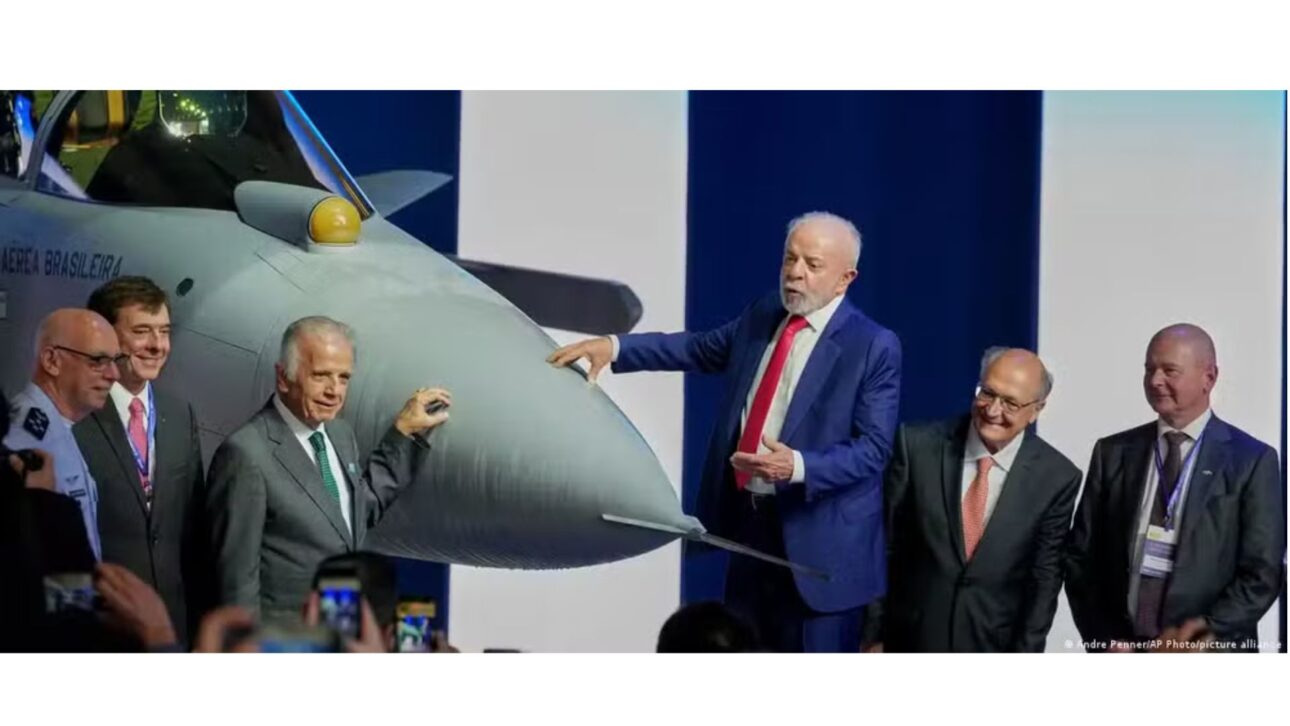
The ongoing order comes from the contract signed in 2013 and 2014, worth about US$ 4.5 billion, for 36 aircraft: 28 single-seat Gripen fighters E and eight two-seat Gripen F. So far, 11 units have already been delivered to the FAB, with deliveries having started in 2020.
The first Gripen assembled on Brazilian soil was completed in March, at the Gavião Peixoto production line, in the interior of São Paulo.
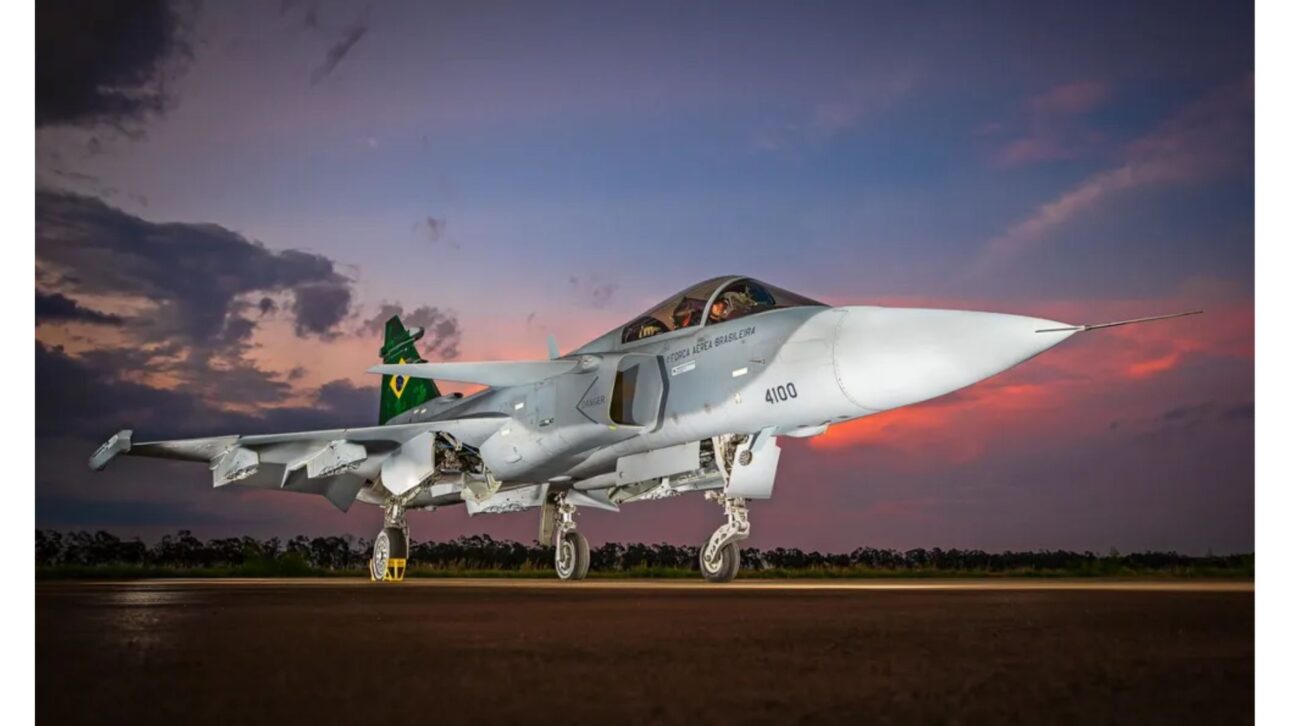
This structure makes Brazil the only country, outside of Sweden, with a fighter production line. The cooperation between Saab and Embraer also resulted in the Gripen F, a two-seater version presented on Tuesday (2) in Linköping, Sweden, after five years of work.
The FAB is expected to receive eight units of this model, while the Brazilian line will still produce 15 Gripen fighters E ordered by Colombia.
Why the expansion is considered urgent
The central argument for the urgency is the aging fleet. Each year, the older fighters of the FAB become more obsolete, harder to maintain, and more expensive, due to the difficulty of obtaining spare parts and the rapid technological evolution, further accelerated by artificial intelligence.
Although the Gripen E, combined with the Meteor missile, is currently the most advanced fighter in service in Latin America, the contracted quantity is considered insufficient for a territory of continental dimensions.
Until recently, the FAB aimed to have 66 Gripen E/F aircraft, a number well above the 56 that this week’s announcement would allow to reach.
Even so, the reinforcement with more Gripen fighters would open space for a second operational base, possibly in Santa Maria, Rio Grande do Sul, to replace the old AMX A-1.
Saab itself and the government do not rule out new batches in the future to reach the considered ideal level.
Cooperation with Sweden and the budget challenge
The partnership between Brazil and Sweden goes beyond the purchase of airplanes. The two countries have confirmed the creation of an innovation and research center in São José dos Campos, São Paulo, dedicated to the development, maintenance, and modernization of aircraft, reinforcing the broad technology transfer program that has marked the agreement since the beginning, when Brazil chose the Gripen over the Rafale and the F/A-18.
However, the biggest obstacle remains: money. The announcement by José Múcio comes amid a strong budget squeeze, and the Ministry of Defense was the most affected by the recent spending freeze, losing R$ 4.36 billion this year.
The topic is also politically sensitive in a presidential election year. In other words, the intention to purchase more Gripen fighters from Saab is clear, but how and when it will materialize is still an enigma.
Expanding the fleet of Gripen fighters could modernize Brazil’s defense, but it faces an increasingly tight budget.
Tell us in the comments if you think the country should prioritize the purchase of new fighters even with Defense cuts or if the money should go to other areas.