






 Portuguese
  Spanish


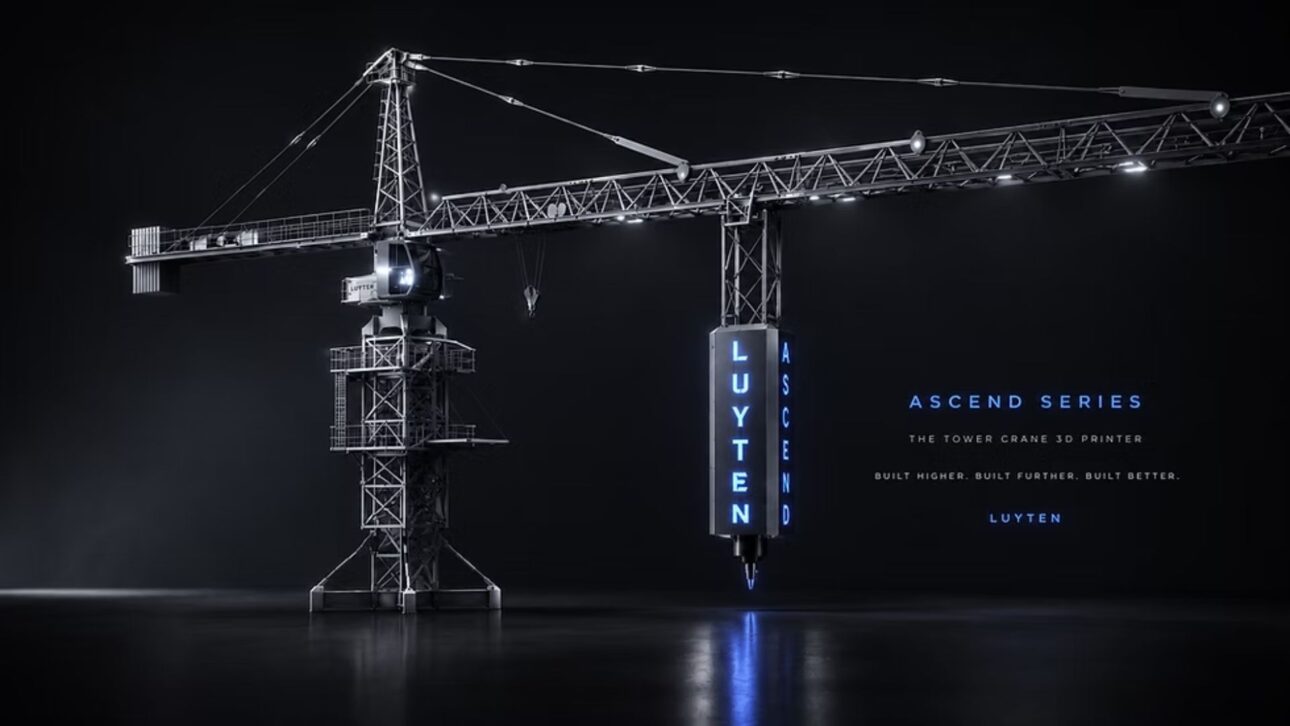
The Australian company Luyten introduced Ascend, the world’s first 3D printer attached to a tower crane. According to CEO Ahmed Mahil, it prints concrete structures up to 100 meters high from digital designs, transforming the crane into a construction robot.
An Australian company has just transformed one of the most common pieces of equipment on construction sites into a builder robot. Luyten, based in Melbourne, introduced Ascend, described as the world’s first 3D printer mounted on a tower crane, capable of raising concrete structures up to 100 meters high.
The proposal, according to founder and CEO, Ahmed Mahil, is to print buildings directly from digital designs, without reinventing the construction site. Instead of creating a new machine from scratch, the company decided to transform the tower crane itself into a robotic manufacturing system, integrating concrete, artificial intelligence, and digital construction.
How the 3D printer mounted on the tower crane works
Credit:
Luyten
The Ascend combines the structure of a tower crane with robotic concrete printing, artificial intelligence, and digital construction workflows.
-
Prefabricated Home Assembled in Days Offers Cleaner, More Efficient Construction with Factory-Made Panels, Requires Technical Design to Prevent Moisture Issues

-
Single Mother Working Three Jobs Receives 111 m² 3D-Printed Home with Concrete Walls Built in 12 Hours, Featuring 3 Bedrooms, 2 Bathrooms, and a Printer for Replacement Parts

-
Simple Technique to Restore Rusty Metal Window Grilles Gains Attention for Revitalizing Old Structures Without Full Replacement

-
Couple Transforms Suffolk’s Last 1891 Windmill into Luxurious Four-Story Home with Zinc Observation Room in England




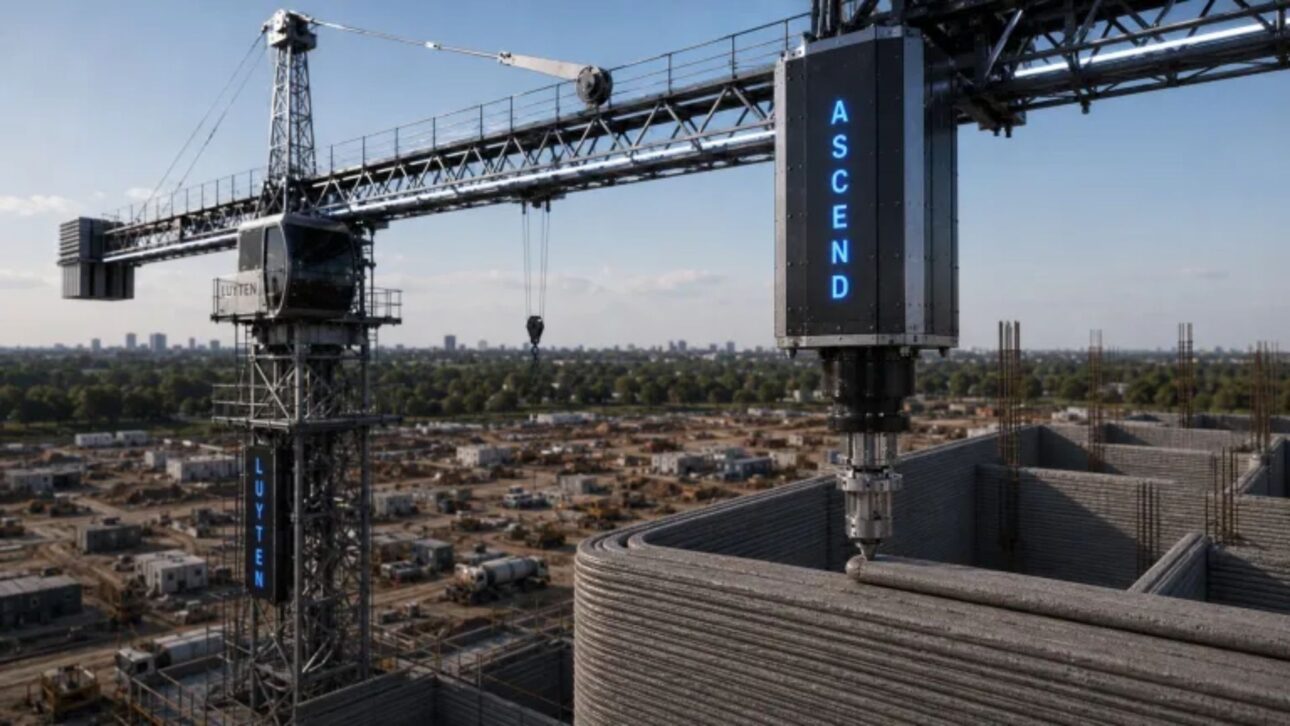
In practice, the 3D printer uses algorithms to create printing paths, optimize the process, and monitor the progress of the work in real-time.
Credit:
Luyten
According to Luyten, the equipment has a working radius of up to 45 meters, supports structures up to 100 meters high, and can be installed and put into operation in just one or two days.
For Ahmed Mahil, the difference is not just being another 3D printer for concrete. According to him, the innovation transforms one of the most important machines in construction into a system capable of erecting buildings directly from digital designs.
It is this change in role, from lifting equipment to construction robot, that the company points to as the leap in technology.
Why transform the tower crane into a robot
Luyten‘s bet goes against what the sector had been trying. According to Ahmed Mahil, the industry spent decades trying to automate the process around the tower crane, while the company decided to transform the crane itself into a robot.
The idea is to take advantage of equipment already known on construction sites, instead of requiring builders to replace all their infrastructure to adopt automation.
This reasoning has historical weight. The first modern tower crane was invented in 1949 by German engineer and entrepreneur Hans Liebherr, and since then the machine has become indispensable in construction sites around the world.
Reusing this base, instead of discarding it, is what Luyten sees as the fastest way to popularize the 3D printer in civil construction.
The Ultimatecrete material and the promise for construction
The technology depends on a special ingredient. The 3D printer is powered by Ultimatecrete, a patented printable concrete by Luyten developed for large-scale additive manufacturing.
According to the company, the material offers high strength, controlled flow, and better adhesion between layers, which would be essential for safely erecting multi-story structures.
The company also claims that the system reduces labor dependency, decreases the need for molds, and improves material utilization.
It’s worth remembering that Luyten already had a history in the field, having built the first 3D-printed house in the southern hemisphere, in Melbourne, and developed other printers before the Ascend.
The productivity gains mentioned, however, are numbers presented by the manufacturer itself.
The future and the caveats of robotic construction
The company’s discourse is ambitious. For Ahmed Mahil, the next chapter of construction will be defined by so-called intelligent infrastructure, and each tower crane has the potential to become a construction robot.
He argues that even if only a small fraction of these cranes were converted, the impact on housing delivery, infrastructure, and productivity could be enormous.
Nevertheless, caution is advised. The Ascend has just been introduced, and many of the announced benefits are promises from Luyten, which still need to be proven in real projects, at scale, and in compliance with each country’s regulations.
If the 3D printer delivers on its promises, it could help tackle the labor shortage and high demand for concrete and housing. But, like any newly launched technology, only time will tell if it will truly redesign construction sites.
Transforming a tower crane into a 3D printer that erects concrete buildings on its own seems like fiction, but it is already being tested.
Tell us in the comments if you would trust a building constructed by such a robot or if you still prefer work done by human hands.


