Portuguese
  Spanish


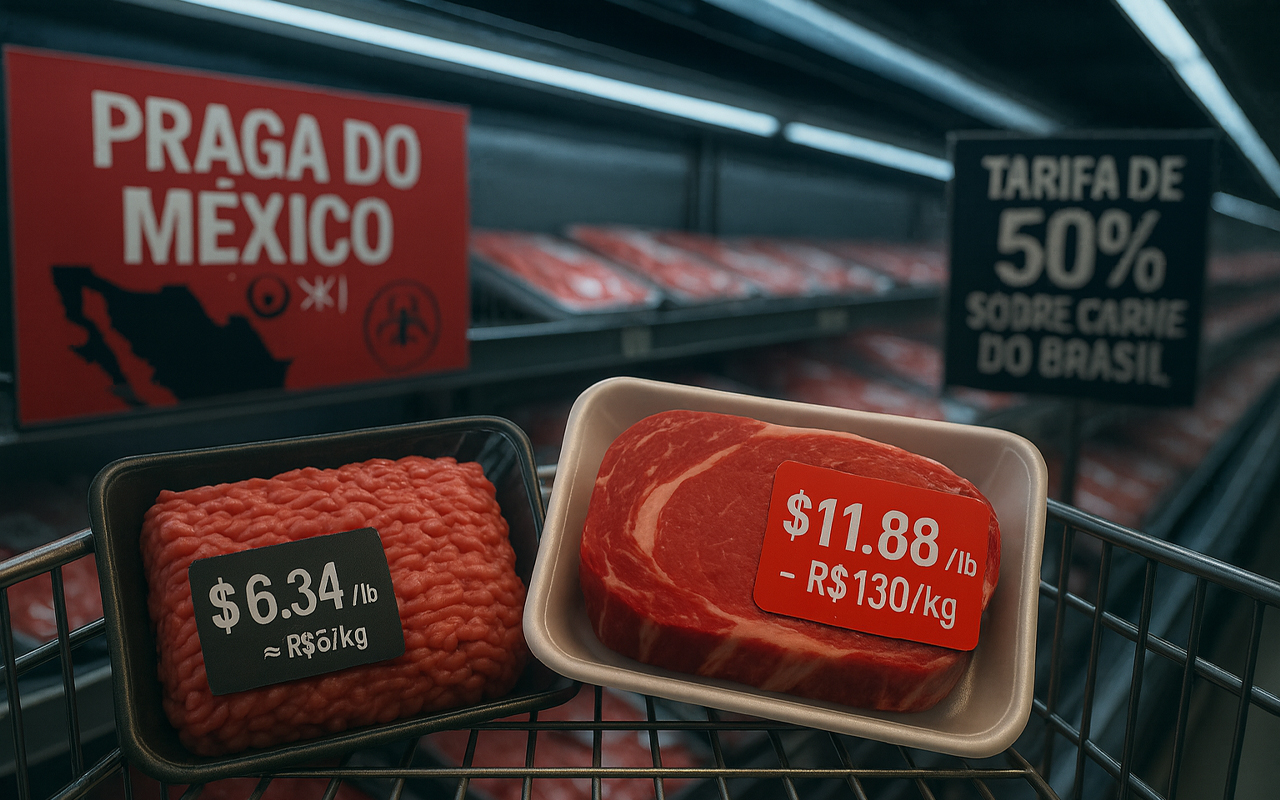


The Meat In The US Reached A Record In 2025, With Ground Beef And Barbecue Cuts Weighing On The Wallet. The Engine Of The Increase Is The Short Supply: Smaller Herd In Decades And A Slow Cattle Cycle To Recover.
Beef prices in the United States remain at a historic high. In July 2025, ground beef reached US$ 6.25 per pound and steaks were at US$ 11.88 per pound, according to the Bureau of Labor Statistics. These are consistent increases over the past months that are putting pressure on American households’ budgets.
For us Brazilians to understand the weight of this increase, a simple conversion helps. With the dollar near R$ 5.40 on August 18 and 19, 2025, these values correspond to about R$ 75 per kg for ground beef and around R$ 140 per kg for barbecue cuts, with small variations depending on the daily exchange rate. This is a high level for historical standards.
Experts remind us that the increase did not come from nowhere. The movement is cumulative and gained momentum with the shortened cattle cycle, tighter supply, and high production costs in recent years. In other words, there is no single culprit.
-
Brazilian City Makes Remarkable Leap, Becomes 4th Wealthiest in the Country with GDP of R$ 134.1 Billion

-
Controversial 6-day Workweek Elimination in Brazil Faces Economic Criticism Over Productivity Claims

-
Itaú to Refund Customers After 14 Years of Unauthorized Credit Card Charges; Agreement Includes No Interest or Adjustments, Deadline by 2028, with Potential Impact of Up to $6.5 Billion

-
Brazilian Company Grows from Bartering Soap for Food to Producing 30 Million Units Monthly, Challenges Global Giants with $100 Million Revenue and Expands into Premium Cosmetics



The Real Villain: Smaller Herd And Tight Cattle Cycle
The US cattle herd started 2025 with 86.7 million head, the lowest level since 1951, according to the USDA. On July 1, the count was 94.2 million, still 1% below what was observed in 2023. Fewer animals mean less meat in the short term.
With the short supply, the USDA reduced its projections for beef production in 2025 and is already indicating upward pressure that may extend to 2026, until the herd’s recovery advances. Rebuilding the herd is slow: replacing breeders and bringing calves to market weight takes 18 to 24 months.
Besides the cycle, climate and feed costs weighed heavily. The drought in recent years reduced pastures and increased feed expenses, forcing many ranchers to cull females and shrink the herd. There are now signs of heifer retention, but the effect on supply will only show up later.
“Plague” In Mexico And Tighter Border
Another factor that tightens supply is the advance of the New World Screwworm in Mexico. To contain the health risk, the USDA reinforced temporary border closures for the import of live cattle and announced a robust plan, including sniffer dogs, horseback patrols, and the construction of a sterile fly factory in Texas, capable of producing up to 300 million flies per week. Less entry of animals for fattening reduces future supply.
These health measures are essential to protect the American herd, but they tend to keep supply tight in the short term. The USDA itself acknowledges that monitoring at the border and combating the pest will require resources and time, affecting costs and availability.
50% Tariff Did Not Cause The Increase, But Could Elevate It Even More
The question of the moment is whether the 50% tariff on Brazilian products explains the recent surge. The short answer: not yet. The increase reflected in the data from June and July was driven by reduced stocks and climate, but tariffs could worsen the pressure going forward, especially since Brazil gained weight in American beef imports in 2025.
The US government formalized the total tariff of 50% at the end of July, effective from August, raising the cost of a significant portion of beef cuts imported from Brazil. American authorities detailed the measure in orders and official communications, and independent analyses indicate direct impacts on segments such as hamburgers, which use blends of front cuts and leaner imported meat. Likely outcome: higher input costs for fast-food chains and processors.
Market reports show that Brazilian processors have reduced or redirected shipments after the announcement, and research agencies have revised downward the projection of beef imports by the US in 2025 and 2026, precisely due to Brazil’s limitation. This reinforces the upward price bias in the American retail market.
What To Expect In 2026
With a slim herd, revised downward imports, and a still demanding health scenario at the southern border, the official outlook is for tight supply and strong prices until 2026. The USDA has cut the production estimate for 2026 in its most recent reading and continues to indicate a tight market. Without a positive supply shock, beef in the US is likely to remain expensive.
For the consumer, this translates into pressure on hamburger and barbecue cut prices, especially in the American summer, when seasonal demand increases. For companies, the situation requires more sophisticated purchasing management and supplier diversification, with greater dependence on sources like Australia and Uruguay, but fully substituting Brazilian volume is not trivial.
The main driver of the increase in beef prices in the US is the short supply caused by the smallest herd in decades. 50% tariffs and sanitary restrictions on cattle from Mexico did not trigger the surge, but add fuel to an already heated market. The trend, according to the USDA, is for high prices until 2026, with possible peaks if the herd recovery is slower than expected.