Portuguese
  Spanish


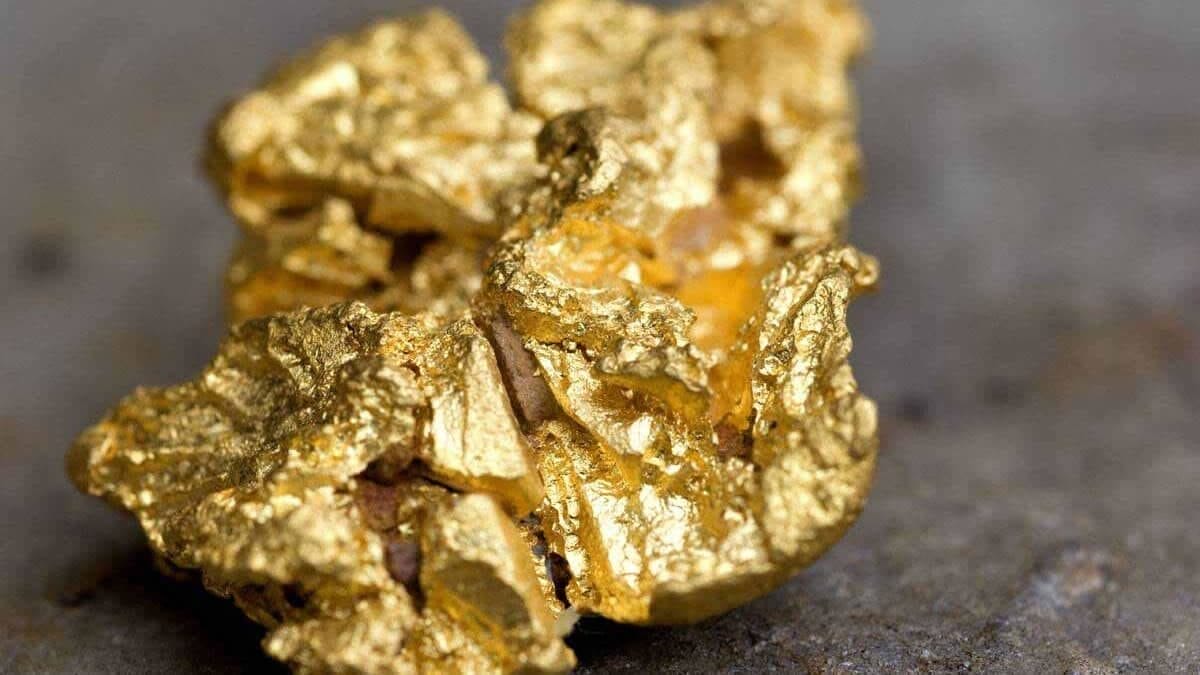

Only in the first quarter of the year, China hit record purchases, with a cumulative total of 2,063 tonnes. The People’s Bank of China has been accumulating reserves since November 2022, to the point of becoming the largest gold buyer in the world.
The price of gold collapsed on the stock exchange! For the first time in 18 months, the People’s Bank of China did not acquire gold in May, which negatively impacted the price of the precious metal, dropping by 2.7%, reaching approximately US$ 2,311 per ounce.
Since November 2022, China has been accumulating reserves, surpassing other central banks like India’s, becoming the largest gold buyer in the world.
China Stocking Gold


Chinese Acquisitions Hit Records During The First Quarter Of The Year, With A Cumulative Total Of 2,063 Tonnes
“My initial impression is that China, a significant driver of the gold rise last year, has not finished buying gold”, stated Ole Hansen, head of Commodity Strategy at Saxo Bank. According to Hansen, the pause indicates a resistance to paying record prices.
-
Brazil’s Federal Revenue Auction: iPhone 13 for $95, PlayStation 4 for $80, and Volkswagen Jetta for $2,600 Among 232 Lots Available

-
Tech Giant Oracle Lays Off 21,000 Employees and Invests $70 Billion in Artificial Intelligence

-
Chilean Giant Acquires St. Marche, Expanding from Discount to Premium Supermarkets in São Paulo’s High-End Retail Market
-
After 60 Years of Selling Cheap Milk, Brazilian Family Invests in $4,000 Equipment to Transform Farm’s Milk into Premium Sweets, Producing 2 Tons Daily and Aiming for $6.4 Million


According to the World Gold Council, Chinese acquisitions reached records during the first quarter of the year. By the end of May, the cumulative total was 72.80 million troy ounces (2,063 tonnes).
For Nicholas Frappell, global head of Institutional Markets at ABC Refinery, the initial price reaction “seems a bit technical”. “It would be surprising if the announcement represented more than a pause in the overall current demand trend from the official sector,” he added.
Although there were no changes in China’s gold balance in the fifth month of the year, recent demand has been driven by the country’s need to diversify its reserves and protect itself against the devaluation of its currency.
Why Did China Increase Its Gold Reserves And What Does It Have To Do With US Interest Rates?
There are two main reasons: growing concerns about US interest rates and debt, which has already reached US$ 34 trillion, along with the risk of economic sanctions due to geopolitical uncertainties. This is the analysis of Gilberto Cardoso, CEO of Tarraco Commodities and a member of the Brazil Export Forum.
“China is apprehensive about the level of American debt. So, it adopts a dual strategy: increases its physical gold reserves and sells US Treasury bonds. It seeks a physical asset that offers protection against inflation while simultaneously reducing its exposure to US debt. US debt and interest rates have entered a dangerous spiral, and China wants to protect itself. It’s a matter of risk diversification,” he explains.
Additionally, Cardoso notes that the Chinese fear new economic sanctions that could hinder their growth. “China faces the risk of economic sanctions. The dollar has become an American weapon, a financial instrument, and this worries China. All BRIC countries are trying to reduce their dependence on the dollar,” he adds.
There is also a simpler reason for diversification. “China is one of the countries that invests the most in dollars. It is natural for it to seek diversification into other currencies, including its own, the Yuan. Investing in gold is a natural choice for a country so exposed to the dollar. It is never wise to put all your eggs in one basket. Diversification is essential when investing,” says Paulo Roberto Feldmann, a professor of international economics at the School of Administration, Economics, and Accounting at the University of São Paulo (FEA-USP).
According to Feldmann, gold tends to appreciate during economic crises. “On the other hand, the value of gold can drop sharply. In the long term, it is not such a safe investment. Therefore, investing in gold is delicate. It is necessary to choose the moment wisely and be sure that there will be a crisis that depreciates currencies and oil, causing people to seek refuge in gold. But this is rare. I would not recommend investing in gold, as one must be very attentive to what can happen in the short term,” he concludes.
It’s Not Just China…
Russia and the US also maintain a large portion of their reserves in gold. As a safe and politically neutral asset, it offers protection against inflation, sanctions, and even seizures, as noted by Gita Gopinath, Deputy Director of the IMF, during an event at Stanford.
“The percentage of gold in the Chinese currency reserves has been increasing since 2015 – a trend that is not exclusive to China and Russia. It is important to note that during the same period, the share of gold in the currency reserves of US bloc countries has remained globally stable,” Gopinath explains.
The trend among central banks, according to an IMF study, indicates that gold purchases are motivated by concerns over the risk of economic sanctions. “Foreign exchange reserve managers tend to increase their gold holdings to protect against economic and geopolitical uncertainty, including the risk of sanctions.”
…And The Future?
For Cardoso, there is another motivation on the Chinese horizon for increasing gold reserves. He suggests looking to the past to understand the future. The Bretton Woods Agreement, signed in 1944 among the victorious countries of World War II, established rules for the international monetary system. One of those rules was the prohibition of backing currency with gold, which was suspended in 1971 by US President Richard Nixon. What does this have to do with China now?
“In the future, China plans to have a digital currency backed by gold. This is a return to the period before the post-war era. It fears that the American monetary base will lose control due to debt, resulting in unprecedented global inflation. As it wishes to maintain control of its currency and unindex it from the dollar, China is building its reserves with physical gold. It buys gold in the international market and stores it. It is a store of value that does not lose over time,” remarks Cardoso.
I would love to know what you thought of the article. Let us know in the comments section. Don’t forget to leave 5 stars and activate CPG notifications to keep up with all the news from the world. Until next time!