Portuguese
  Spanish





During the OTC Brazil, Magda Chambriard highlighted that Petrobras will continue to prioritize the exploration of oil, praising the drilling license in the mouth of the Amazon and rejecting plans to transform the state-owned company into a renewable energy company.
The president of Petrobras, Magda Chambriard, reinforced this week that the future of the state-owned company is directly linked to the exploration of oil, and not to energy transition. The statement was made during the Offshore Technology Conference (OTC Brazil), held in Rio de Janeiro, and was accompanied by the celebration of the environmental license granted to the company to drill a well in the Amazon River mouth, in the FZA-M-59 block — an area auctioned off in 2013, when Magda was still the general director of the National Petroleum Agency (ANP).
According to the executive, the authorization represents a “milestone for Amapá and for Brazil”, marking the opening of new exploratory frontiers for the country. “There is no future for an oil company without exploration,” Chambriard stated emphatically.
The New Frontier of Brazilian Oil and the Resistance to Energy Transition
As global leaders prepare to discuss, at the COP30, the end of fossil fuels and the advancement of clean sources, Petrobras continues in the opposite direction. Magda Chambriard made it clear that she does not intend to alter the essence of the state-owned company, even in the face of international projections indicating a decline in oil demand starting in 2030.
-
The Chamber releases R$ 10 billion to hold the price of diesel until December and proves that Brazilian fuel remains tied to Congress.

-
It’s official: Petrobras takes 75% of block 3 in São Tomé and Príncipe and debuts as an offshore operator outside South America.
-
With a record production of nearly 3 million barrels per day, Petrobras resumes importing diesel in July, highlighting the bottleneck in Brazilian refining.
-
Qantas and Airbus Invest in Company Aiming to Convert Unsorted Household Trash into Jet Fuel


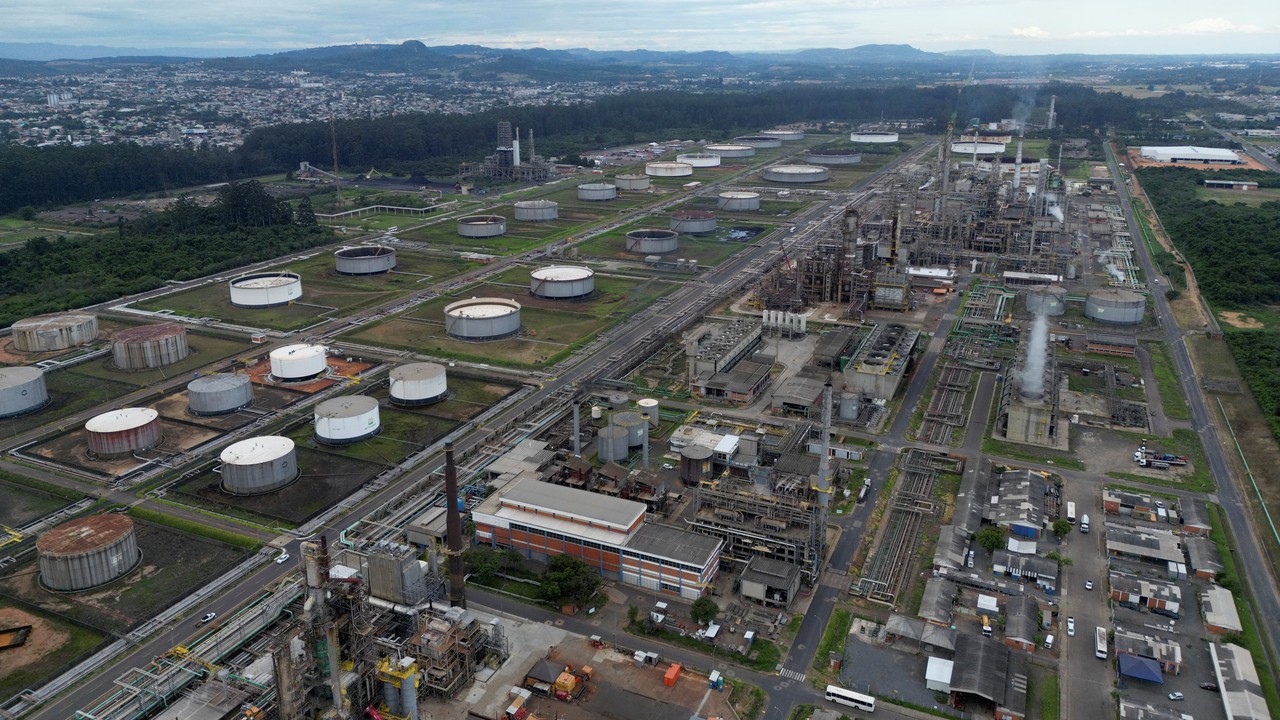

According to the president, the exploration of the Amazon River mouth symbolizes a “sustainable production” — a term that, in this context, refers to the economic continuity of the sector and not to environmental sustainability. Petrobras’ strategy, therefore, prioritizes increasing the production of fossil oil and gas, contradicting recommendations from international organizations and climate specialists.
Economic and Environmental Risks of a Petrobras Centered on Oil
Petrobras’ insistence on maintaining an almost exclusive focus on fossil fuels raises concerns among environmentalists and market analysts. There is fear that by ignoring the global movement towards decarbonization, the company will accumulate stranded assets — investments in areas that may lose value as the world reduces its dependence on oil.
Recent reports from the International Energy Agency (IEA) warn that the transition to renewable sources is likely to accelerate in the coming decades. If the Paris Agreement is met, global demand for oil could drop drastically, making many high-cost exploration projects, such as those in the Amazon region, unfeasible.
Nonetheless, the Petrobras Strategic Plan 2024-2029 maintains a significant disparity between investments in oil exploration and those allocated to renewable sources or low-carbon fuels. Despite the discourse about a “just energy transition,” resources allocated to sustainable projects remain a tiny fraction of the total budget.
The Role of the Climate Observatory and the Criticisms of the State-Owned Company
In September, the Climate Observatory launched the document “The Petrobras We Need”, proposing a restructuring of the company’s business model. The study argues that the company could reduce investments in fossil fuels and increase them in clean energy without compromising its profitability.
According to the organization, Petrobras has the technical and financial capacity to lead the energy transition in Brazil but lacks political and strategic will. The state-owned company was invited to participate in the study’s launch, but did not send representatives or respond to the invitation.
For specialists, the company’s absence from the debate reflects an institutional resistance to accepting the need for change. “Petrobras still sees itself as an oil company, not an energy company,” members of the Observatory assess.
The Global Alert and the Risk of Losing Competitiveness
The statement from the president of Petrobras comes at a time of strong international pressure. The Secretary-General of the UN, António Guterres, recently declared that the “era of fossil fuels is coming to an end”, highlighting that companies that do not adapt quickly will lose their space in the global market.
However, Magda Chambriard continues to bet on exploration, arguing that it ensures “energy security” for the country. Experts, however, consider the argument questionable, warning that insisting on this model could isolate Brazil in discussions about climate and sustainable development.
The concern also extends to shareholders, who view the state-owned company’s stance with caution. With the lack of significant investments in innovation and clean energy, Petrobras risks losing competitiveness against international companies that are already advancing in decarbonization and energy diversification projects.