Portuguese
  Spanish


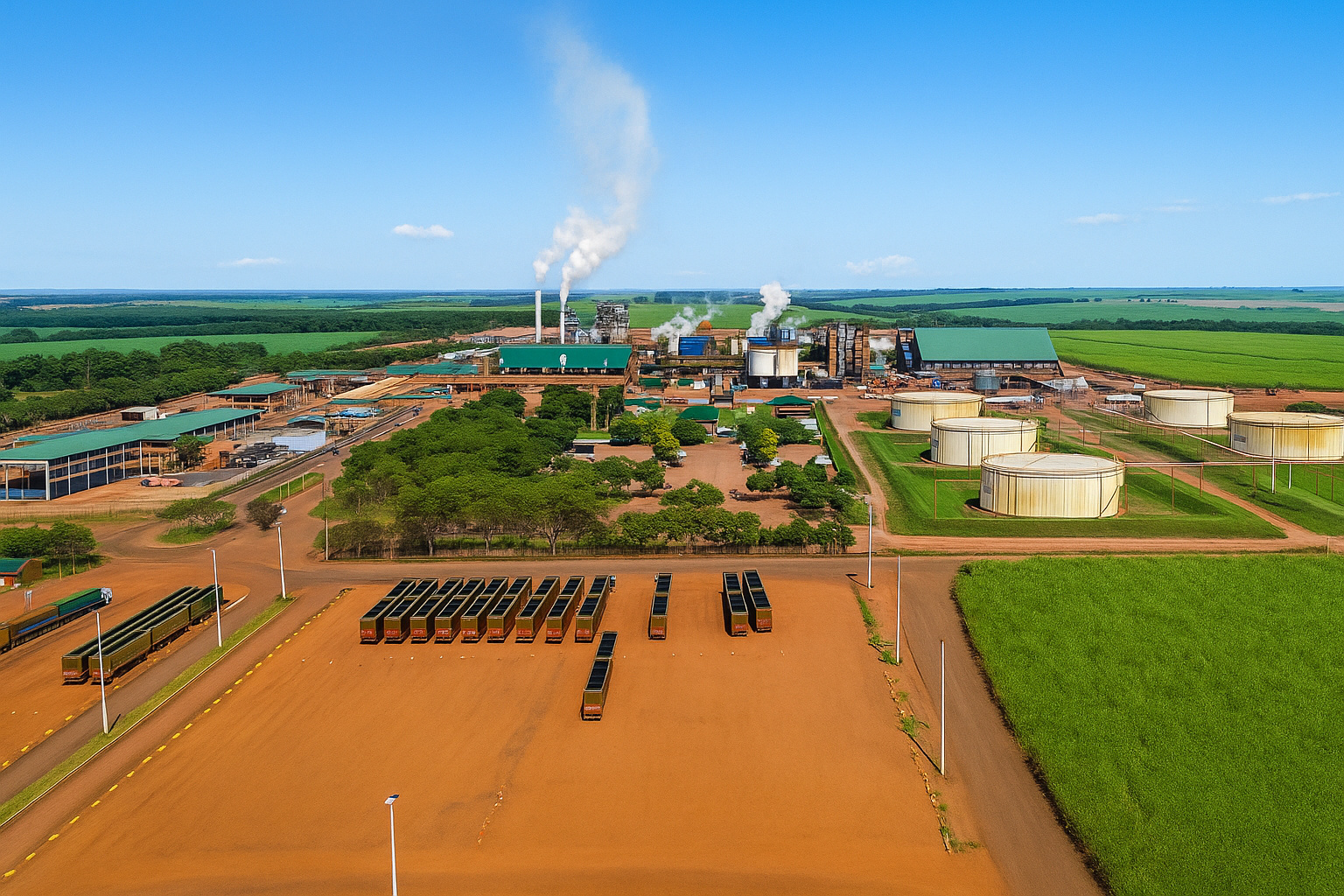

Discover How the First Biomethane Plant in Minas Gerais Transforms Sugar Cane Waste into Clean, Sustainable, and Innovative Energy.
The inauguration of the first biomethane plant in Minas Gerais undoubtedly marks a historic moment in the state’s journey towards sustainable energy transition.
Moreover, located in Tupaciguara, in the Triângulo Mineiro region, Zeg Biogás, a result of the partnership between Zeg and Bioenergética Aroeira, pioneeringly produces biomethane from vinasse, a byproduct of sugar cane.
Thus, this project solidifies Minas Gerais as a hub of innovation in the energy sector and, at the same time, reinforces the importance of public policies and incentives aimed at a low-carbon economy.
-
Brazil Advances with JetBio’s Megaproject to Build the World’s Largest Ethanol-Based Sustainable Aviation Fuel Plant, Aiming to Become a Global Exporter

-
Brazil on Track for Record 40.7 Billion Liters of Ethanol in 2026/27 Season, Driven by Corn Ethanol
-
Petrobras Approves $1.2 Billion Refinery in Brazil to Produce Aviation Fuel and Diesel from Plants
-
US$ 7 billion, green hydrogen, and steel with up to 95% less CO₂: the first green steel plant on the planet emerges in Sweden and targets Brazil as the next chapter


Historically, Minas Gerais has always stood out for its economic and productive relevance on the national scene, especially in the areas of mining, agribusiness, and energy generation.
Additionally, the exploration of natural resources began during the colonial period, with gold and precious stones mining, and evolved over the centuries into a more diversified industrial sector, including electricity generation, ethanol, and bioelectricity.
This way, the advancement of biomethane in Minas Gerais strengthens the local energy matrix, reducing dependence on fossil fuels and promoting renewable alternatives.
Besides the energy aspect, the production of biomethane also generates positive environmental impacts.
While transforming agro-industrial waste into renewable fuel, the plant reduces greenhouse gas emissions and decreases soil and water pollution.
Therefore, this approach demonstrates that it is possible to reconcile economic development and environmental preservation, creating a sustainable model for other Brazilian states.
Investment and Economic Impact
The venture received an investment of R$ 78.6 million, reflecting the confidence of the private sector and the state government in Minas Gerais’ ability to establish itself as a reference in clean energy.
Additionally, state government officials, representatives from local municipalities, directors of the involved companies, and energy sector leaders attended the inauguration.
Thus, the presence of these actors reinforces the strategic importance of the project, which combines technological innovation, environmental responsibility, and economic development.
Zeg Biogás has already commenced operations and plans to employ 70 workers by the end of the year, among direct and indirect positions.
Moreover, the plant utilizes vinasse, which was traditionally discarded or used in a limited way, transforming it into biomethane, a renewable fuel with high potential for decarbonization.
In this way, this technological advancement contributes to reducing greenhouse gas emissions and reinforces the state’s commitment to a cleaner and more efficient energy matrix.
New investments in renewable energy, like Zeg Biogás, also stimulate local economic development.
For instance, small and medium suppliers of equipment and services benefit from the demand generated by the plant’s operation, creating a positive multiplier effect in the regional economy.
Additionally, job creation, coupled with technical training, strengthens the local workforce and prepares Minas Gerais to welcome future biofuel projects.
Biomethane in the Energy Context
The biomethane from Minas Gerais arises in a context of growing global concern about climate change and the need for energy diversification.
Furthermore, in Brazil, similar initiatives have begun to emerge in recent years, encouraged by energy transition policies and the appreciation of renewable sources.
Thus, while the country maintains a relatively clean electricity matrix, with an emphasis on hydropower, the incorporation of biomethane and other biofuels broadens the range of sustainable energy sources and reduces environmental impacts.
During the inauguration ceremony, they also launched the Biorrota BR-050 project, which will connect plants and consumers of clean energy in the Triângulo Mineiro.
In this way, the project supports companies in adopting clean technologies, promoting the reduction or elimination of carbon emissions throughout the production chain.
Therefore, this integration between producers and consumers of renewable energy demonstrates the potential of an organized and planned low-carbon economy, where biomethane does not function solely as fuel, but as part of a broader sustainable development strategy.
The production of biomethane also aligns with global trends of the circular economy, which value the re-utilization of waste and the reduction of waste.
On the other hand, Minas Gerais, with a strong presence in agribusiness, leverages this logic to consolidate its position as a national leader in innovative energy solutions.
For instance, the use of vinasse to generate biomethane exemplifies how technology and sustainability work together to meet economic and environmental demands.
Minas Gerais’ Commitment to Renewable Energy
The state’s deputy secretary of economic development, Frederico Amaral, stated that the inauguration of Zeg Biogás reinforces Minas Gerais’ commitment to a solid and sustainable energy transition.
Furthermore, the state already comprises 32.4% of the energy matrix with renewable sources, above the national average.
Biomass, including agricultural waste like vinasse, represents the third most relevant source of the local matrix, highlighting Minas Gerais’ potential to attract investments in the sector.
Therefore, the biomethane from Minas Gerais integrates a strategy that combines innovation, sustainability, and economic development.
Historically, the production of biomethane in Brazil began to explore organic waste and byproducts from agribusiness.
Since the 2000s, studies and pilot projects have analyzed the energetic potential of vinasse, pig farming waste, landfills, and other organic materials.
Thus, Minas Gerais, with its agro-industrial tradition and strong presence in the sugar cane sector, transformed this opportunity into energy, reducing environmental impacts and strengthening the local economy.
The growth of biomethane is also supported by international agreements and policies, which encourage the reduction of carbon emissions and the use of renewable fuels.
In this way, Minas Gerais strengthens its energy matrix and positions itself as a protagonist in global sustainability goals, attracting attention and foreign investment for energy innovation projects.
Sustainability and Job Creation
The investment attraction director of Invest Minas, Leandro Andrade, highlighted that biomethane integrates the new energy matrix of Minas Gerais, uniting innovation, job creation, and environmental responsibility.
Moreover, projects like Zeg Biogás demonstrate that it is possible to reconcile economic growth and sustainability, creating quality jobs and promoting energy solutions that respect the environment.
This approach connects to international objectives, such as the Race to Zero initiative, which encourages companies and governments to reduce carbon emissions.
The impact of biomethane from Minas Gerais goes beyond energy generation.
By utilizing vinasse and other waste, the project promotes a circular economy, reduces waste, and transforms byproducts into valuable resources.
Additionally, it diversifies the energy matrix, decreases vulnerability to fossil fuel crises, and strengthens energy security.
Consequently, investments in biofuels and renewable energies generate simultaneous environmental, social, and economic benefits.
The training of professionals and technological innovation propels Minas Gerais to become a reference in research and development in the biomethane sector.
Furthermore, local universities and research centers capitalize on this demand for technical knowledge, promoting partnerships between education, science, and industry, and fostering more efficient and sustainable energy solutions.
Minas Gerais as a Hub for Clean Energy
The inauguration of the first biomethane plant in Minas Gerais highlights the state’s potential as a leader in sustainable energy solutions.
Moreover, the integration of clean technologies, incentive policies, and strategic partnerships between the public and private sectors creates a favorable environment for new investments.
Therefore, Minas Gerais is poised to become a reference hub for biomethane and other renewable sources, consolidating a more sustainable energy future.
In summary, the Zeg Biogás project marks the beginning of a new era for biomethane in Minas Gerais, standing out for technological innovation, waste utilization, and positive impact on the local energy matrix.
Additionally, the initiative combines economic development, job creation, and environmental responsibility, placing the state on a leadership path in renewable energies.
The history of biomethane in Minas Gerais, still recent, shows that strategic investments and effective public policies transform opportunities into concrete results, benefiting society and the environment in a lasting way.
The future of biomethane in Minas Gerais looks promising, with prospects for production expansion, creation of new distribution routes, and integration with industrial and residential consumers.
<pThus, projects like Biorrota BR-050 and Zeg Biogás evidence that the state embraces the energy transition, solidifying itself as an example of how innovation, sustainability, and economic development walk hand in hand.
Therefore, Minas Gerais reinforces its role as a protagonist in building a greener, more efficient, and sustainable Brazil.