






 Portuguese
  Spanish
  3 min of reading
  2 comments


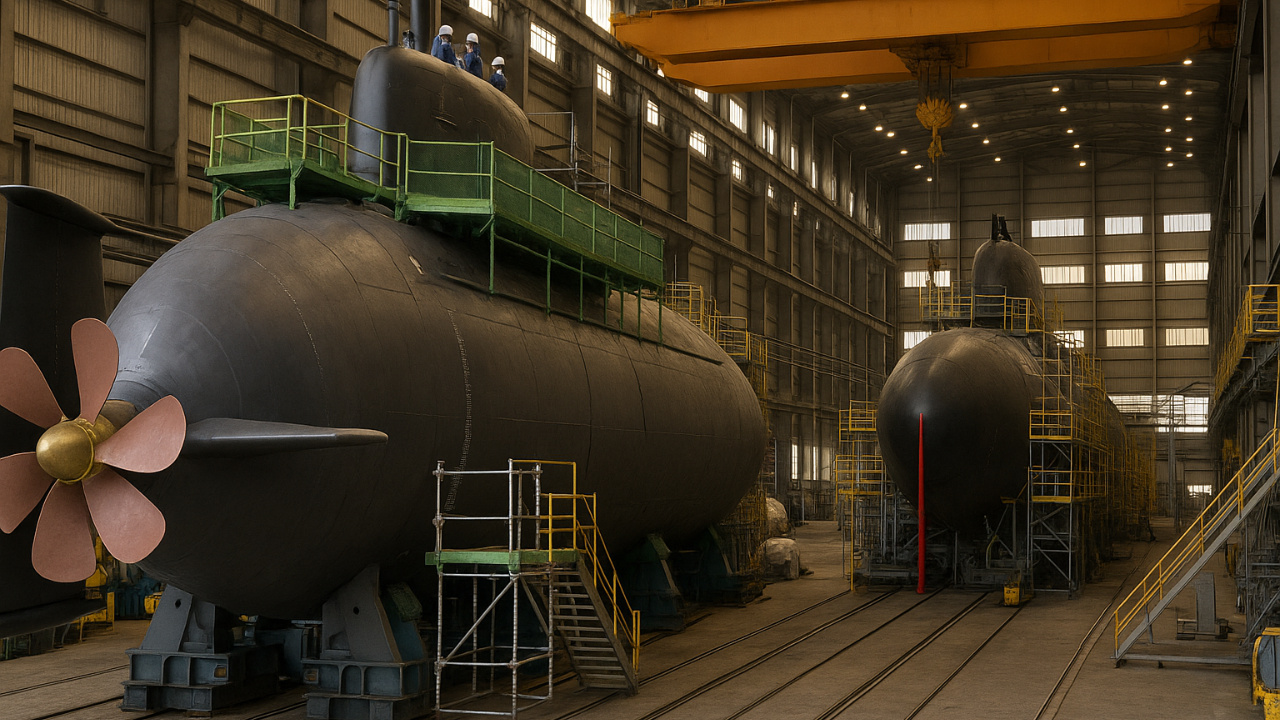


Navy Advances in the Construction of Brazil’s First Nuclear Submarine and Begins Work on the Álvaro Alberto Submarine.
The Navy advances in the construction of Brazil’s first nuclear submarine by announcing, on Wednesday (26), the official transition to the most complex stage of the Submarine Development Program (PROSUB).
The announcement took place at the Naval Complex in Itaguaí (RJ), where the agency presented the conventional submarine Almirante Karam (S43) and showcased the armament of the Tonelero (S42).
Transition to the Nuclear Submarine Marks the Most Important Moment of PROSUB
The presentation of S43 and the advancements on S42 confirm that the Navy is making progress in the construction of Brazil’s first nuclear submarine with the completion of the development cycle of conventional vessels.
-
North Korean Fiasco: Launch of the Largest Warship Ends in Sinking

-
While giant ships still burn heavy fuel and the maritime sector races against climate targets, Maersk and Vale are starting to bet on ethanol as a new route to reduce emissions at sea.

-
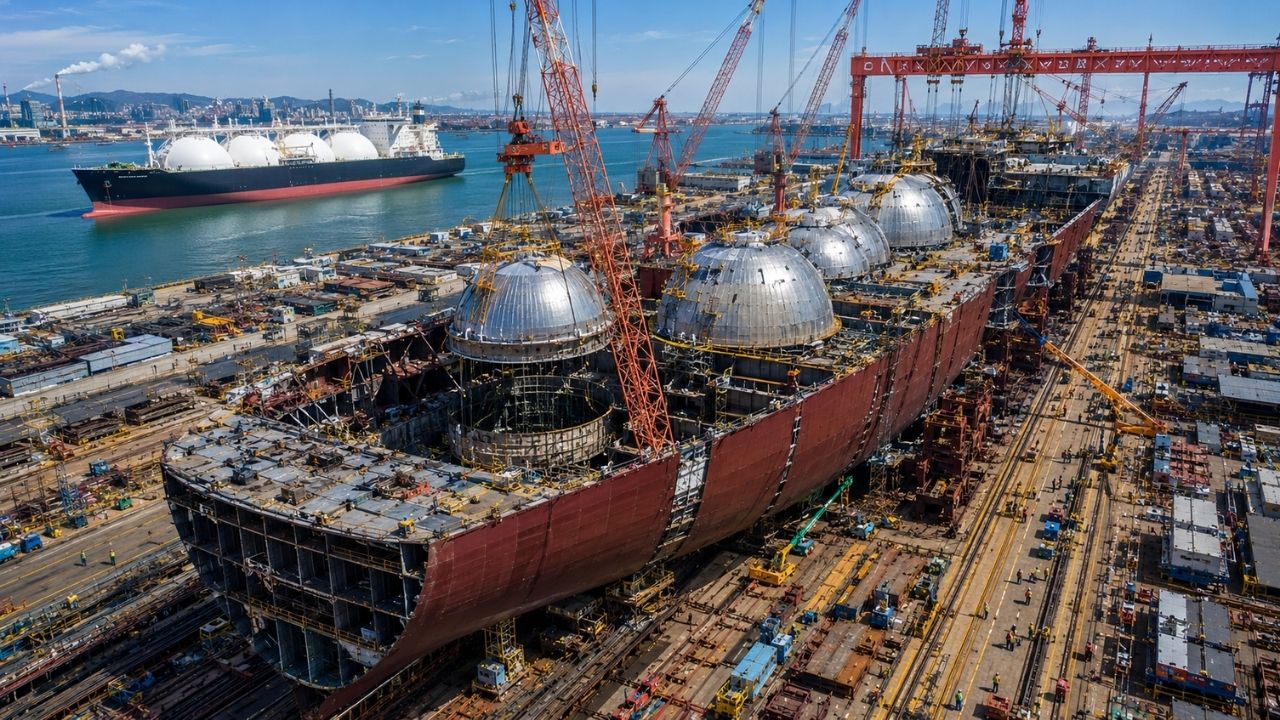
China begins construction of the world’s largest LNG ship, a 344-meter giant capable of supplying 4.7 million homes for a month, carrying 271,000 m³ of gas, and placing QatarEnergy in the largest naval order ever recorded in world history.
-
China is designing a container ship with a thorium nuclear reactor that will operate for 40 years without refueling, and the 25,000-container giant from Jiangnan Shipyard will cross oceans without emitting carbon in an industry that burns 300 million tons of fuel per year.



Now, PROSUB, developed in partnership with Naval Group from France, enters the most sensitive and technological phase of the program: the total concentration on the construction of the nuclear submarine Álvaro Alberto.
This new phase will be conducted at the Itaguaí shipyard, where preparations for the initial structural stages of the vessel are already beginning, focusing initially on the stern.
According to the Navy, this is a decisive moment because it involves technologies that only five countries master: the United States, China, Russia, France, and the United Kingdom.
Thus, Brazil will become the first country in the southern hemisphere capable of designing and manufacturing a nuclear-powered submarine.
Álvaro Alberto Submarine: Why Is It So Strategic for Brazil
The Navy advances in the construction of Brazil’s first nuclear submarine because the vessel will represent an unprecedented leap in autonomy and naval power.
Expected to enter service starting in 2034, the Álvaro Alberto will have nuclear propulsion based on a pressurized water reactor, the most commonly used model in the world and considered highly safe.
The construction involves complex challenges of electromechanical systems and control structures that will form the technological heart of the submarine.
The advancement is the result of decades of national research.
This energy density allows the submarine to operate submerged for long periods without the need for refueling.
Autonomy, Surveillance, and Defense: The Advantages of Nuclear Technology
With the Álvaro Alberto, Brazil’s deterrence capability will increase significantly.
Nuclear submarines have far superior autonomy compared to conventional vessels, allowing for prolonged missions of defense, surveillance, and reconnaissance.
Furthermore, the Navy points out that the developed technology will reduce dependence on foreign suppliers in sensitive areas of the defense industry.
This opens up possibilities for future exports, strengthening the national industry.
Brazil Reaches a New Level on the International Scene
As the Navy advances in the construction of Brazil’s first nuclear submarine, the country also increases its strategic relevance on the global stage.
The Álvaro Alberto submarine honors one of the main architects of the Brazilian nuclear program and symbolizes the historical effort for technological sovereignty.
Thus, when it enters service, it will place Brazil alongside the world’s major naval powers.
For the Navy, PROSUB represents more than a military advancement.
It is a vector for innovation, generation of highly qualified jobs, and strengthening of the defense industrial base.
Thus, the country inaugurates a maritime and technological prominence that will have a direct impact on national security and Brazil’s international projection in the coming decades.




Tadinho doa gaduinos!!!! Kkkkkk engracado q de tao militares e patriotas q sao…nada fizeram pelo exercito, marinha e aeronautica!!! Me corrijam se falei besteira
Tudo muito bonito mas a Marinha sozinha não faz nada. Quem decide e financia é o governo federal, no caso, o Presidente Lula que lançou o PROSUB em 2008, assinou o contrato de transferência de tecnologia de tecnologia com o Presidente francês Sarkozy, e providenciou os bilhões de reais necessários à construção da fabrica e do estaleiro de submarinos brasileiros e ao financiamento da construção desses quatro submersíveis convencionais, os primeiros a serem construídos no Brasil.