Portuguese
  Spanish


Brazilian Researchers Reach Unprecedented Milestone by Developing Genetically Edited Calves with Greater Heat Resistance, Paving the Way for Changes in Tropical Climate Livestock. Experiment Already Shows Positive Results in Newborn Animals.
The birth of the first genetically edited calves in Brazil represents an unprecedented advancement in Latin America, with potential to transform national livestock in light of climate change.
Developed from in vitro fertilized embryos, the animals are part of a research project by the Brazilian Agricultural Research Corporation (Embrapa) Dairy Cattle, in partnership with the Brazilian Angus Association.
The main objective is to create cattle that can withstand high temperatures, a condition increasingly present in different regions of the country.
-
The industrial waste that even recyclers didn’t want has gained value in the interior of Bahia: two entrepreneurs invested R$ 2.8 million to transform 350 tons per year of foam, rubber, and plastic into boards that can replace wood and MDF.

-
A city with 8,000 inhabitants will receive R$ 25 billion to host the largest single-stage pulp mill in the world, with a production of 3.5 million tons per year and a cost of R$ 45 million.

-
He left India for Oman in 1976, entered through the door of luxury finishes, and took Sobha to the premium real estate market in the Middle East.

-
What is a red flashlight used for, after all? See why it is so commonly used at night.



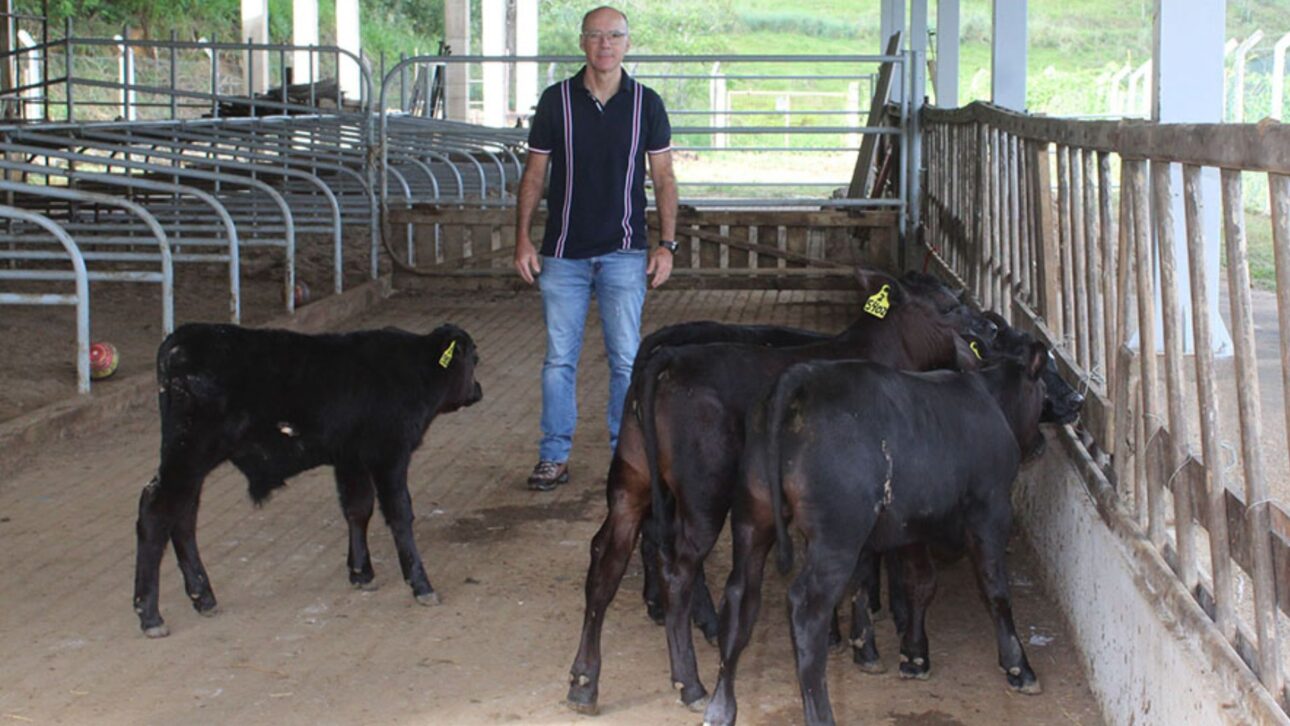
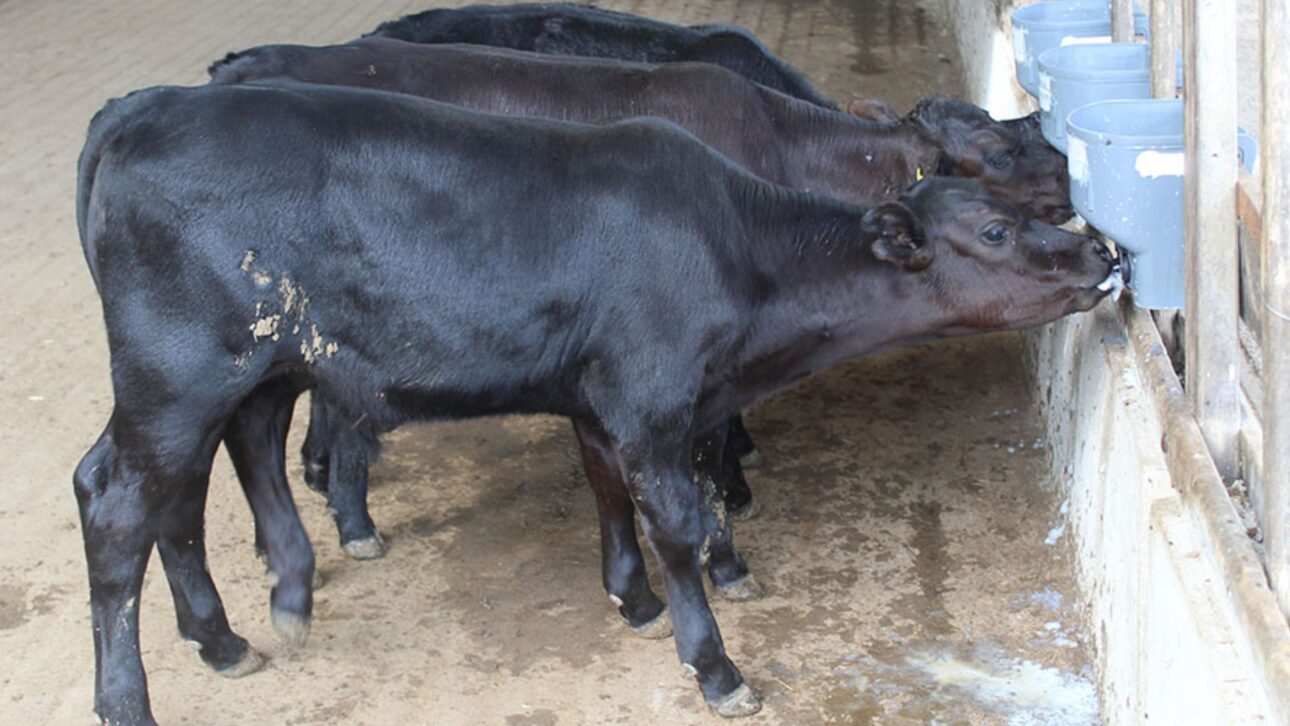
Between the end of March and the beginning of April 2025, five calves were born, two of which already showed short, smooth coats, a characteristic associated with greater heat resistance.
CRISPR/Cas9 Technique and the First Results
The specialists responsible for the experiment used the CRISPR/Cas9 technique, internationally known as a “molecular scissors” for allowing precise modifications in DNA.
As explained by Luiz Sergio de Almeida Camargo, veterinarian and researcher at Embrapa, the method was optimized for application in laboratory-fertilized bovine embryos, without compromising embryo quality or pregnancy development.
According to Camargo, 40% of the animals born already exhibit the desired genetic characteristic, showing positive results early in the first stage of the experiment.
Brazil is among the few countries that have succeeded in producing genetically edited calves, and the expectation is that it will become a reference in the use of biotechnology to adapt herds to the tropical climate.
This innovation could mean a strategic response to increasing challenges posed by rising global temperatures, a phenomenon already identified by international institutions such as the Food and Agriculture Organization of the United Nations (FAO) and the World Meteorological Organization (WMO).
Angus Breed Adaptation and the Climate Challenge
The choice of the Angus breed for the application of gene editing was not coincidental.
Internationally recognized for the quality of its meat, precocity, and high yield, the Angus breed originates from cold climate regions in the United Kingdom.
In Brazil, however, these animals face difficulties coping with thermal stress, especially during the intense summers in the South and in tropical or subtropical climates.
Excessive heat compromises not only animal welfare but also negatively impacts fertility and the development of Angus cattle.
Through the genetic editing of the coat, the focus is on increasing the animals’ ability to dissipate heat, stabilizing body temperature even under high environmental temperatures.
The researchers believe that by increasing the animals’ heat resistance, it will be possible to enhance the productivity and fertility of the Angus breed, facilitating its raising in regions previously considered unsuitable for the species.
Difference Between Gene Editing and Transgenesis
Unlike transgenesis — a technique that involves the insertion of genes from other species — the gene editing performed in the Brazilian experiment did not introduce external genetic material.
According to the regulations of the National Technical Commission on Biosafety (CTNBio), genetically edited animals are only considered transgenic when there is the presence of exogenous DNA.
In this case, the modification occurred in the gene of the prolactin receptor, responsible for the development of short and smooth hair, a characteristic that favors adaptation to heat.
CTNBio evaluates each situation individually, considering the origin of the genetic alterations.
Genetic Selection and Acceleration of Improvement
Mateus Pivato, executive director of the Brazilian Angus and Ultrablack Association, highlights that the result obtained through gene editing would only be possible with natural breeding over about 20 generations, a process that would take decades.
According to him, the association has been working for more than 15 years on the selection of animals with shorter coats, a practice that contributed to providing the genetic material used in the research in partnership with Embrapa.
Impact on Brazilian Livestock
Gene editing for heat resistance paves the way for a livestock industry more adapted to the new climatic demands of the 21st century.
Animals with short and smooth coats, such as the genetically edited calves, can maintain high levels of productivity and fertility even in hot environments, reducing economic losses and promoting greater animal welfare.
Moreover, the technique used allows for considerable acceleration of genetic improvement in herds, without the need for multiple generations of selective breeding.
The expectation is that, in a few years, the genetic material of these animals will be available to rural producers throughout Brazil.
According to projections by Luiz Sergio de Almeida Camargo, within two to four years, the offspring of these genetically edited calves may be incorporated into commercial herds, expanding the dissemination of heat resistance characteristics.
Expansion of the Technique to Other Breeds
The advancements achieved with the genetic editing of the Angus breed may also benefit other important breeds for national livestock.
Camargo states that the same procedure can be adapted for Gir breed animals, aimed at milk production, and for the Nelore breed, focusing on improving meat quality characteristics, such as tenderness and texture.
However, the success of these applications depends on the accurate identification of mutations that produce the desired phenotypic effects in each breed.
It is important to emphasize that each new experiment needs to be evaluated rigorously, considering not only economic benefits but also bioethical issues and food safety, always in accordance with the regulations established by regulatory bodies such as CTNBio.
Next Steps and Perspectives
The next stage of the Brazilian project consists of testing the genetically edited calves under real heat conditions and verifying whether the mutation will be transmitted to subsequent generations.
The researchers also intend to create a founder population of these animals, from which it will be possible to expand the desired trait to larger herds throughout the national territory.
The sector’s expectations are high, as by allowing the extensive breeding of high-quality breeds in hot climate regions, gene editing can make Brazilian livestock even more competitive in national and international markets.
Bioethical Debate and Regulation
Gene editing in animals raises discussions about ethics and biosafety.
According to Salmo Raskin, scientific director of the Brazilian Society of Medical Genetics and Genomics, despite the rapid advancement in the animal area, the application of gene editing in humans faces stricter ethical and legal limitations.
While in livestock the goal is to enhance economically valuable traits, in human medicine, international regulations prohibit genetic manipulations in germ cells due to the risks of unintended side effects.
In Brazil, current legislation stipulates that each case of animal gene editing must undergo careful evaluation, considering not only food and environmental safety but also the welfare of the animals involved.
Future of Livestock with Genetically Edited Animals
With the first positive results, Brazil can take a leading position in the development and application of gene editing for adapting cattle breeds to the tropical climate.
The adoption of the CRISPR/Cas9 technique in national livestock has the potential to boost productivity, ensure sustainability, and increase the international competitiveness of the sector.
Given this advancement, what will be the impact of gene editing on beef production and the future of livestock in Brazil, especially in an increasingly intense climate change scenario?