Portuguese
  Spanish


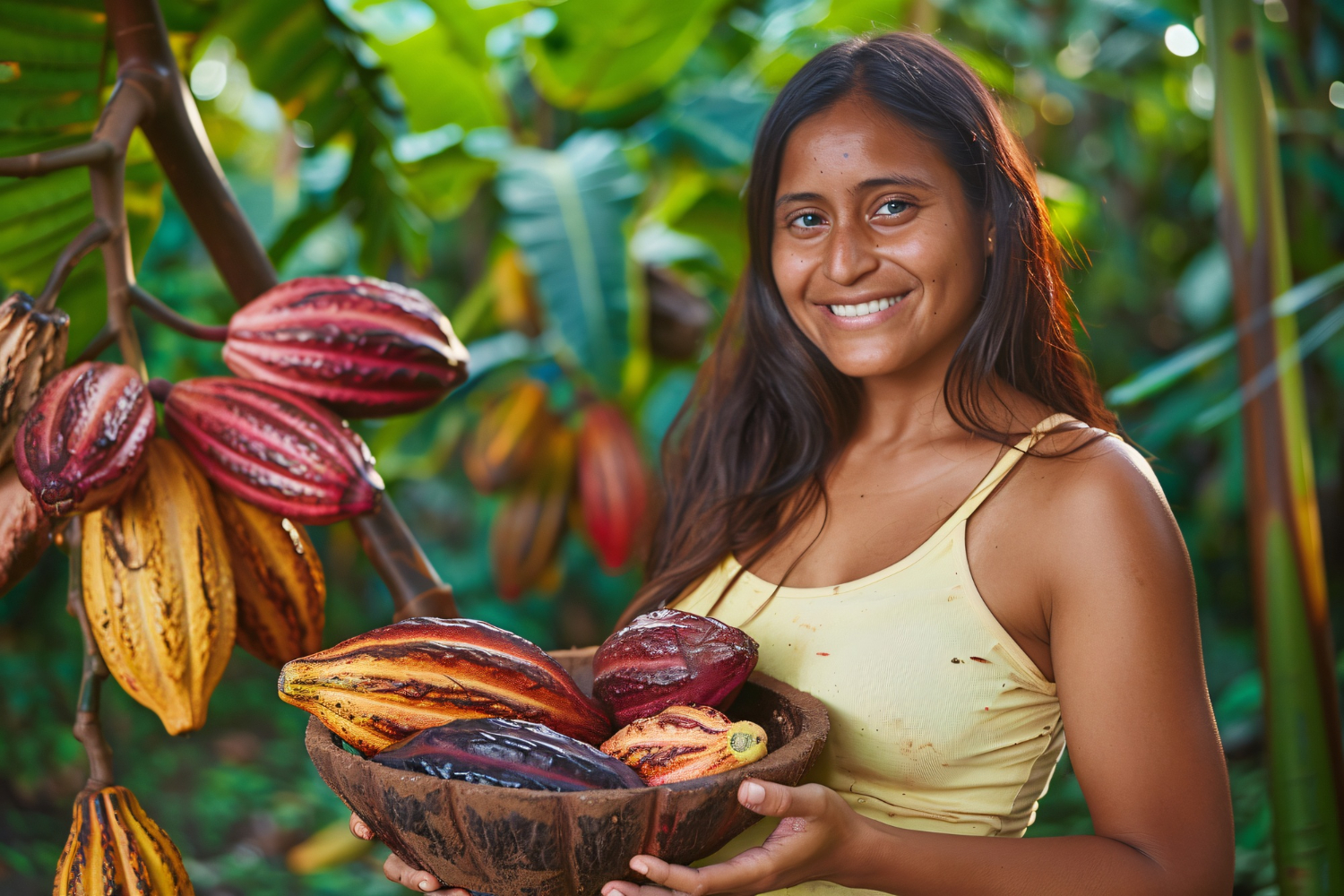

Innovation in Planting and Irrigation Drives Cocoa Production in Minas Gerais, Highlighting the North of the State on the Global Scene with Scientific Support and Sustainability
The cocoa production in Minas Gerais gains global prominence thanks to a pioneering cultivation model developed in the North of the state, according to a report published.
In a region known for its dry climate and high temperatures, research from the State University of Minas Gerais (Unimontes), with support from the Foundation for Research Support of the State of Minas Gerais (Fapemig), is transforming the local agricultural landscape.
The method uses full sun planting, combined with irrigation systems and intercropping with banana trees, a combination that has been revolutionizing regional productivity.
-
El Niño may boost corn and soybean harvests in Brazil and Argentina, offering potential relief for global food prices.

-
Japanese Wagyu Gains International Fame for Its Intense Marbling, Tender Cuts, and High Prices in Brazil
-
Brazilian Farmers with Basic Education Create Backyard Machines That Win National Invention Contest, Beating 242 Projects

-
Brazilian Farm Innovates with Cage-Free Chickens, Producing 3,300 Odorless Eggs Daily


Currently, about 480 hectares are planted with cocoa, but the projection is to reach three thousand hectares by 2026.
This progress places the Northern region of Minas on the world cocoa map, driving jobs, innovation, and sustainable development.
Sustainable Cultivation with Agricultural Technology and Productive Consortium
Agronomist Victor Martins Maia, a specialist in plant science and coordinator of the Technological Center for Cocoa Cultivation in Non-Traditional Regions (CTCRNT), leads the research supporting this revolution.
According to him, the investment of R$ 3.5 million from Fapemig has allowed for the development of studies on irrigation, fertilization, and varieties of seedlings adapted to the semi-arid region.
The cocoa production in Minas Gerais in this model utilizes full sun cultivation, intercropped with banana crops that are already equipped with irrigation systems.
This method replaces the traditional “cabruca” system, where cocoa grows under the shade of thinned Atlantic Forest.
In the Minas model, banana trees serve a similar function, protecting the cocoa clones during the first two years and allowing the producer to maintain income from banana harvesting while the cocoa develops.
The technique combines sustainability with profitability, offering an efficient alternative for local farmers.
Smart Irrigation and Scientific Advances Enhance Results
The research center also invests in smart irrigation technologies that optimize water usage, a scarce resource in Northern Minas.
Based on computer vision, the CTCRNT conducts predictive analyses of productivity, identifying the best time to irrigate and the ideal amount of water to be applied.
The cocoa production in Minas Gerais, by adopting these practices, reduces costs, improves resource utilization, and strengthens environmental commitment.
Additionally, studies are underway on agroforestry systems that intercrop cocoa with crops like macadamia and pineapple, expanding economic potential and diversifying income sources.
The results have sparked the interest of national and foreign investors, who see in the project an opportunity for sustainable expansion of the cocoa chain.
International Scientific Partnership and the Birth of the “Terroir of the Sertão”
Since 2011, experiments conducted by Unimontes have faced challenges such as long periods of drought, which led to the loss of initial plantations.
The lessons learned led to the development of more resistant clones, brought from Bahia and adapted to the soil of Minas.
In 2017, the project gained new momentum with financial and technical support from Fapemig, resulting in biennial events focused on training producers.
Currently, the CTCRNT maintains a partnership with the Federal University of Lavras (Ufla) to study the cocoa fermentation process, focusing on the quality of artisanal chocolate.
This research aims to create a “terroir of the Sertão,” with unique characteristics and regional identity.
According to Victor Maia, the cocoa production in Minas Gerais can consolidate a new national hub and meet the growing global demand for products that are traceable and sustainable.
The project, in addition to strengthening family agriculture, places Northern Minas on the map of global cocoa cultivation, with concrete prospects of generating new jobs, boosting exports, and attracting investments aimed at the chocolate industry.
With technology, science, and a vision for the future, Minas Gerais transforms its semi-arid region into an example of productive innovation and sustainability.