





 Portuguese
  English
  Spanish
  5 min of reading
  0 comments


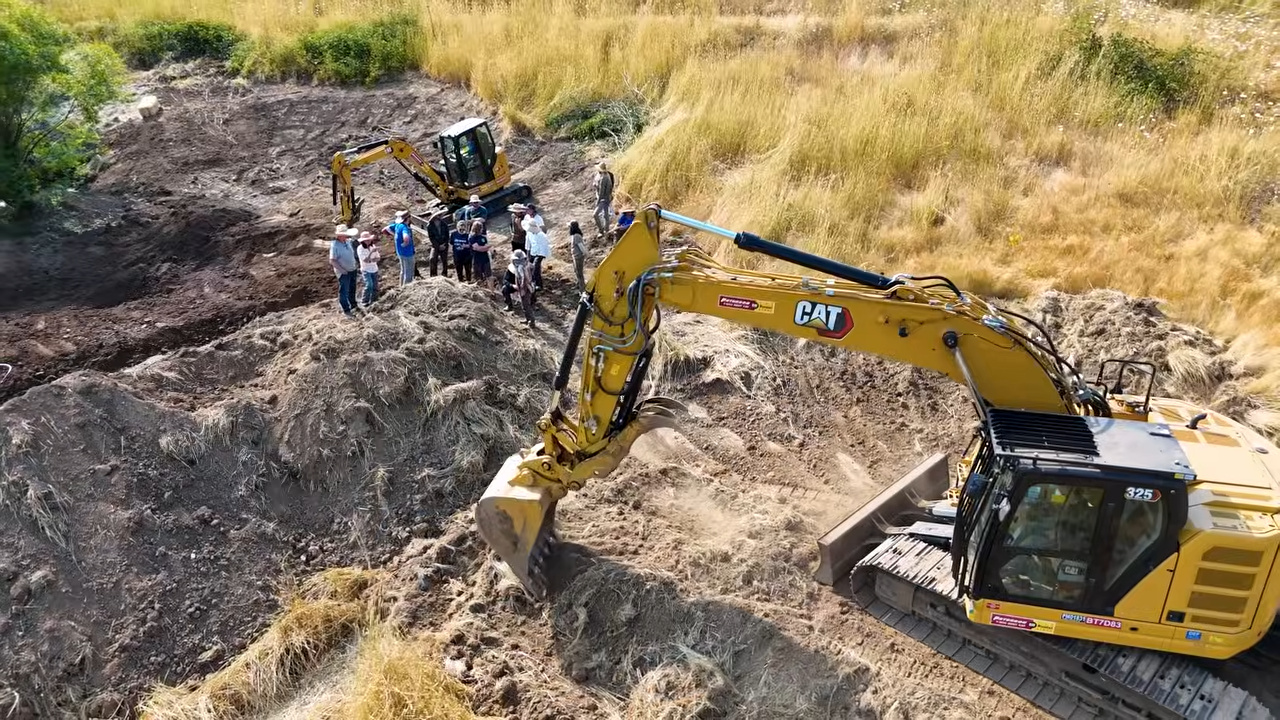
Oregon Witnesses Hydrological Turnaround: Natural Lake Excavated on Arid Farm Begins to Restore the Water Cycle, Rehydrate the Landscape, and Reactivate Ecological Functions in Just a Few Months
In a landscape marked by decades of artificial drainage and water scarcity, the construction of a natural lake at Bellmere Farm in Oregon transformed an arid area into a functional water retention system. The project was not just the excavation of a reservoir. It was a strategic intervention aimed at restoring the water cycle, rehydrating the soil, and reactivating the local hydrological dynamics.
In less than six months after the completion of the works, the results were already visible: increased water retention, balanced infiltration, persistent moisture in the surroundings, and progressive return of wildlife.
From a Draining Landscape to a Water-Retaining Landscape
Much of the agricultural areas in the western United States have historically been modified to drain water as quickly as possible. Ditches, underground drains, and topographic corrections accelerated surface runoff, reducing the soil’s natural capacity to retain moisture.
-
After BYD and others, China invades Brazil with giant tractors of up to 700 hp, 50% fuel savings, and a billion-dollar factory planned after Zoomlion projects R$ 500 million in sales in Brazilian agriculture.

-
China buys 1.1 million tons of beef in four months, an increase of 25.75%, and Brazil leads with 612.87 thousand tons

-
While the world discusses geopolitics, China is quietly closing a deal with its Kazakh neighbor to secure grain supplies during any global food crisis, with more than 3,600 Kazakh companies already able to export directly to the Chinese market.
-
A farm in the Mexican desert has become so green that today it has rivers flowing year-round and even rain in the dry season, all thanks to a technique that transforms dead sand into fertile soil with manure, mountain microorganisms, and what farmers call the secret soil formula.



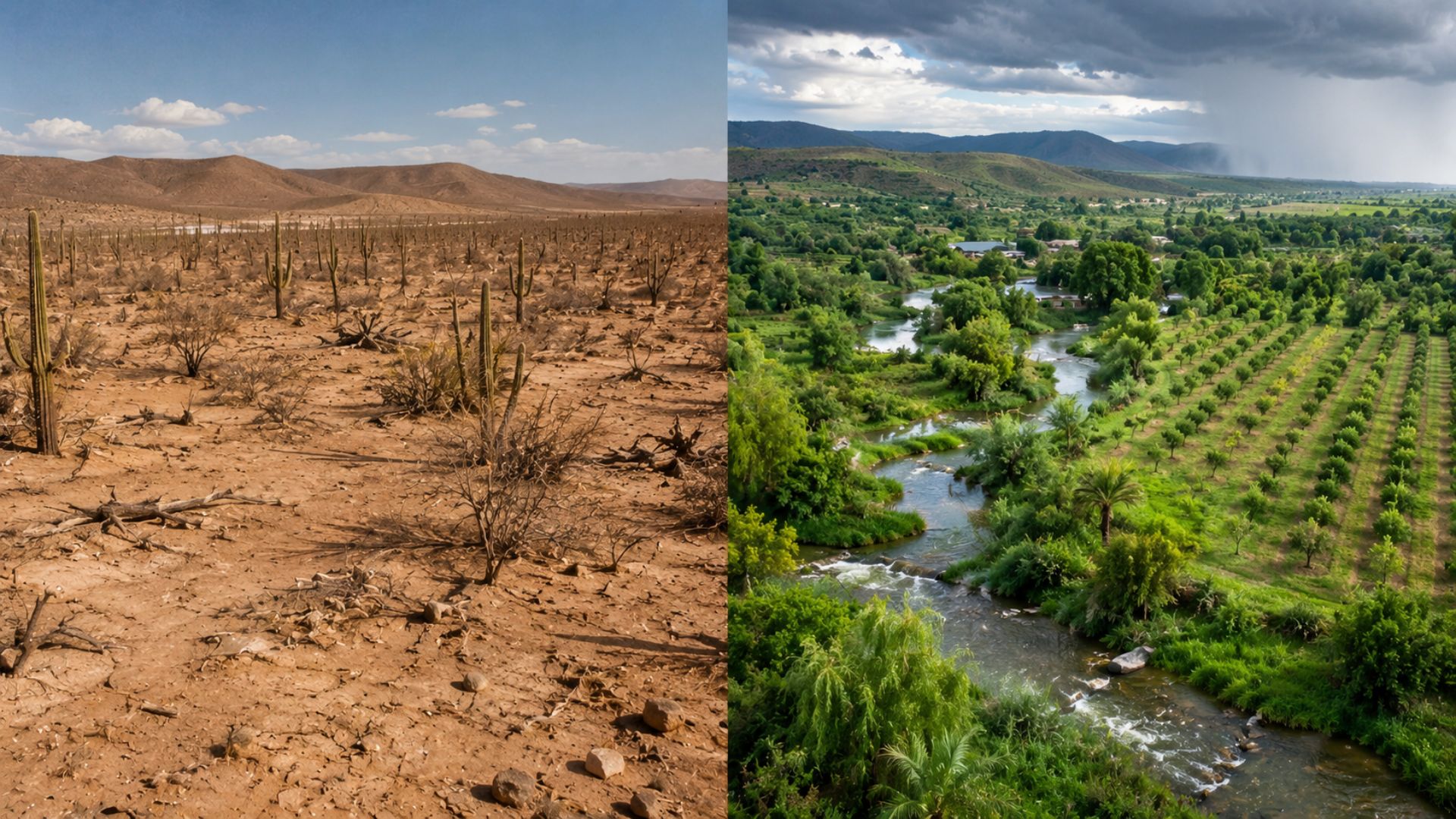
The project at Bellmere Farm started with a central question: What is the actual hydrological potential of the landscape?

Before any excavation, the team spent days surveying the terrain, analyzing microtopography, and conducting soil tests. Rather than relying solely on digital maps and computer modeling, the assessment prioritized direct observation, physical probing, and infiltration testing.
The goal was to identify whether there was a deep clay layer capable of supporting a perennial body of water.
The Clay Layer as a Decisive Element for Water Retention
The viability of a natural lake depends on the presence of impermeable material in the subsurface. Without adequate clay or rock, water infiltrates rapidly, recharges the aquifer but does not sustain a surface reservoir.
At Bellmere Farm, tests confirmed the presence of an abundant deep clay layer. This finding was crucial in expanding the project scope and facilitating the construction of one of the largest natural lakes ever executed by the responsible team.
The catchment area was extensive. The clay was sufficient. The potential for water retention was present.
Building the “Key” of the Dam: The Structural Core of the Lake
The most critical element of any natural lake is the so-called “key” of the dam — the sealing core that connects the dam to the impermeable subsurface layer.
The key was excavated until reaching the deep clay. Then, clay was added and compacted layer by layer until the projected retention level was achieved.

This process requires technical precision. Any compaction failure can compromise the reservoir’s impermeabilization.
During construction, an unexpected issue threatened the schedule: the compactor used on the key broke down on the second day of use. The team had to improvise the compaction with the excavator arm, consuming critical time.
The challenge was even greater because an intensive water cycle restoration workshop was about to begin.
Intensive Water Cycle Restoration Workshop with 30 Participants
Over eight days, 30 students participated in practical training focused on hydrological restoration and the construction of natural water bodies.
In addition to the main lake, participants designed and excavated their own small experimental reservoir. The process included:
- Soil assessment
- Clay identification
- Excavator operation
- Proper compaction
- Measuring the spillway with laser level
The spillway was sized to allow, in case of flooding, the water to overflow slowly and spread across the landscape, promoting controlled rehydration of the surroundings.
This step was essential to ensure that the lake functioned as an ecological restoration tool, not just as an isolated reservoir.
Discovery of Old Drains and Risk to Water Retention
During excavations, the team found old clay drains installed decades ago to speed up water runoff.

These systems could completely compromise the lake by draining the stored water.
The solution was to break the identified drains and ensure that the dam key was connected to a deeper layer than any existing artificial channel.
Without this deep connection to the clay, the lake could fail in the first winter.
Utilizing Spring and Providing Drinking Water
In addition to the lake, the project included the protection of a nearby spring. The team installed a collection and piping system to provide structured drinking water for visitors and residents of the property.
Spring exploration requires extreme care. A positioning error can compromise the natural flow.
The system was installed with detailed planning and controlled execution.
Six Months Later: Water Retention and Return of Wildlife
After six months, the team returned to evaluate the results.
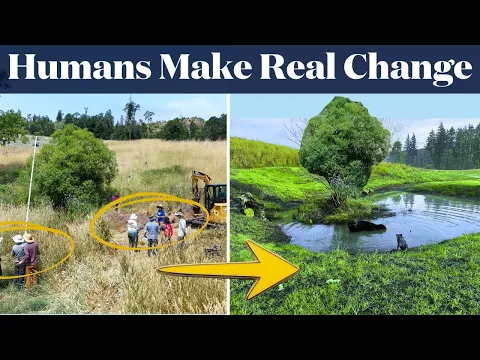

The lake was full and overflowing in a controlled manner. Water was slowly spreading across the surroundings, increasing soil moisture and creating a continuous water retention environment.
The previously drained landscape began to function as a retention system.
The ecological impact started to manifest:
- Moose
- Bears
- Frogs
- Migratory birds
- Turtles
- Small mammals
The rehydration of the soil created a more stable microclimate and reactivated local ecological functions.
Restoration of the Water Cycle Is Not Irrigation
The project reinforces a central concept: restoring the water cycle is not simply about storing water for human use.
It is redirecting water to the land at strategic points, allowing the soil to recover its natural hydrological function.

When the soil maintains moisture, vegetation responds. When vegetation responds, biodiversity returns. When the hydrological cycle stabilizes, the ecosystem reorganizes.
The lake is not the end. It is the catalyst.
Regenerative Impact in Arid Regions
Oregon has dry areas and irregular rainfall. Strategic water retention projects can reduce reliance on intensive irrigation, increase agricultural resilience, and restore degraded ecological functions.
Bellmere Farm has become a practical example of how targeted hydrological interventions can yield measurable impacts in a short timeframe.
In less than six months, the transformation was already evident.
Small Groups, Big Ecological Impact
The project demonstrates that landscape restoration does not rely solely on large public policies or multimillion-dollar investments.
With correct terrain reading, technical knowledge, and proper execution, it is possible to:
- Rehydrate degraded landscapes
- Restore the water cycle
- Create functional natural reservoirs
- Increase biodiversity
- Reduce surface runoff
The transformation begins with water.
And when the water cycle is restored, the entire ecological system responds.








-

-

-

-

-

12 people reacted to this.