






 Portuguese
  Spanish


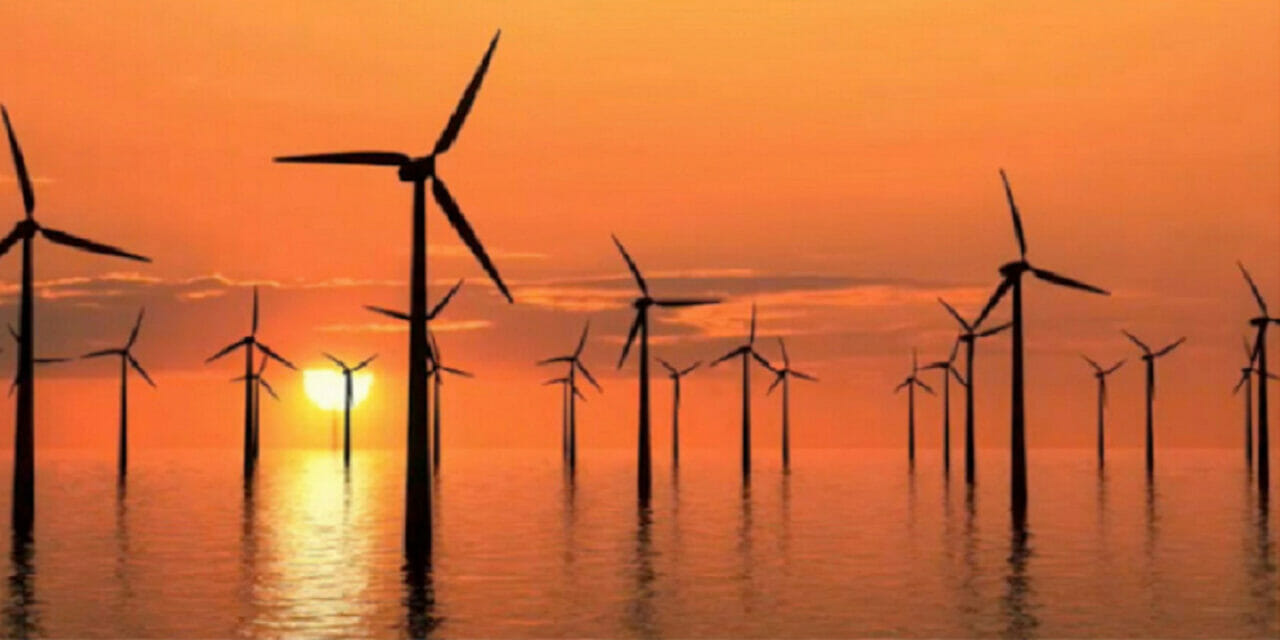

A New Era in Energy Sustainability Is Approaching! The Element Project, Funded with Investments of € 5 Million, Revolutionizes the Renewable Energy Sector with the Use of Tidal Turbines
Renewable energies are constantly evolving, and the recent ELEMENT Project – Effective Life Span Extension in the Marine Environment for Tidal Energy – is an impressive example of this innovation. This project, involving eleven partners, led by Nova Innovation and the Offshore Renewable Energy (ORE Catapult), focused on developing an intelligent control system for tidal turbines. This advancement has the potential to reduce tidal energy costs by more than 17.7%.
The ELEMENT Project, funded by the Horizon 2020 program and with a budget of € 5 million, had the main goal of enhancing the control system in tidal turbines. Since tidal energy has enormous potential, maximizing efficiency and reducing costs is a priority.
The ELEMENT Project Progressed in Three Key Operational Phases
Phase 1: Onshore Testing
-
Giant Batteries Take Center Stage in Chile Auction as Company Offers 960 GWh of Solar Energy for Nighttime Use, Aiming to Stabilize Solar Power Supply

-
After a Year of Success in Switzerland, Solar Railway Attracts Italy’s Interest for Clean Energy Transformation
-
Robots Clean Solar Panels in Desert Power Plants Without Water, Preventing Energy Losses
-
Brazil’s Offshore Wind Energy Potential Worth $1 Trillion Stalled by Long-Delayed Agreement




The first phase involved onshore testing at the ORE Catapult test facilities in Blyth, Northumberland. This stage aimed to reduce the risks of the new technology and validate its feasibility before moving on to the next phases in marine environments.
Phase 2: Real-World Testing
The second phase of the project consisted of deploying the control system in a real-world environment, specifically in the Étel estuary in France. This allowed for testing the turbine controller under estuarine conditions, providing valuable insights into its performance in more challenging scenarios.
Phase 3: Offshore Environment
The third and final phase involved installing the control system in an offshore environment at the Shetland Tidal Array in Scotland. This replicated the conditions that the tidal turbines would encounter in actual operations.
Cost Reduction and Lifespan Extension
One of the most notable achievements of the ELEMENT Project was a 17.7% cost reduction. This feat was achieved through various means, including yield gains, damage reduction, and the extension of the lifespan of tidal turbines. The intelligent control system played a crucial role in this process, allowing for more efficient turbine operation.
Simon Cheeseman, leader of the wave and tidal energy sector at ORE Catapult, emphasizes that the results of the ELEMENT Project offer glimpses of the advantages of intelligent control systems in tidal turbines. This not only maximizes the amount of tidal energy captured but also reduces costs, making tidal energy more accessible and sustainable.
The Future of Tidal Energy
Moreover, the successful operation of the new control system on the RE50 turbine in France opens new opportunities for green energy generation from rivers. This could have a positive impact in regions where rivers are a significant source of energy.
The ELEMENT Project demonstrates that innovation in the tidal energy sector is advancing rapidly. With increased efficiency and reduced costs, tidal energy has the potential to play an even more significant role in the sustainable energy matrix of the future.
The ability to monitor and improve the performance of turbines in real-time, especially in offshore environments, paves the way for promising tidal energy. With the success of the ELEMENT Project, we can envision a brighter future for this renewable energy source.







