






 Portuguese
  Spanish
  3 min of reading
  0 comments


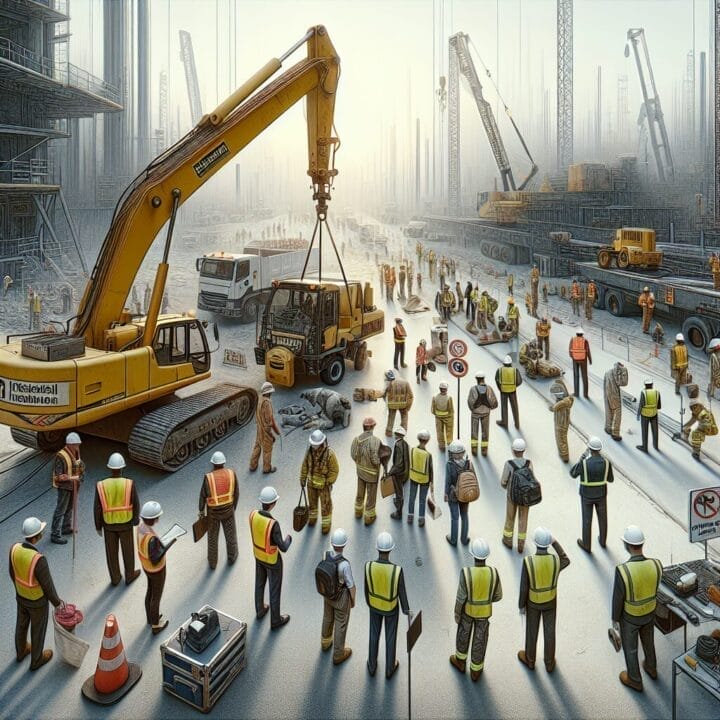
Improving Load Handling Safety in Construction Requires Procedures, Equipment Quality, Cost Optimization, and Quality Audits.
How to enhance safety in load handling in the construction sector? The construction segment plays a crucial role in the national economy and is vital for job creation. Ensuring safety in this environment requires the implementation of strict measures, the use of quality equipment, and the conduct of regular audits.
However, in addition to focusing on safety, it is essential to invest in accident prevention, which involves proper training of workers and the adoption of practices that ensure the protection of all. Improving process integrity not only minimizes risks but also optimizes operational costs, contributing to a safer and more efficient work environment. The quality of the equipment used is a determining factor for reducing incidents and must be constantly evaluated.
Importance of Safety at Work
However, the construction sector still faces high accident rates, which reinforce the need to continually discuss workplace safety. Encouragingly, the sector is taking steps to reduce these incidents. In the last year, more than R$ 296 million was invested in safety, representing a 74% increase compared to 2022, when the amount invested was R$ 170 million.
-
Bolivian Female Construction Workers Form Association to Combat Discrimination and 38% Pay Gap in the Industry

-
Near Amsterdam, residents buy land and discover they must also build streets, manage drainage, handle waste, and grow food on half their plot.
-
Brazil’s WEG to Open New Factory in China by 2027, Expanding Production of Large Rotating Electric Machines and Low to Medium Voltage Motors in Rugao

-
Chinese Shipyard Secures $1 Billion in Orders for Low-Carbon Container Ships Amid Global Fleet Renewal Efforts


The data comes from the research Work Accidents on Construction Sites, conducted by the Brazilian Association of Real Estate Developers (ABRAINC). When addressing safety on construction sites, the elevation and handling of loads of large volume and weight stands out as an activity that requires close attention.
Training and Prevention on Construction Sites
Although many companies have qualified professionals to coordinate these operations, it is clear that much remains to be done to achieve a significant reduction in risks and to increase the efficiency of a project. Insisting on safety is essential, especially with the need to train workers so they can assess all aspects of load handling. This includes everything from inspecting materials to evaluating their quality and usage specifications.
On construction sites, safety should be a behavior disseminated among all workers, not just those who are highly qualified. The best method to ensure this is through continuous training and creating specific procedures for load handling, considering that this is a repetitive activity prone to errors in any project.
The Role of Procedures and Equipment Quality
Creating internal standards is not enough; managing them with metrics and efficiency indicators is crucial. Thus, with processes being rigorously followed, it is possible to minimize errors and have effective control over operational safety. Regular inspection of all materials is another point that can be improved with procedures specifically designed by the responsible technicians. In parallel, it is extremely important to ensure that the quality of the equipment is as high as possible.
In the construction sector, cost optimization is vital for project feasibility. However, this should not compromise the choice of qualified suppliers, especially for critical items such as load handling. The guidance of external specialists can be an effective solution.
Specialized Consulting and Supplier Qualification
Whether in the acquisition or planning of the necessary lifting equipment and accessories, specialized consulting can balance tight costs with the highest quality, indicating the best options for each specific situation.
A positive development for the sector would be the creation of initiatives aimed at qualifying suppliers through audits and quality seals, certifying the origin of materials and the best brands available in the market. This would help prevent the influx of low-quality products, often lacking traceability or certifications that validate their safety and performance specifications.
Investment in Training and Supplier Selection
Although this reality is still distant, investing in continuous training and processes, along with carefully selecting suppliers, are fundamental measures to enhance safety in lifting and handling loads on construction sites.
The future of the construction sector depends on a more reliable and safe ecosystem, something that can be achieved through these strategic and qualifying actions. In this way, it will be possible to create a safer work environment, promoting the integrity of all workers and minimizing the inherent risks of this crucial activity.
Source: Allan Costa





Be the first to react!