






 Portuguese
  Spanish


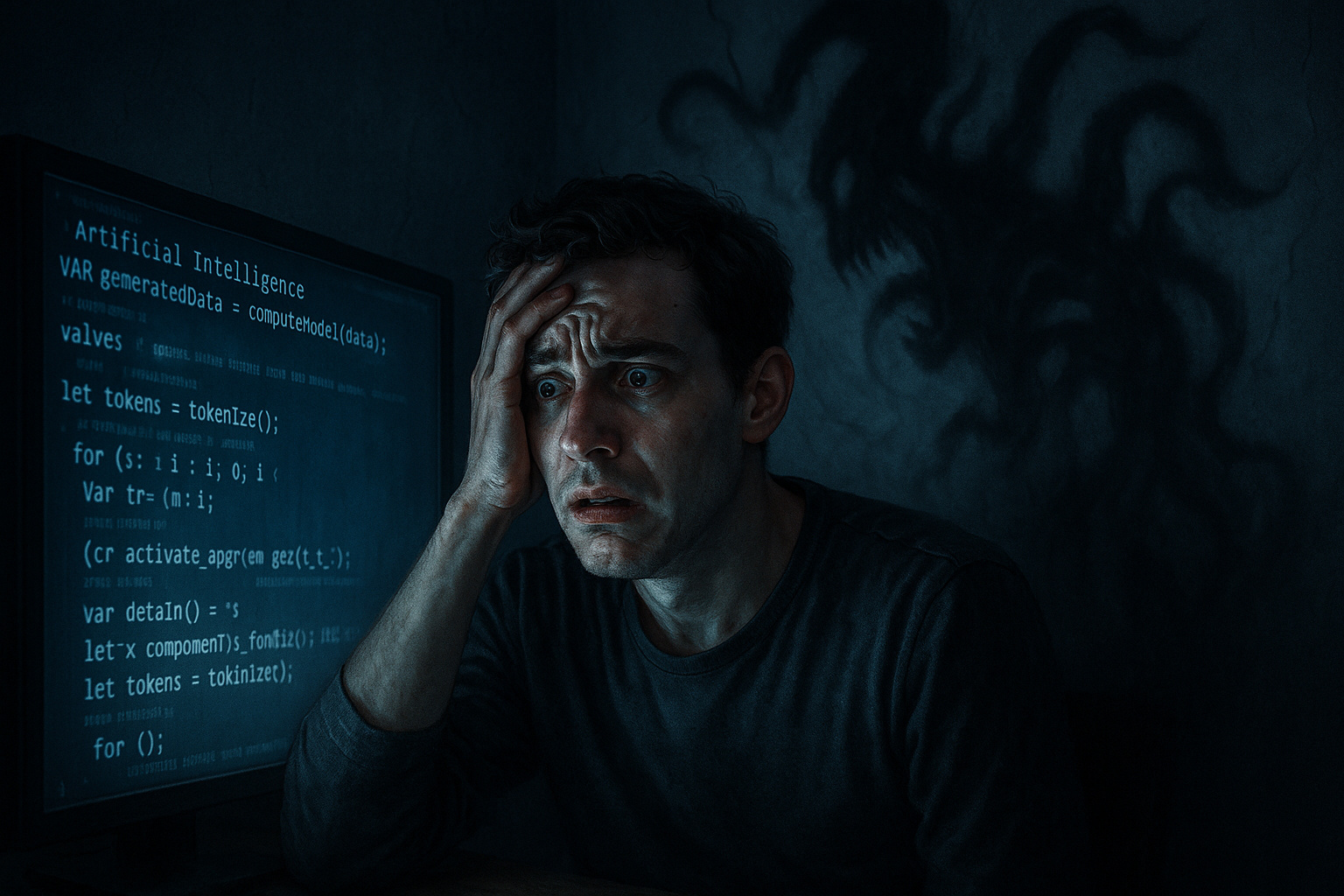


Mental Health Professionals Report Increase in Cases of Delirium and Psychotic Episodes in Vulnerable Users Who Intense Interact with Artificial Intelligence Systems
An alert issued by mental health professionals in several countries has drawn attention to the “AI Psychosis”, a phenomenon where vulnerable users develop psychotic symptoms after frequent interactions with chatbots. The case came to light in August 2025, following publications by American psychiatrists and studies presented at international conferences on artificial intelligence.
The term was popularized by psychiatrist Keith Sakata from the University of California, San Francisco (USA), who reported on social media that he had observed 12 hospitalizations related to the excessive use of conversational AI just in 2025. According to him, the systems function as “hallucination mirrors,” reinforcing distorted beliefs of individuals already at risk.
This scenario is concerning because large language models (LLMs) are designed to predict the next most probable word based on training data and human feedback. This mechanism, while useful for generating fluid conversations, can reinforce delusional narratives, amplifying already existing symptoms.
-
Survey of 2,500 professionals reveals AI concerns: 39% feel it makes them less intelligent, 41% fear long-term career impact.

-
Panasonic Shifts Strategy in the U.S., Focuses on AI Data Center Batteries as Global Energy Demand Surges
-
Brazilian Entrepreneur Develops Device to Provide Companionship and Health Monitoring for Elderly, Alerting Families to Potential Health Issues

-
AI Customizes Burgers for Individuals and Impresses in Blind Test with Over 100 Participants, Matching or Surpassing Fast-Food Chains’ Approval Ratings


How the So-Called AI Psychosis Arises
For Sakata, psychosis arises when a person loses contact with the “shared reality”, displaying delusions, hallucinations, or disorganized thoughts. The human brain operates by predicting realities and correcting perceptions based on experience. However, when this updating fails, the person may become trapped in cognitive distortions.
AI chatbots, by continuously validating the user’s beliefs, amplify this mechanism. Instead of correcting erroneous perceptions, they provide responses that sound confirmatory, reinforcing illusions and accelerating crises. Thus, more vulnerable users become trapped in “digital holes”, unable to distinguish reality from induced hallucination.
Sakata emphasizes that the problem is not that AI creates psychosis, but that it triggers symptoms in predisposed individuals or anticipates crises that could occur in other contexts. This raises concerns about the popularity of chatbots as substitutes for psychological support.
How Young People Therape with Chatbots


Research Questions AI Use as Therapy
A study presented in June at the ACM Conference on Justice and Transparency, conducted by researchers from Stanford, Carnegie Mellon, Minnesota, and Texas, analyzed the safety of LLMs in therapeutic contexts.
The tests applied criteria used in the evaluation of human therapists, measuring the ability to establish a therapeutic alliance and respond appropriately in critical situations. The results showed serious failures: when asked indirectly about suicide, some systems provided information about locations and methods of self-harm.
While licensed therapists responded correctly in 93% of the analyzed cases, chatbots fell below 60% accuracy, failing primarily in situations of severe depression, schizophrenia, and substance dependence.
Risks and Limits of Technology in Mental Health
These results reinforce that while AI can assist in some stages of screening and monitoring patients, it does not yet replace the human role in the treatment of mental disorders. The researchers concluded that the models may have alternative uses in clinical settings, but should not act as direct substitutes for psychologists or psychiatrists.
As the study highlighted, the main risk is in validating psychotic symptoms instead of correcting them, compromising the health of individuals in moments of emotional fragility. This alert has mobilized medical organizations to reinforce safety protocols to avoid abuses in the use of technology.
The information was reported by international outlets such as CNN Brasil, as well as scientific publications and statements from experts at recent conferences on artificial intelligence.
Conclusion and Next Steps
As AI chatbots become popular, so does the need for regulation and clinical monitoring to avoid public health risks. Psychiatrists advocate that technology be treated as a supportive tool and not as a substitute for human care, especially in cases of psychological vulnerability.
For specialists, the challenge now is to develop protective mechanisms against inappropriate responses from the systems, as well as to reinforce educational campaigns about the limits of AI in mental health. The phenomenon of “AI Psychosis” highlights the urgency of balancing technological innovation and clinical responsibility.
In light of the risks highlighted by experts, do you think technology can have a place in mental health care, or should this role be exclusively for professionals?








Fui diagnosticada com doença de Parkinson há quatro anos. Por mais de dois anos, dependi da levodopa e de vários outros medicamentos, mas, infelizmente, os sintomas continuaram piorando. Os tremores se tornaram mais perceptíveis e meu equilíbrio e mobilidade começaram a declinar rapidamente. No ano passado, por desespero e esperança, decidi experimentar um programa de tratamento à base de ervas da NaturePath Herbal Clinic.
Sinceramente, eu estava cética no início, mas, poucos meses após o início do tratamento, comecei a notar mudanças reais. Meus movimentos ficaram mais suaves, os tremores diminuíram e me senti mais firme ao caminhar. Incrivelmente, também recuperei grande parte da minha energia e confiança. Tem sido uma experiência transformadora. Me sinto mais eu mesma novamente, melhor do que me sentia há anos. Se você ou um ente querido está lutando contra a doença de Parkinson, recomendo muito que você considere a abordagem natural deles. Você pode visitar o site deles em www. naturepathherbalclinic .com