








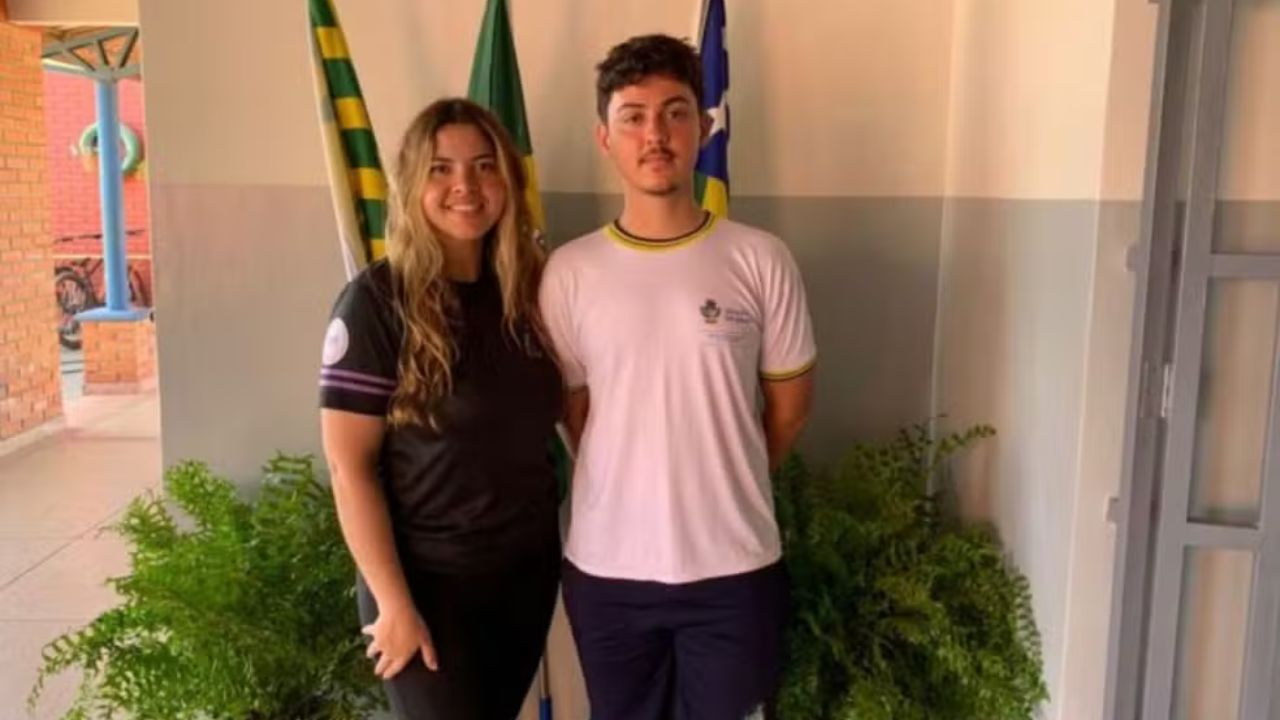
Meet the project of student Thiago Alves, who used sugarcane bagasse to create a biodegradable fiber and secured spots at USP, Unicamp, and UFRJ.
Approval at seven renowned higher education institutions in the country crowned the journey of an 18-year-old who combined dedication to books and scientific investigation. Student Thiago Alves dos Santos secured spots in courses such as Biological Sciences and Food Sciences at UFRJ (via SiSU), PUC-GO, and UCB (with a full scholarship through ProUni), as well as Unesp, Unicamp, UFC, and USP, through exclusive spots for Olympic medalists.
This academic background was built during high school at Colégio Estadual em Período Integral Osvaldo da Costa Meireles, in Luziânia (GO), where the student also developed a biodegradable textile fiber from sugarcane bagasse. The project focuses on reducing the ecological damage caused by the fashion industry.
The impact of science on the student’s journey
To achieve such impressive results in entrance exams and the National High School Exam (Enem), the young man organized his routine based on three pillars: consistency in studies, development of school research, and active participation in knowledge olympiads.
-
23-Year-Old Brazilian Turns Beekeeping into College Tuition, Harvesting Honey Twice a Year from 50 Hives
-
A Brazilian city decided to purchase a piece of the Atlantic Forest with more than 153,000 square meters, and owners of preserved areas will be able to submit proposals to transform the forest into a conservation unit.

-
Brazilian siblings aged 11 and 7 read 240 books in just one year and caught attention on social media: while many children spend hours on screens, they turned their family’s routine into an example of reading, discipline, and curiosity.
-
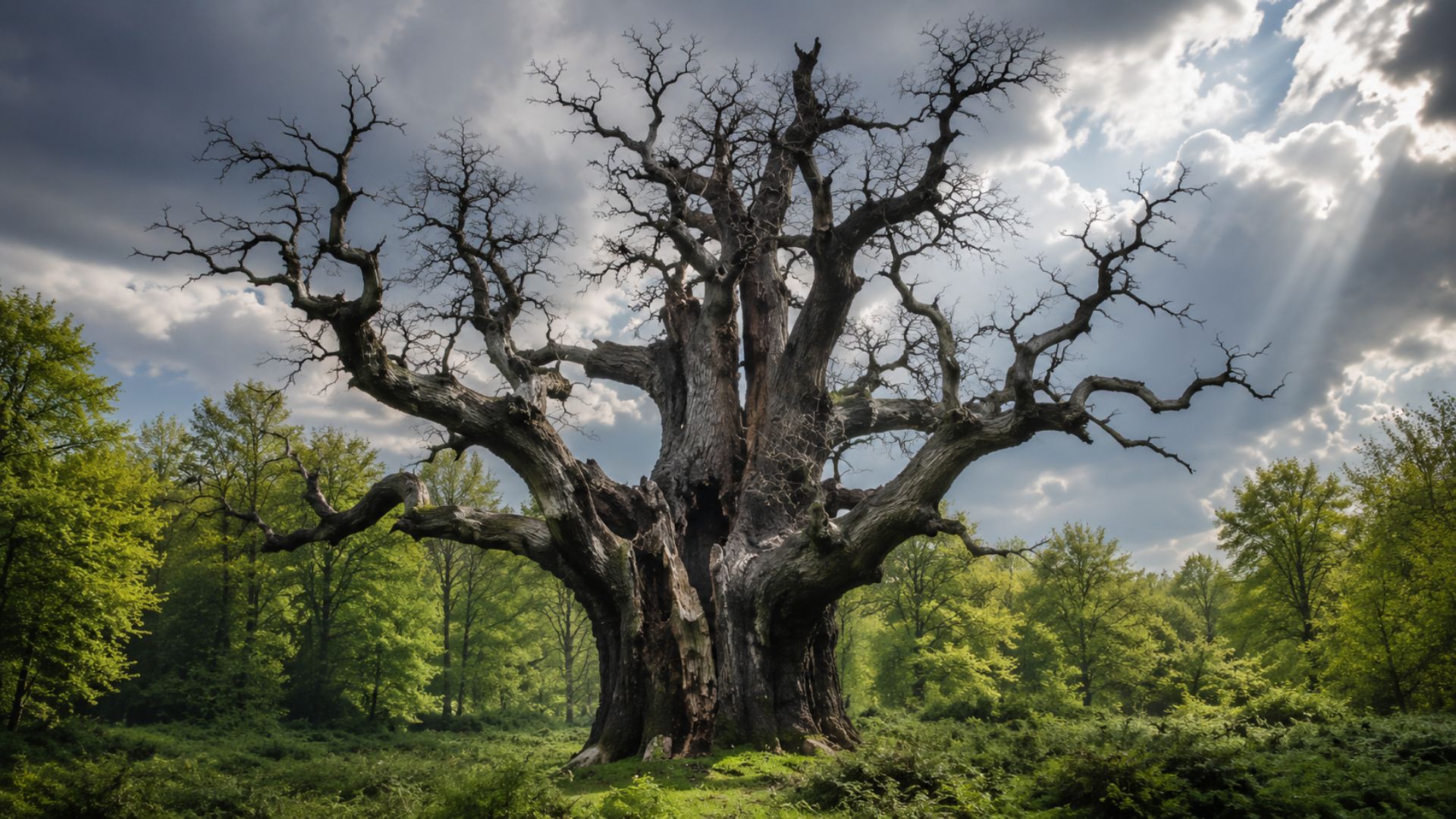
The legendary oak that, according to the story, hid Robin Hood from the Sheriff of Nottingham, died at the impressive age of 1,200 years in England, and the first chilling sign of its end was that no leaves sprouted on the tree this spring.


Throughout high school, he accumulated medals and honorable mentions in competitions such as the National Science Olympiad, which later secured his entry into public universities. As a recommendation for other candidates seeking to consolidate learning and open doors in higher education, the young man highlights:
“Participating in olympiads, doing projects, and seeking to learn beyond the classroom helps a lot to consolidate knowledge and also opens up various academic opportunities.”
Besides success in exams, direct involvement with practical experiments at the school laboratory bench transformed the young man’s worldview. On the importance of science in his education, he commented:
“It brought me knowledge in Chemistry, Physics, and sustainability. I think it took me to a totally different reality from what I was before.”
From waste to clothing: the creation of the sustainable fiber
The project, named “From waste to clothing,” was born from a collateral observation. While participating in a previous study focused on producing paper with pequi leaves, Thiago noticed the feasibility of creating textile threads from cellulose.
Upon noticing that sugarcane bagasse was an abundant and easily accessible material in mills and markets, he decided to change focus, receiving immediate encouragement from his Biology teacher, Gabrielle Rosa Silva. The advisor praised the student’s focused profile and dedication to taking the idea off the paper and bringing it to scientific exhibitions:
“I found the proposal bold but promising. He always wanted to go to science fairs and needed a strong and original project. Thiago is very ambitious. He wants to compete and he wants to win. He works hard for that.”
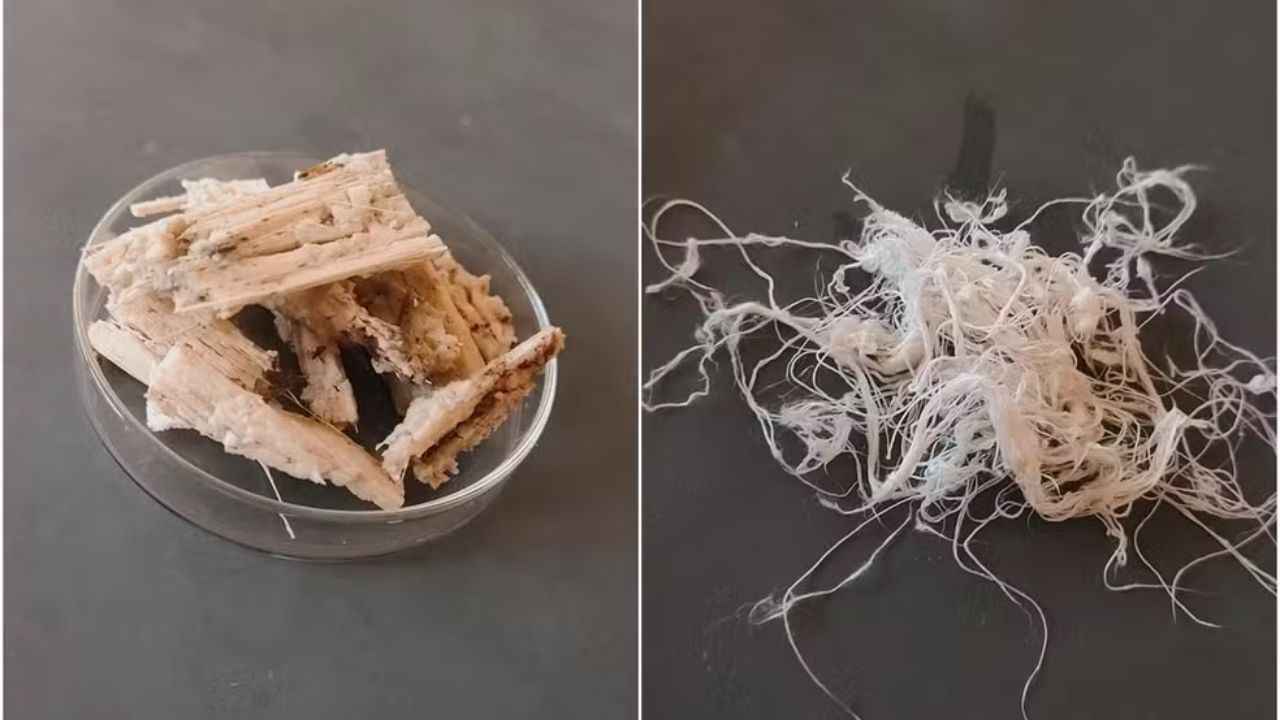
The laboratory process required stages of extraction and treatment of the sugarcane cellulose, converting it into a viscous solution that, after coagulation, generates fine and shiny filaments similar to traditional silk.
The research, which took 20 days to develop, is now expected to be submitted for patenting.
The data and yields generated from the experiment show the following profile:
- Optimized production cycle: The complete process can be finished in just 15 hours.
- Raw material ratio: About 450 grams of textile fiber are obtained for every kilogram of processed sugarcane bagasse.
- Yield per area: The volume extracted from one kilogram of the vegetable residue is equivalent to 3m² of pressed material.
- National highlight: The work was the only representative from a public school in the state of Goiás at the Brazilian Science and Engineering Fair (Febrace), held between March 16 and 20.
The fight against waste generated by the fashion industry
The central goal of Thiago’s authorial work is to combat the severe ecological impacts of the clothing manufacturing chain, a production sector globally known for its high water consumption, improper waste disposal, and microplastic pollution.
The great advantage of the filament created with sugarcane bagasse is its rapid decomposition in nature in case of improper disposal, in addition to utilizing an agricultural waste widely available in Brazil.
Now, to expand the project to the weaving or pressing stages on a large scale, the creator points out the need to establish partnerships with external entities.


