






 Portuguese
  Spanish


Skyscraper project in Balneário Camboriú brings together high-strength steel, engineering for great heights, and prefabricated solutions, in a project linked to FG, Marca Senna, and Havan in the luxury real estate market.
ArcelorMittal will be the exclusive supplier of the high-strength steel used in the structure of the Senna Tower, a residential building under construction in Balneário Camboriú, on the northern coast of Santa Catarina.
The development is being carried out by FG Empreendimentos, in partnership with Marca Senna and Havan, and is presented by the companies involved as the future tallest residential building in the world.
The project plans for 228 residential units and more than 550 meters in height, according to data released by FG and published by CNN Brasil.
-
Oil Prices Drop to $72 as 20 Million Barrels Pass Through Strait of Hormuz in 24 Hours, Easing Supply Fears but Regional Tensions Keep Market on Edge

-
Brazil’s Ministry of Justice Investigates CazéTV for Betting Ads During World Cup Broadcasts

-
Brazilian Retail Giant Americanas Faces $10 Billion Asset Freeze Amid Investigation into Hidden Debts
-
Does Your State Rank Highest? Brazil’s IBGE Reveals Salary Rankings and Worker Disparities


The Council on Vertical Urbanism, an international reference base for tall buildings, records the Senna Tower with 544 meters of architectural height and 135 floors above ground.
The difference in relation to the 157 floors reported in commercial materials may be related to different counting criteria, but this reconciliation is not detailed in the sources consulted.
High-strength steel in the Senna Tower
The building will be the first tower to employ the ArcelorMittal CA70 S AR rebar in its structure.
According to ArcelorMittal, the material has a strength about 40% higher than conventional CA50 and a minimum yield strength of 700 MPa.
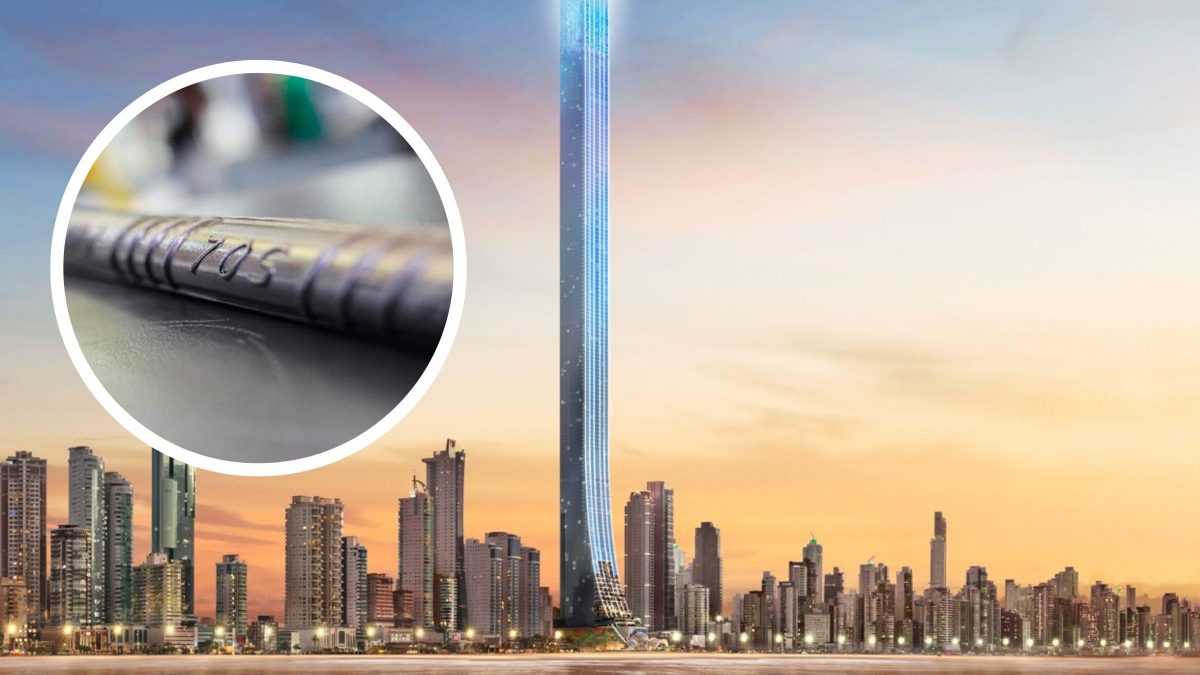
The company states that the product maintains ductility, a characteristic associated with the deformation capacity of steel under tension.
In the project, the application of the material is related to the pursuit of rationalization in the use of steel and the execution of structural elements compatible with a high-rise building.
ArcelorMittal will also provide cutting and bending services and ready-welded reinforcements, according to information released by the company.
These solutions, according to the company, aim to increase the level of industrialization on site, reduce waste, and improve productivity during execution.
The adoption of prefabricated pieces can also facilitate transportation, assembly, and handling stages, as ArcelorMittal itself reports when discussing supply for the project.
The development of the rebar occurred in partnership with the University of São Paulo, within the Building Tomorrow chair.
The product underwent studies and tests focused on structural performance in highly complex buildings, according to ArcelorMittal.
“The Senna Tower represents a milestone for the Brazilian civil construction sector with a greater focus on industrialization, rationalization, productivity, and the use of new technologies in construction,” stated Everton Negresiolo, CEO of ArcelorMittal Long Steel LATAM.
In the same statement, the executive said that the company reinforces its role as a strategic partner of national engineering.
Engineering for High-Rise Building
The Senna Tower brings together engineering solutions associated with large-scale buildings.
Among the systems mentioned in the project’s materials are deep foundations, Auger Cast piles, outrigger system, wind tunnel assessments, and the Tuned Mass Damper, known by the acronym TMD.
The TMD is a system used to reduce oscillations caused mainly by wind action in tall structures.
According to the official Senna Tower website, the building will be the first supertall in Latin America to implement this type of tuned mass damper.
CNN Brazil also reported that the project will feature high-performance materials, outriggers, and constant wind tunnel assessments to meet the structural standards defined for the development.
The publication cites the TMD as a kind of pendulum used to mitigate the effects of winds.
In addition to the structure, the building will feature eight high-performance elevators, according to the project’s official website.
CNN Brazil reported, based on data from the construction company, that the equipment should travel from the ground floor to the top floor in less than a minute.
FG, Senna Brand, and Havan in the Project
FG Empreendimentos is responsible for the development of the Senna Tower, in partnership with Marca Senna and Havan.
The project associates the high-end real estate market of Balneário Camboriú with the use of the brand linked to the driver Ayrton Senna.
The architectural concept is signed by Lalalli Senna, a plastic artist and anthropologist, niece of Ayrton Senna.
In promotional materials from Marca Senna, she relates the design of the tower to the driver’s trajectory and the concept of the “hero’s journey.”
The planned units include apartments, suspended mansions, duplex penthouses, and mega triplex penthouses.
According to CNN Brazil, there will be 204 apartments of up to 400 square meters, 18 suspended mansions from 420 to 563 square meters, four duplex penthouses of 600 square meters, and two mega triplex penthouses of 903 square meters.
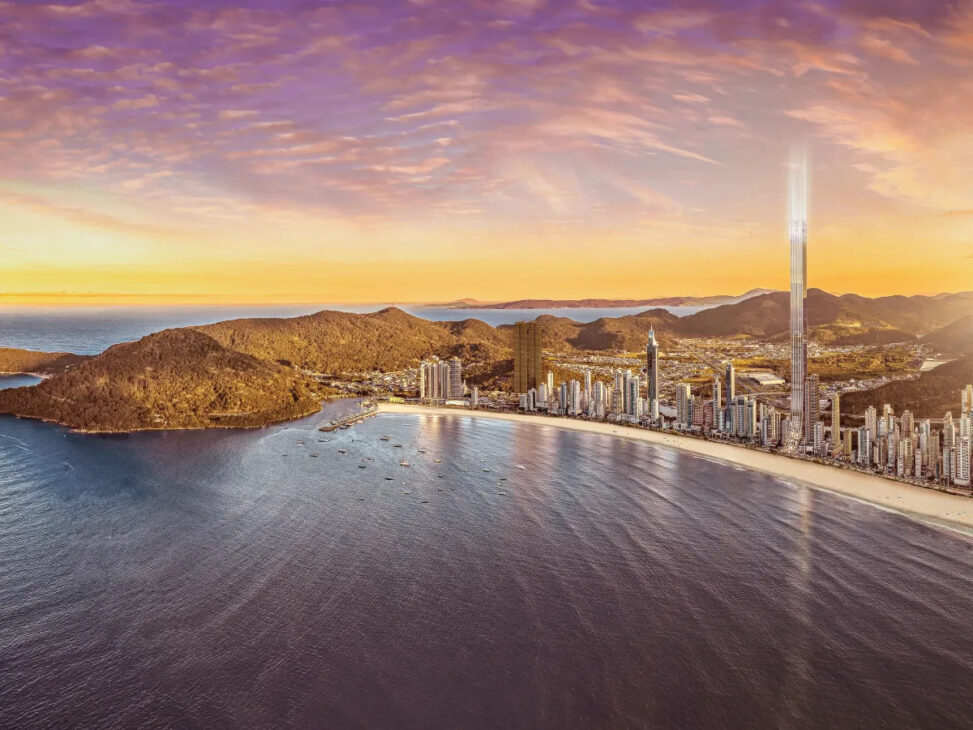
The same report stated that the expected investment is R$ 3 billion and that the delivery is scheduled for 2033.
This timeline updates previous information that mentioned completion in 2030 in texts and materials published about the development.
Leisure Areas and Environmental Certification
The official Senna Tower website states that the development will have more than 6,000 square meters dedicated to leisure, contemplation, and well-being.
These spaces will be distributed at different heights of the tower.
Among the planned areas are a spa, heated pool, massage room, saunas, gym, and pilates at about 216 meters high.
The project also plans leisure and social areas on panoramic floors, as well as commercial, gastronomic, and entertainment spaces open to the public, according to the official materials of the development.
The tower is also presented as the first residential supertall in the world to seek the LEED Platinum certification.
The certification is mentioned on the official Senna Tower website as part of the project’s sustainability strategy, but obtaining the seal depends on the corresponding certification process.
In promotional texts, the development also states that it will have an observatory, panoramic leisure floors, duplex penthouses, mega triplex penthouses, and areas dedicated to the experience associated with Ayrton Senna’s trajectory.
These elements make up the commercial positioning of the project in the high-end real estate market.
Balneário Camboriú and the Tallest Buildings in Brazil
The construction of the Senna Tower is taking place in Balneário Camboriú, a city that already hosts some of the tallest residential buildings in Brazil.
CNN Brazil reported that the municipality had, in April 2025, the most expensive square meter in the country, according to a FipeZAP survey.
The development is located on Avenida Atlântica, in the Barra Sul region, a beachfront area that concentrates real estate projects aimed at the high-end segment.
The location is also used in the project’s commercial materials as one of the attributes of the building.
In the Council on Vertical Urbanism’s registry, the Senna Tower appears as a residential building under development, with an architectural height of 544 meters.
The record considers the measurement from the lowest public entrance to the architectural top of the building, a criterion used by the entity in its tall building rankings.
The presence of ArcelorMittal in the project strengthens the link between the construction and the national steel industry, as the CA70 S AR rebar was developed in Brazil and will be applied in the tower’s structure.
The company states that the supply combines high-strength steel with prefabricated solutions to meet the technical requirements of the development.
The construction also highlights the adoption of more industrialized processes in vertical construction, such as ready-made reinforcements, cutting and bending, and materials with greater mechanical resistance.

These resources are presented by ArcelorMittal as part of the strategy to reduce waste, rationalize steel consumption, and increase productivity on site.
With delivery scheduled for 2033, the Senna Tower remains one of the tallest real estate projects under development in Brazil.
Beyond the race for records, the development brings together technical choices involving special steel, oscillation control, deep foundations, and integration between the developer, licensed brand, and industrial suppliers.


