






 Portuguese
  Spanish


Brazil Ranks Among the Lowest on the Index Measuring Global Peace and Security. New Report Shows Setbacks and Lack of Trust in Justice
The world has never been as unstable as it is now — and the latest data from the Global Peace Index (GPI) released on June 18, 2025, confirms this. The study, conducted by the Institute for Economics and Peace (IEP) and cited by Forbes, ranks 163 countries based on 23 indicators measuring levels of violence, security, militarization, and institutional stability. While some nations remain among the most peaceful on the planet, the overall outlook is one of regression.
The 2025 edition reveals a concerning fact: more than half of the assessed countries have worsened their scores compared to the previous year, highlighting an increase in active conflicts and geopolitical tensions. In contrast to this negative trend, a select group of countries continues to be a global reference for security and institutional quality. And Brazil? It ranks among the worst.
The Top 10 Most Peaceful Countries in the World
For the 17th consecutive year, Iceland leads as the most peaceful country in the world. Its internal stability, low crime rates, demilitarized police force, and strong institutions make it a model for peaceful society.
-
Award-Winning Japanese Restaurant Reveals It Has Preserved Part of the Same Frying Oil for 66 Years

-
American Youth Transforms from Severe Obesity to U.S. Air Force Enlistment, Losing 90 Kilograms in Two Years
-
11-Year-Old Entrepreneur Sells 60 Homemade Sweets Daily, Mastering Cost Calculation, Social Media Promotion, and Client Negotiation Since Age 7

-
Peruvian Mountain’s 5,200 Aligned Holes May Unveil Ancient Indigenous Market for Corn and Cotton


Check out the top ten positions for 2025:
- Iceland
- Ireland
- New Zealand
- Austria
- Switzerland
- Singapore
- Portugal
- Denmark
- Slovenia
- Finland
All these countries share common characteristics: low corruption, strong social cohesion, respect for civil rights, and consistent public policies. They are mostly consolidated democracies with high levels of human development and low levels of militarization.
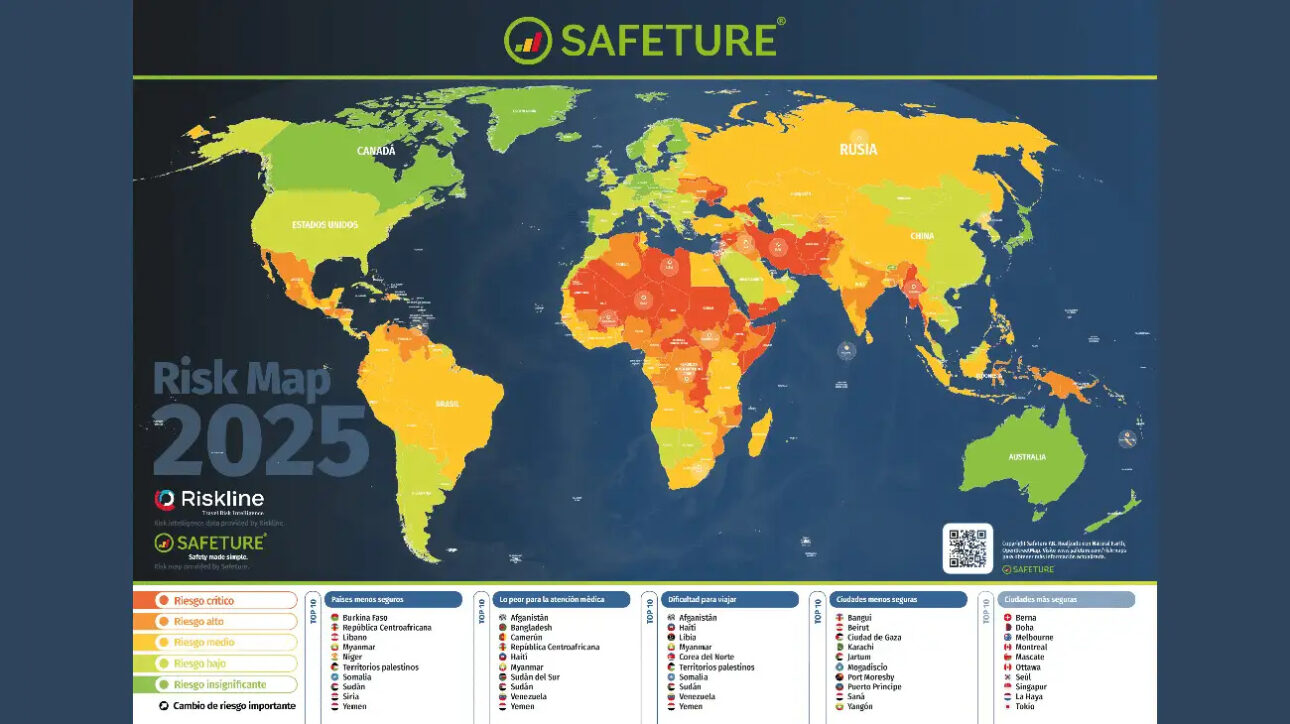
In America, Canada and Argentina Stand Out — and Brazil is Among the Worst
In North America, Canada remains the highest-ranked country on the continent, appearing in the 14th position in the global ranking. In South America, Argentina positively surprised by rising five positions to reach 46th place, surpassing Uruguay (48th), Chile (62nd), and Bolivia (83rd).
But not all countries in the region have good reasons to celebrate. The United States, for example, ranks 128th — the lowest position among developed nations — affected by high rates of armed violence and internal tensions.
And Brazil? The situation is even more critical.
Brazil’s Position in 2025: Among the Least Peaceful Countries on the Planet
In the Global Peace Index 2025, Brazil is in 130th place among the 163 analyzed countries, remaining among the worst in the ranking. The country occupies a range close to nations like Honduras, Guatemala, and El Salvador, traditionally marked by high levels of violence.
According to IEP data, the main factors hindering Brazil’s performance are:
High Homicide Rates
Despite a gradual decrease in homicide rates, Brazil still has an average of 17.9 murders per 100,000 inhabitants, according to data from 2024 from the Brazilian Public Security Forum. In absolute numbers, there were 38,772 homicides recorded in the country in one year — which represents over 100 deaths per day.
This is a significant decrease compared to the peak in 2017 (with 63,880 deaths), but insufficient to position the country as a reference in security. The Brazilian average is still almost double what is considered tolerable by the World Health Organization (10 homicides per 100,000 inhabitants).
Alarming Regional Inequalities
Violence in Brazil is not homogeneous. While states like São Paulo report rates below the world average (6.4 homicides per 100,000 inhabitants), states in the North and Northeast, like Amapá, exceed 57 homicides per 100,000.
These disparities reveal a fragmented country, where peace is a privilege for a few — and insecurity is a daily reality for millions.
Overcrowded Prison System
Another factor negatively impacting Brazil’s evaluation is the prison situation. In 2024, the country surpassed 909,000 prisoners, becoming the third-largest prison population in the world, behind only the United States and China.
Brazilian prisons operate with a deficit of nearly 200,000 spaces, resulting in an occupancy rate of 135.6%. The system is marked by:
- overcrowding;
- domination by criminal factions;
- frequent uprisings;
- systematic human rights violations.
Institutional Fragility and Public Insecurity
Public trust in security forces and the justice system is also low. Cases of police abuse, corruption, procedural sluggishness, and impunity contribute to a widespread feeling of insecurity and distrust in the State.
An Increasingly Unstable Planet: The GPI 2025 Alert
The report also highlights that the global level of peace has worsened for the ninth consecutive year. Among the most alarming data are:
- 59 active armed conflicts — the highest number since World War II.
- 78 countries involved in conflicts outside their borders.
- Growing geopolitical tensions, militarization, and democratic regression in various regions.
For Steve Killelea, founder of the IEP, the world is experiencing an era of “Great Fragmentation,” where old international alliances are being undone and replaced by increasingly armed regional blocs that are suspicious of each other.
The Least Peaceful Countries in the World in 2025
For the first time in the history of the index, Russia ranks as the least peaceful country in the world, surpassing Afghanistan, which held this position for eight years.
See the ranking of the ten worst:
- Russia
- Ukraine
- Sudan
- Democratic Republic of the Congo
- Yemen
- Afghanistan
- Syria
- South Sudan
- Israel
- Mali
The majority of these nations are involved in civil wars, territorial conflicts, or deep institutional crises.
Brazil Needs More Than Reforms
Brazil’s position in the Global Peace Index 2025 exposes a structural problem: it is not just about reducing crime, but about rebuilding society’s trust in public institutions and the State itself.
The decrease in homicide rates is a positive sign, but insufficient to offset decades of negligence in the prison system, social policies, and public safety.
While countries like Argentina, Uruguay, and Chile advance in promoting a culture of peace, Brazil remains trapped in a cycle of violence, fear, and inequality.
In an increasingly unstable world, ensuring internal security and institutional stability is no longer a competitive advantage — it is a matter of survival.





e o Iran????