Portuguese
  Spanish


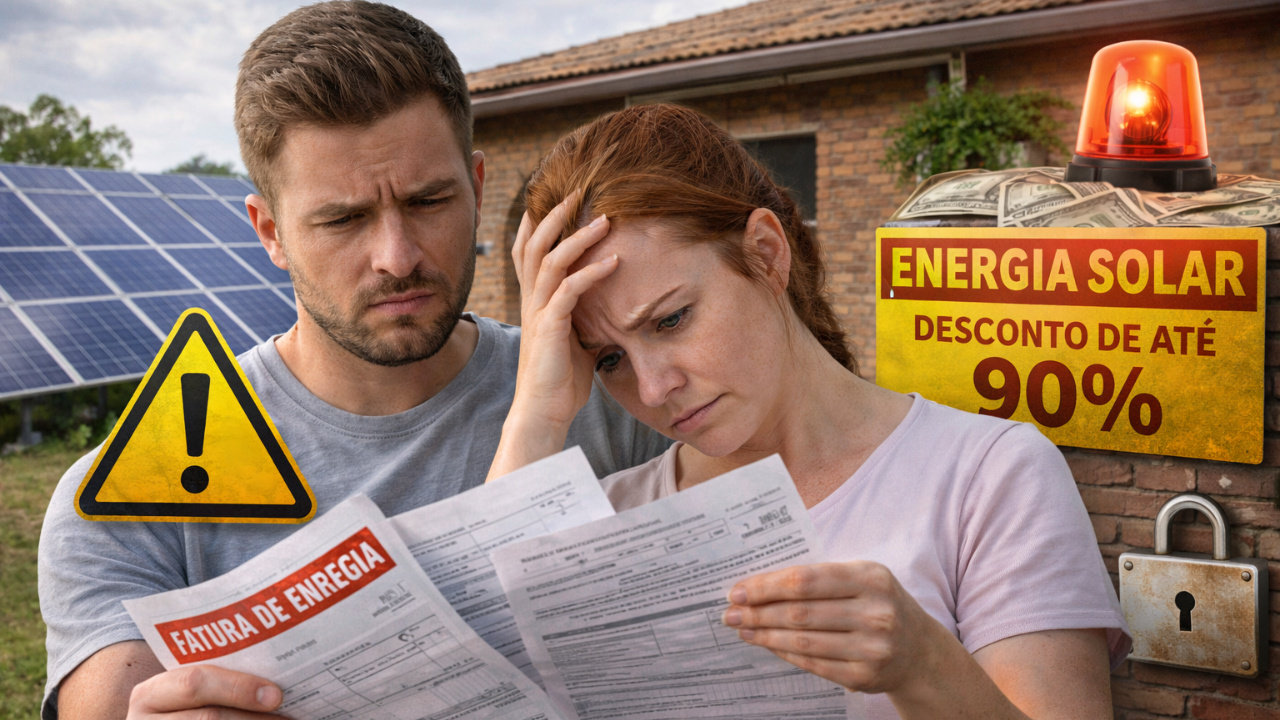


Consumer Council of MS Warns of Possible Traps in Shared Solar Energy, with Discounts Less Than Promised and Double Billing.
The search for solar energy as a solution to reduce electricity bills has gained momentum in Mato Grosso do Sul.
However, alongside the promise of savings, complaints have arisen. Consumers report that they joined shared solar energy and ended up receiving two bills: one from the distributor and another from the cooperative or consortium contracted.
The warning came from the Electric Energy Consumer Council of MS (Concen/MS). According to the council’s president, Rosimeire Costa, some analyzed cases show that the actual discount was far below expectations. In certain situations, the reduction was only 10% on the tariff.
-
Island in Brazil Innovates by Installing 184 Solar Panels on Urban Lagoon to Generate Clean Energy

-
Japanese Island of 417 Residents to Test Living Half the Year Solely on Solar Power, Reducing Dependence on Diesel Brought by Ship
-
Brazilian Fishermen Use Solar Power to Produce Nearly One Ton of Ice Daily, Preventing Fish Spoilage Before Reaching Market
-
Brazil, known for its river-powered energy, installs solar plant in mountains to boost winter electricity production


“This case is emblematic because the consumer had the expectation of much greater compensation. When we looked at the contract, it was there: the discount was only 10% on the tariff, and she would continue to receive the bill from Energisa normally, because the network belongs to the distributor,” explained Rosimeire.
Two Bills and Savings Less Than Imagined
The central point of the controversy lies in the difference between expectation and reality. Many consumers believe they will stop paying the traditional bill. However, they continue to receive the bill from the distributor, as the power grid remains under its responsibility.
In the case cited by the council, the client consumed about 245 kWh per month. After joining the shared solar energy contract, the compensation would amount to approximately 25 kWh. “What are 25 kWh?” questions Rosimeire. “A fan running eight hours a day for 30 days consumes around 17 kWh. An air conditioner under the same conditions comes close to 238 kWh. In other words, it’s much less than the person imagined.”
Thus, the discount that seemed significant during the sales pitch was revealed to be limited in practice.
Change in Rules Impacts New Contracts
In addition, there is an important regulatory factor. The so-called “boom” in solar energy occurred until January 6, 2023. Those who joined by this date secured more advantageous rules, including the possibility of compensating 50% of the wiring cost until 2045.
On the other hand, those who joined later are already subject to new rules. This means higher payments for using the power grid and, in many cases, smaller deductions on the final bill.
According to Concen/MS, the problem is not the existence of solar farms. “The sale is legal, the businesses are there, we are under the law of economic freedom. But that same law mandates respect for the Consumer Protection Code and ANEEL regulations. It’s not acceptable to lead anyone to believe in a savings that the contract does not guarantee,” asserts Rosimeire.
What to Observe Before Signing
In light of the situation, the council advises caution. Before closing a shared solar energy contract, the consumer should demand a clear simulation, in reais, demonstrating the estimated savings month by month. It is also essential to read all clauses and understand that the distributor’s bill does not disappear.


The promise of reducing the bill may be real. However, without attention to the details, the relief in expenses may be much less than advertised.