






 Portuguese
  Spanish


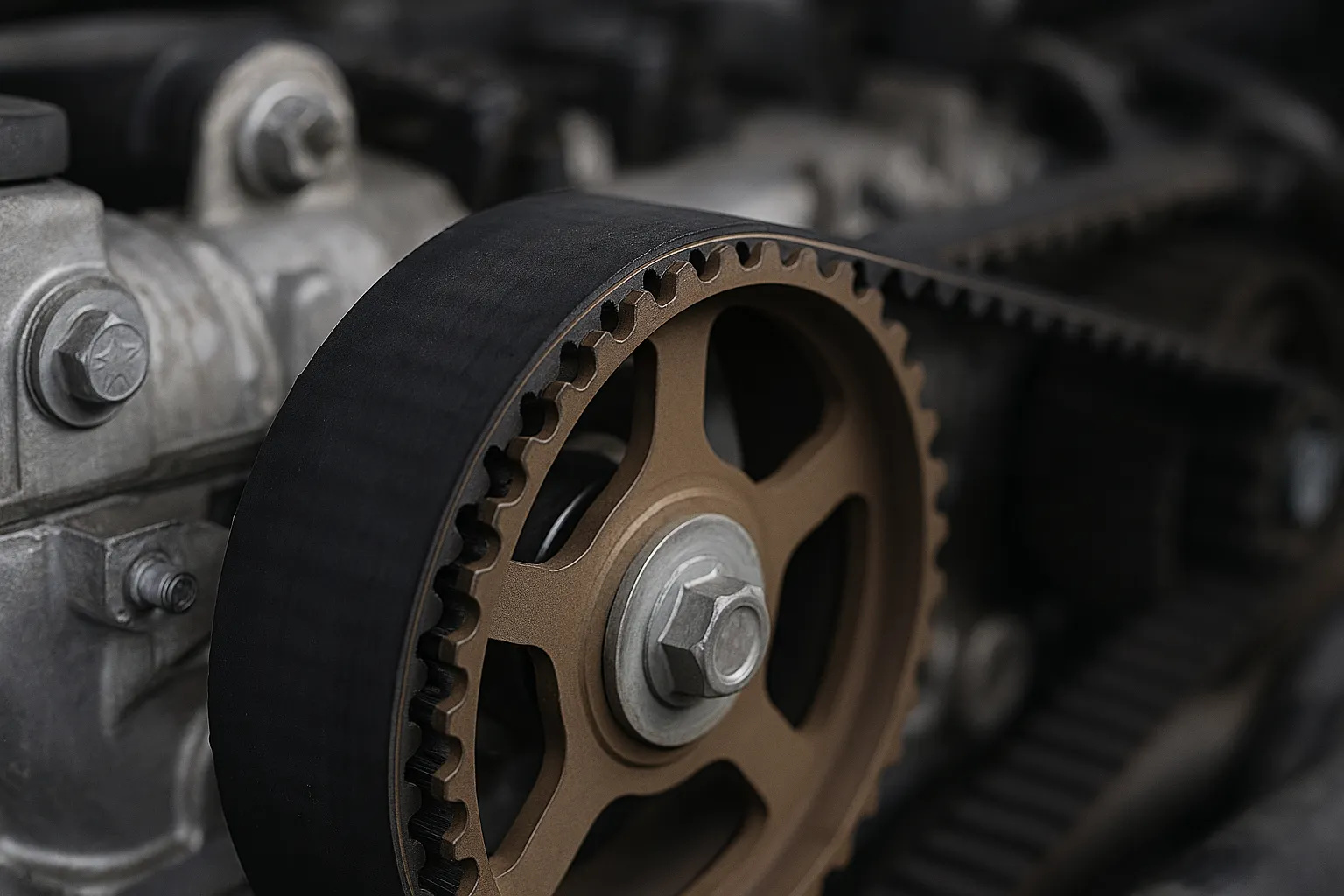


Did you know that a simple delay in changing the timing belt can be expensive, putting the entire car engine at risk? This discreet component, often forgotten during maintenance, is responsible for synchronizing the operation of valves and pistons, ensuring that the engine works accurately and safely. Ignoring its maintenance can lead to losses of thousands of reais and even complete engine failure.
Timing Belt: The Essential Component for the Engine
The timing belt is one of the most important components of the engine’s timing system. Its function is to synchronize the movement of the crankshaft with the camshaft, allowing pistons and valves to move in harmony. This synchronization is crucial: any failure can cause internal shocks and irreversible damage.
Even though it is durable, the belt does not last forever. Over time, it suffers wear from heat, friction, and even natural drying. Therefore, knowing the right time to replace it is essential for keeping the car safe and avoiding headaches.
-
Chevrolet’s Parent Company to Invest Billions in Brazil to Modernize Factories, Update Cars, and Accelerate Hybrid Launch by 2028

-
Practical Driving Tests in Brazil Surge by 23.5%, Exceeding 2.2 Million by 2026, as New Rules Make the Process Cheaper and Simpler
-
Brazil’s Lula Government Allocates $463 Million Quota for Electric Car Parts, Waives Import Tax Until December, Sparking Competition Among BYD, Automakers, and Unions as Consumers Question Impact on Prices and Local Industry

-
Thinking of Installing LED Headlights? Why Replacing Halogen Bulbs is Still Banned, the Glare Risks Authorities Worry About, and How a New Proposal Could Allow Certified, Safe Installations


When to Replace the Timing Belt
There is no single standard for all vehicles, as the timing belt replacement depends on the model, the type of engine, and even the usage conditions. However, most manufacturers recommend replacement every 50,000 to 70,000 kilometers or every 5 years, even if the mileage has not been reached.
The ideal is always to consult the owner’s manual, which provides specific guidance for your car. Ignoring this recommendation risks the most valuable asset in the vehicle: the engine.
Signs of Wear That Cannot Be Ignored
Although the replacement is preventive, some signs may indicate that the timing belt is nearing the end:
- Strange noises in the engine area, such as squeaks or clicks.
- Difficulty starting, as the engine’s synchronization may be compromised.
- Loss of power and acceleration failures.
- Excessive vibration, resulting from irregular internal operation.
If any of these symptoms appear, take the car immediately to a trusted mechanic. Often, the belt can break without warning, and the repair costs can easily exceed R$ 5,000, depending on the vehicle model.
Replacing Just the Belt Is Not Enough
Another common mistake is replacing only the timing belt without changing the complete kit. It is recommended to change the belt, bearings, and tensioner all at once. This is because the wear of one of these components can compromise the others, nullifying the safety of the maintenance.
Additionally, some vehicles also use the water pump linked to the timing belt. In these cases, replacing the pump along with the kit is highly recommended, as a failure in it can cause the same damage as a belt breakage.
Difference Between Timing Belt and Timing Chain
Many drivers confuse the timing belt with the timing chain. Although they serve the same function, the difference lies in durability and material.
The timing belt is made of reinforced rubber and requires periodic replacement. The timing chain, on the other hand, is metallic and, theoretically, lasts the life of the engine, needing only inspections and adjustments.
However, vehicles with timing chains are not free from maintenance: metallic noises, excessive oil consumption, and engine failures can indicate wear.
Why Not to Wait for the Breakage to Replace
Waiting for the timing belt to break is a risky bet. In engines called interference engines, where pistons and valves occupy the same space, a break in the belt causes them to collide violently, resulting in bent valves, broken pistons, and even damage to the block.
The repair of an engine under these conditions can cost between R$ 4,000 and R$ 12,000, depending on the vehicle. In some cases, the car ends up being sold as scrap due to the severity of the damage.
Cost of Preventive Replacement
Changing the timing belt is not a cheap service, but it is much more cost-effective than an engine repair. On average, the complete kit replacement costs between R$ 800 and R$ 1,800, varying according to the car model and the chosen workshop.
This amount includes labor and quality parts. Therefore, always prefer trusted professionals and avoid questionable aftermarket parts.
Preventive Maintenance as Smart Savings
Many drivers still see preventive maintenance as an expense, but it should be viewed as an investment. After all, changing the timing belt at the right time means extending the engine’s lifespan, avoiding unforeseen events, and saving money in the long run.
A practical tip is to note the mileage at the time of replacement and keep it visible on the dashboard or in the maintenance schedule. This way, you will never lose track of the deadlines.
Periodic Review Is the Secret to Peace of Mind
Even without signs of wear, the timing belt should be replaced on time. In addition, performing periodic reviews avoids unpleasant surprises. Experienced mechanics know how to identify premature wear and advise on the right time for replacement.
Taking care of this detail ensures not only savings but also safety since a failure in a moving engine can cause serious accidents.
The Choice Between Risking and Preventing
In the end, changing the timing belt represents a simple decision: risk the engine’s health or invest in safety and peace of mind. Many owners who delayed replacement learned the hard way that cheap can become expensive.
If you want to drive comfortably and preserve your car’s most valuable asset, do not postpone the replacement. Plan ahead, consult the owner’s manual, and strictly follow the mileage and time recommendations.






Nada desse artigo e o correto, primeiro que o fabricante fala pra trocar com 240 mil , outro que a troca não fica 1.800 e sim de 3.500 a 5000 mil … realidade e outra
Vc é **** certo? Esse post se está referindo a correia dentada normal e não a banhada no óleo oh **** !!!!
Excelente a lembrança da troca da correia dentada.