Portuguese
  Spanish


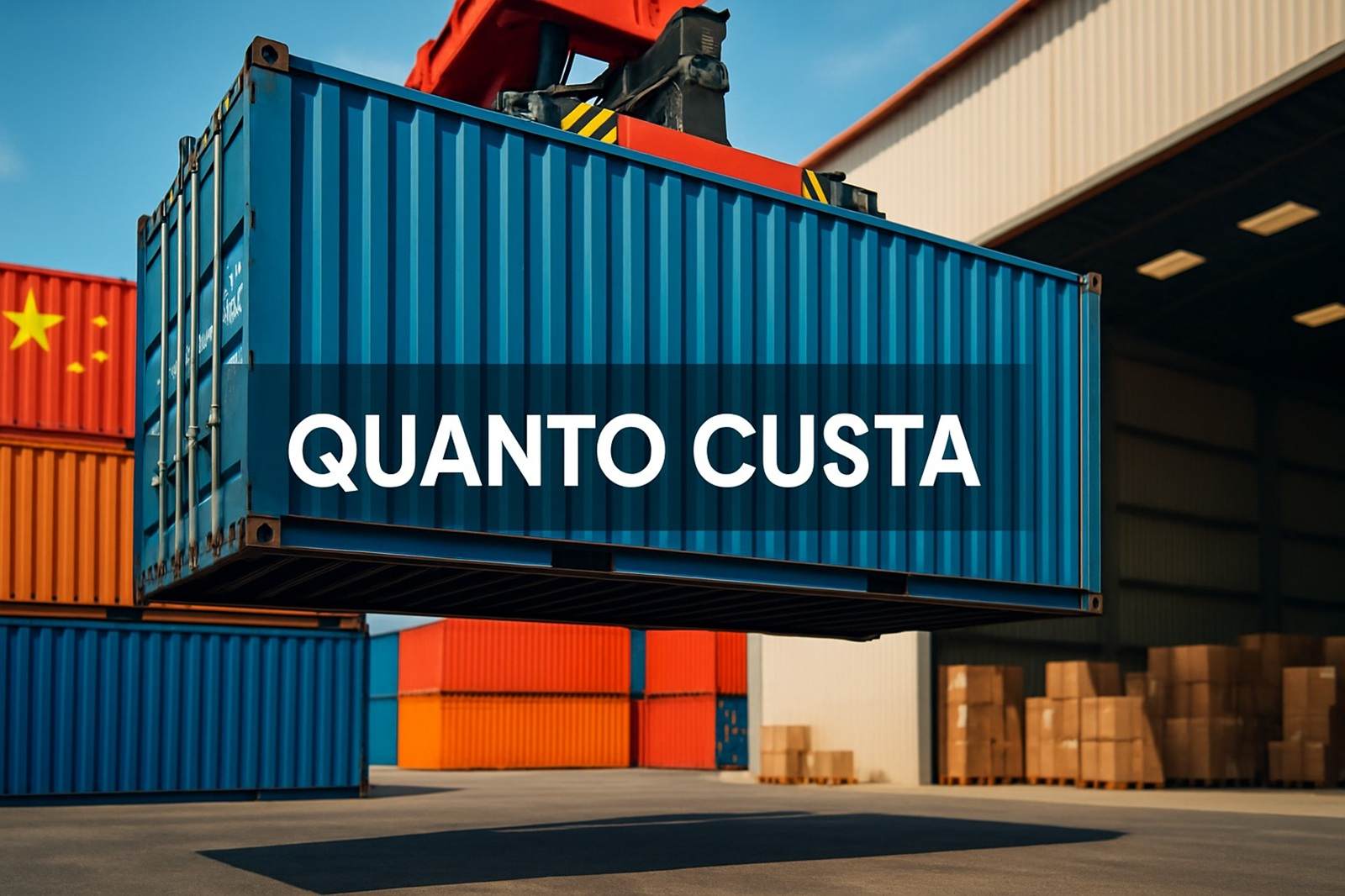

Importing From China Seems Like a Good Deal At First Glance, But Freight, Storage, And Taxes Can Turn A Low Price Into A Much Higher Investment
Importing From China may seem like an easy way to profit from attractive prices, but it involves a much more complex cost structure than the value displayed on international websites.
Behind each shipment there are logistical expenses, taxes, and variables that determine the final price in Brazil. Understanding each step is essential for those who intend to import legally and safely.
The Product Cost Is Just The Beginning
The prices practiced in the Chinese market are impressive: items that cost R$ 10, R$ 20, or R$ 50 on online platforms give the impression of immediate profit. However, this is just the factory price.
-
As Brazil Expands Social Welfare, Survey Reveals 40% Blame Poverty on Laziness, While 58% Cite Lack of Opportunities

-
China Tightens Control on Antimony, Driving Prices from $22,000 to Nearly $40,000 per Ton as U.S. Rushes to Bolster Strategic Reserves

-
BlackRock Freezes $1 Billion in Brazilian Renewable Energy, Impacting 1.5 GW of Planned Projects and Highlighting Investor Concerns Over Infrastructure Bottlenecks Cutting Up to 25% of Solar and Wind Generation
-
Labor Shortage: Despite Record Average Salary, 90% of Brazilian Bar and Restaurant Owners Struggle to Hire Key Roles Like Sushi Chefs and Head Cooks


To reach Brazil, the goods go through stages that require payment of freight, storage, handling, and, mainly, taxes.
The basic cost structure is divided into three blocks: product, logistics, and taxes.
Each of these factors can vary depending on the type of goods, the mode of transportation, and the final destination of the shipment. Those who understand this composition avoid surprises and can accurately calculate the total investment.
Three Pillars Of Importation: Product, Logistics, And Taxes
The first component is the amount paid to the supplier, which directly depends on the quantity and quality. In China, the larger the purchase volume, the lower the unit cost tends to be. Higher standard products, on the other hand, increase the price proportionally.
The second pillar is logistics. It involves all stages from internal transportation to shipping to Brazil. There are costs to collect the cargo at the factory, take it to the port, load the container, clear the goods, and carry out domestic transportation after unloading. Each phase has a direct influence on the final value of the delivered product.
The third pillar is taxes. To import legally, it is necessary to pay five taxes: Import Tax (II), Tax on Industrialized Products (IPI), PIS, COFINS, and ICMS.
These amounts are levied not only on the product price but also on freight and logistical expenses. The exact percentage varies according to the nature of the imported item and the destination state.
Transportation Modalities And Logistical Costs
Air transportation is the fastest method, but it is also the most expensive. On average, goods arrive in up to 15 days, but the cost can be up to 20 times higher than maritime transport.
This option is more suitable for lightweight products with high added value or urgent delivery needs.
Maritime transportation is the most commonly used and offers two modalities: full container and shared container.
In the first, the importer occupies all available space without the need for interim storage. In the second, several companies share the same container, which reduces the cost but requires consolidation and control in storage.
Currently, the freight for a full container can vary between R$ 20,000 and R$ 25,000, accommodating about a thousand boxes or 67 m³ – the equivalent of a three-axle trailer. The shared container is charged by cubic meter, with initial values around R$ 300 per m³ and progressive reductions as the volume increases.
Additionally, there is a storage usage fee, usually around 10% of the cargo value, which also decreases as the quantity shipped increases. These costs are only paid when the importer utilizes the service.
Practical Cost Simulation
To visualize the final composition, it is possible to use an average estimate. Those who invest R$ 50,000 in goods should consider about R$ 50,000 more to cover transportation, logistics, and taxes. In other words, the total amount tends to double.
For smaller purchases, the multiplier tends to be slightly higher: an acquisition of R$ 15,000 to R$ 20,000 can result in a final cost between R$ 34,000 and R$ 46,000.
This difference reflects the dilution of fixed expenses, which weigh more in smaller volumes.
The buyer’s location also influences costs. Cities close to ports, such as Jundiaí or Blumenau, have lower domestic freight rates. On the other hand, distant locations, like Cuiabá or Foz do Iguaçu, increase the cost of internal transportation.
Therefore, when it is said that a product “arrives at double the price,” this account already considers all costs to the final address in Brazil, including internal land transportation.
Planning And Calculation Before Purchase
Before making any payment to the supplier, the importer must calculate the total cost of the operation. This process involves detailed simulations with spreadsheets that show the product price, logistical expenses, taxes, and domestic costs.
This analysis prevents losses and allows evaluating whether the import is really worth it. With the correct information, the entrepreneur knows exactly how much they will spend and what their profit margin will be when reselling in Brazil.
Storage Structure And Direct Operation
The process of consolidating loads requires specific care. In the Chinese warehouse, teams organize the loading according to the weight and fragility of the goods. Heavy items go at the bottom of the container, while lighter ones are placed on top, ensuring safety and avoiding damage during transportation.
These operations occur constantly, with two to three loadings per week. The warehouse environment is bustling, with forklifts, trucks, and teams coordinating each step to optimize space and reduce costs.
Safety And Profitability In The Importation Process
The success of an import depends on planning, precision in calculations, and correct execution at each stage. Importing without knowing all costs is a mistake that can turn a good opportunity into a loss.
With the complete calculation made in advance, the importer has the assurance of knowing exactly how much they will pay and can decide based on concrete data.
By doing so, they avoid surprises, maintain profitability, and turn importation into a predictable and profitable operation.
Importation only becomes a good business when carried out with planning, control, and information. Knowing the real cost is the first step toward turning a cheap product into a safe and profitable investment.