






 Portuguese
  Spanish
  3 min of reading
  0 comments


A Lot Of Gold Has Been Extracted, But The Largest Volume Remains Out Of Human Reach — Trapped In The Earth’s Core, According To Scientists
Gold has always sparked fascination. Since ancient times, its shine and value have crossed civilizations. Today, the metal continues to be a symbol of wealth, investment, and beauty. But after all, what is the actual amount of gold available in the world?
The Total Amount Of Gold Extracted
According to estimates from the World Gold Council, humans have extracted about 216,300 tons of gold throughout history.
A large part of this volume has been directed toward jewelry production, accounting for about 45% of the total. Another 22% is in private and public collections — such as coins and bars — and 17% remains stored by central banks in various countries.
-
As the polar cold wave freezes the South this week, archaeology reminds us how the Kaingang dug underground houses on the Santa Catarina plateau to survive frosts millennia ago.

-
Federal Police involved in the case to identify the person responsible for hacking the Civil Defense system, which sent ten false alerts, frightened residents of different capitals, and turned messages about real risks into notifications with “misanthropy” and even alien attacks.

-
Extreme drought causes ghost village to reappear at the bottom of the reservoir that supplies Athens, revealing houses, a school, and ruins swallowed since the 1980s as the lake shrinks and exposes the water crisis threatening the capital of Greece.

-
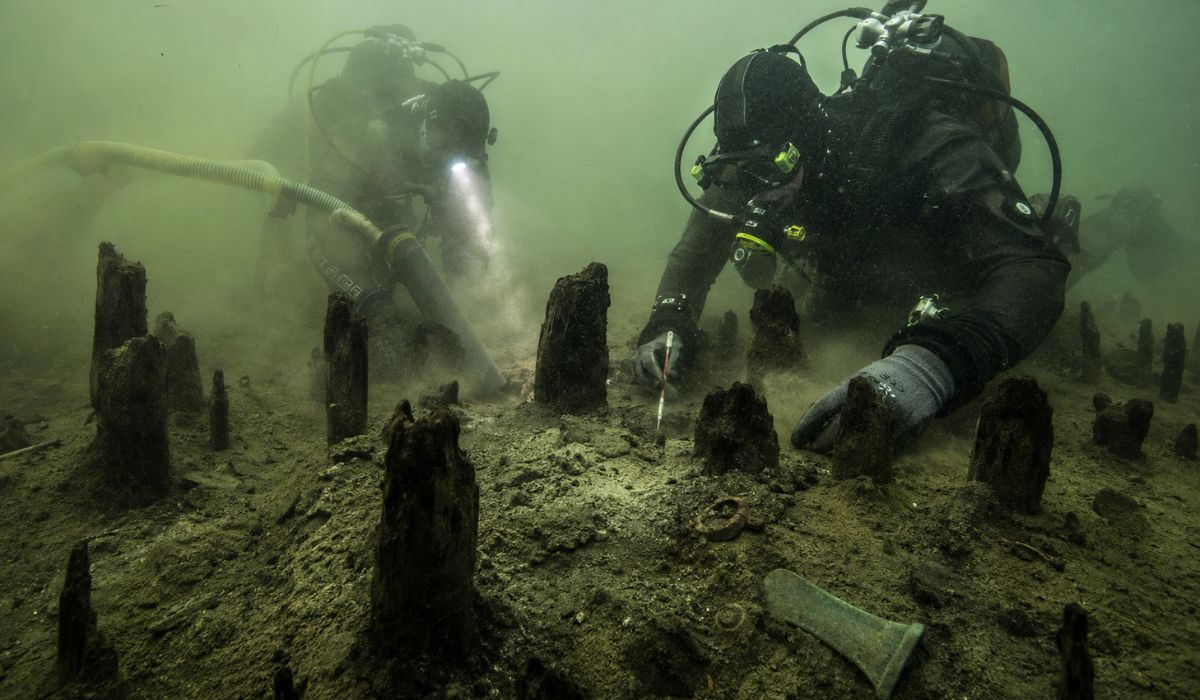
An entire village lay asleep at the bottom of a lake for 3,000 years: divers suction sediments in Italy and reveal more than 600 wooden stakes, bronze tools, and traces of a Bronze Age settlement hidden underwater.


The United States Geological Survey (USGS), which also tracks production data, estimates that 187,000 tons of gold have been extracted from nature to date.
Despite the difference in numbers, both sources agree that most of it has been used for jewelry making.
But the valuable metal has not run out. According to the report Mineral Commodity Summaries (MCS), published by the USGS itself, there are still about 64,000 tons of the metal in deposits considered accessible with current technology.
Three countries hold the largest reserves: Russia (12,000 tons), Australia (12,000 tons), and South Africa (5,000 tons). These locations are strategic for the future of gold mining.
Reserves Versus Resources
There is an important difference between “reserves” and “resources” when it comes to gold. Reserves are deposits whose extraction is economically viable with current methods.
Resources, on the other hand, include areas with mineral potential but still require more geological studies or technological development.
Based on this distinction, the World Gold Council estimates that global reserves total 54,700 tons, while resources amount to about 132,100 tons.
This difference shows that there is a lot of known gold, but still not effectively explored.
Gold In The Earth’s Crust
In addition to traditional reserves and resources, there is gold dispersed throughout the Earth’s crust. Researchers from the University of California indicate that this gold is mainly in igneous rocks, formed from cooling magma.
According to the Royal Mint, the United Kingdom’s Mint, if it were possible to gather all the gold present in the Earth’s crust, the total would reach 400 million tons.
However, this gold is extremely dispersed and cannot be easily utilized with the technologies available today.
The Largest Part Is In The Earth’s Core
Still, this number represents only a small portion of the gold that exists on the planet. Studies indicate that about 99% of the Earth’s gold is concentrated in the core, an area inaccessible to humanity.
If it were extracted, it would be enough to cover the entire surface of the planet with a golden layer half a meter thick.
This phenomenon is explained by the density of the metal. During the formation of the Earth, when everything was still molten, heavier elements, such as gold, sank to the core. This explanation comes from geologist Chris Voisey from Monash University.
According to him, 99.5% of the mass of the Earth formed during this initial phase, allowing denser metals to accumulate in the deeper parts.
Only 0.5% of the gold remained in the Earth’s crust, which corresponds to the quantities currently known and explored.
What We Know Is Just A Fraction
The majority of gold accessible for human use is in the form of jewelry, coins, bars, and bank reserves.
There is still much to be extracted from known deposits. However, the overwhelming majority of the planet’s gold remains out of reach, locked in the Earth’s core.
This reality shows that the valuable metal, despite its long history of exploration, still holds secrets about its true abundance.
For scientists, accessible deposits will continue to be the focus of mining in the coming years. Meanwhile, the core remains a natural vault, impossible to reach. For now.
With information from Canal Tech.





Be the first to react!