






 Portuguese
  Spanish



Alibaba Model Bets on Efficient Architecture, Autonomous Agents, and Global Expansion to Reduce Costs and Compete for Leadership in Artificial Intelligence
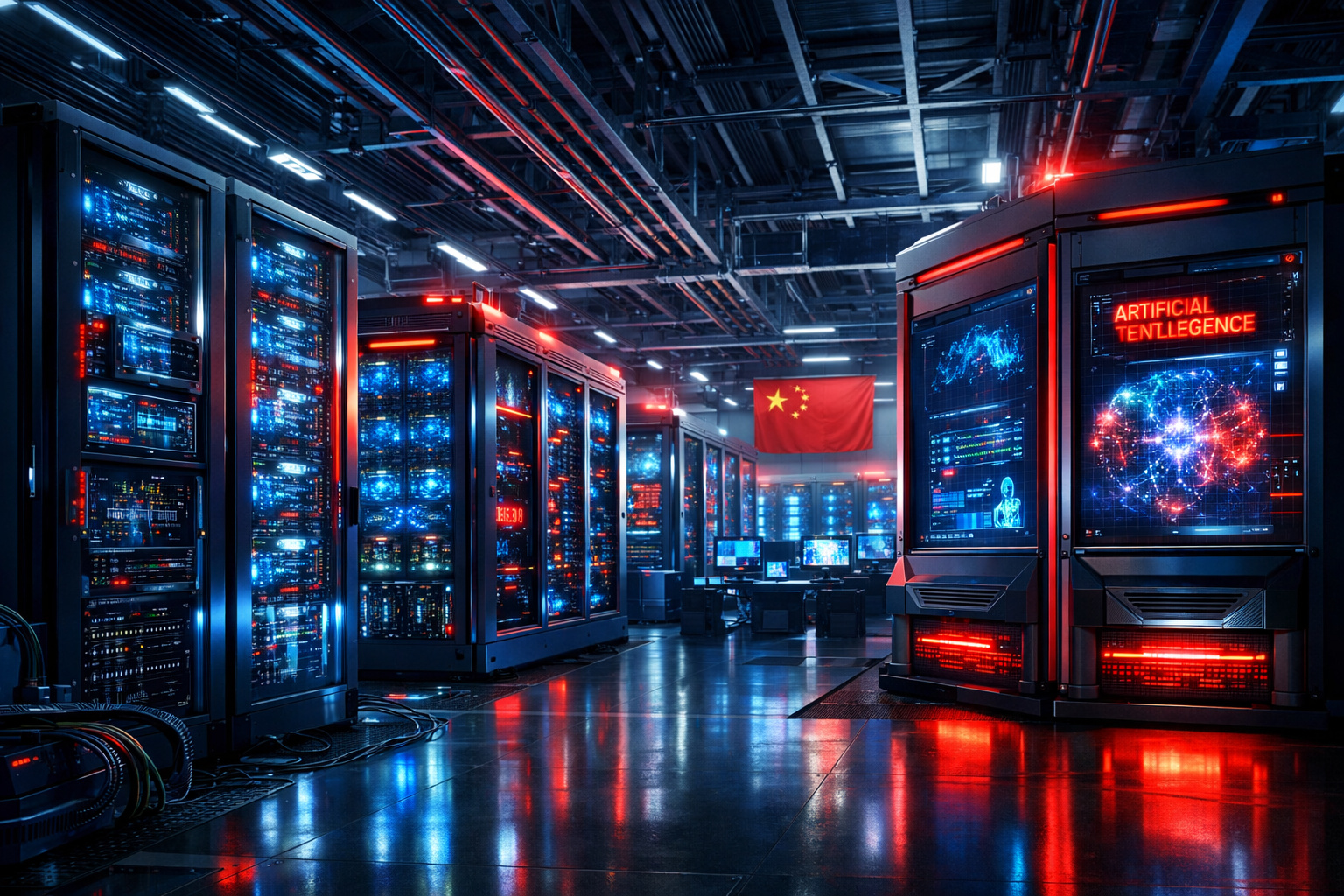
While Western companies focus on gradual updates to proprietary models, China has decided to accelerate. The Alibaba group officially announced Qwen 3.5, a model with 397 billion parameters. However, the goal goes beyond launching a powerful chatbot.
The company aims to transform artificial intelligence into accessible industrial infrastructure.
According to the official announcement, Qwen 3.5 operates as an engine for autonomous agents aimed at business automation. In other words, AI is no longer just a subscription service but starts operating within companies themselves.
-
The ‘tsunami’ of investments directed at Artificial Intelligence (AI) and semiconductor companies, which prioritize security and more predictable profits, has been a determining factor in the declining trajectory of Bitcoin.

-
Samsung eyes strategic chip factory in South Korea and could shake up the global AI landscape with advancements in HBM memories and advanced packaging.

-
Nvidia makes agreements in South Korea for AI factories and takes data centers, advanced chips, and global cloud to another level by 2027
-
ChatGPT reveals which human job it would choose if it could really work


This move is technological. However, it is also strategic.
Smart Architecture: 397 Billion Parameters, but Only 17 Billion Active
Qwen 3.5 utilizes Sparse Mixture of Experts architecture. In practice, the model has a total of 397 billion parameters. However, it activates only about 17 billion per request.
It’s like a gigantic library that only opens the necessary books.
Moreover, the model offers a maximum context of 1 million tokens. With this limit, it would be possible to insert extensive contracts, complete spreadsheets, entire codes, and email histories in a single analysis.
However, it is worth highlighting an important point. Having 1 million tokens available does not guarantee stable quality throughout the entire context. Benchmarks show technical performance. However, real corporate environments present greater complexity.
Even so, the technical advancement is noteworthy.
Autonomous Agents and Large-Scale Business Automation
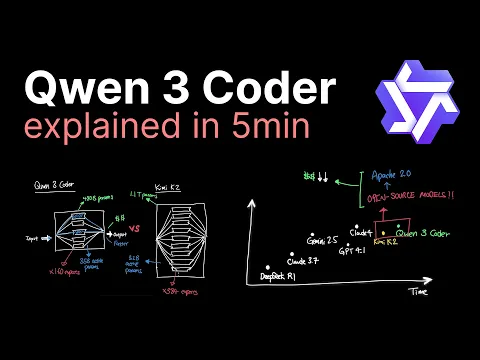

The Alibaba structured Qwen 3.5 to operate in two distinct modes:
- Deep reasoning mode, similar to OpenAI’s reasoning models
- Goal-oriented automatic mode, with task execution
In this second format, the user defines a goal. Then, the model performs actions.
For example:
“Organize my export logistics based on these emails and spreadsheets.”
In this scenario, the system could interpret data, navigate interfaces, locate buttons, and execute commands automatically.
If this promise is confirmed in practice, sectors such as logistics, legal, finance, customer service, and IT could feel a direct impact.
Additionally, the model maintains compatibility with open-source ecosystems. Thus, companies can run AI internally. In this way, they avoid sending sensitive data to external servers. Consequently, they gain technological autonomy.
Benchmarks, Linguistic Expansion, and Global Impact
Alibaba disclosed aggressive numbers. Qwen 3.5 achieved 88% to 89% in mathematical tasks. Furthermore, it showed competitive performance against models from Google and Anthropic.
Another relevant point involves spatial intelligence. The model demonstrated the ability to locate elements in graphical interfaces.
Still, it is important to remember: benchmarks are not the real world. Standardized tests do not fully reflect complex corporate environments. However, coming close to the leaders already represents a significant advancement.
In the linguistic field, the expansion is significant. Support increased from 119 to 2,011 languages and dialects. The vocabulary also grew to 250,000 tokens.
This enhances efficiency outside of English. Additionally, it strengthens presence in emerging markets such as Latin America, Africa, and Asia.
Another strategic factor deserves attention. Even with restrictions on access to advanced NVIDIA chips, China has advanced. Instead of relying solely on extreme hardware, development prioritized:
- Memory optimization
- Efficient architecture
- Selective activation of specialists
- Reduction of computational cost
Thus, external limitations stimulated structural innovation.
What’s Really at Stake?
The discussion is not just about technical performance. The central question is another:
Will artificial intelligence be an expensive and centralized service?
Or will it become accessible industrial infrastructure?
If models like Qwen 3.5 deliver real efficiency at a reduced cost, the impact could include:
- Less dependence on paid APIs
- Pressure on closed models from Silicon Valley
- Reconfiguration of the global economic dynamics
Therefore, the launch of Qwen 3.5 represents not only a technical advancement. It signals a strategic competition for the next phase of global digital infrastructure.
And this competition is just beginning.
Do you believe that artificial intelligence should be controlled by large Western companies or distributed as accessible infrastructure globally?


