






 Portuguese
  Spanish


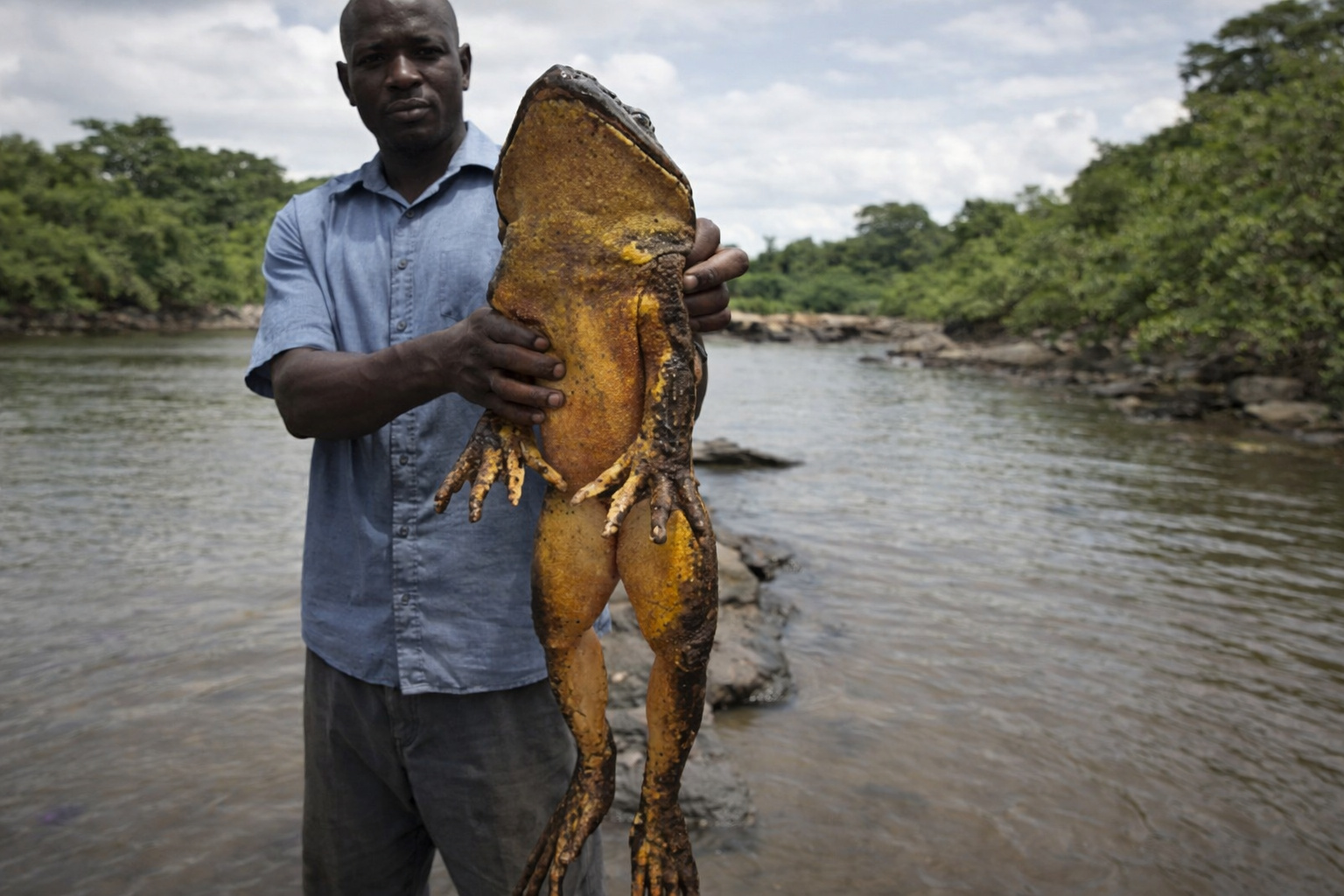


With Up to 32 Cm and Over 3 Kg, the Goliath Frog (Conraua goliath) Is the Largest Living Frog on the Planet, Capable of Leaps of Nearly 3 Meters and Impressive Adaptations.
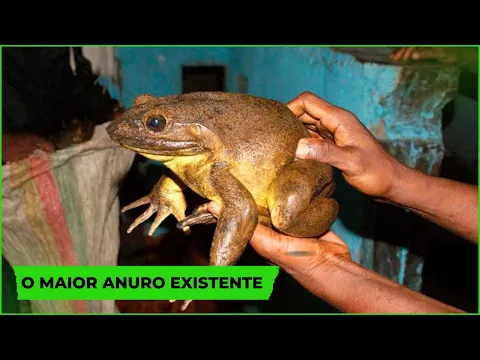
Few people imagine that the largest living amphibian on the planet is not an extinct animal or a museum rarity, but a species still inhabiting tropical rainforest rivers. The goliath frog, scientifically known as Conraua goliath, represents the known physical limit for modern amphibians. In the wild, adult individuals have been measured at up to 32 centimeters from snout to cloaca, not including the legs, and weights exceeding 3 kilograms, something absolutely out of the ordinary for frogs and toads.
What makes this animal even more impressive is that its gigantism does not compromise essential skills. Even with body mass comparable to that of a domestic cat, the goliath frog remains capable of long jumps and strong swimming in fast-flowing rivers.
Where the Goliath Frog Lives and Why Its Habitat Is So Specific
The distribution of the goliath frog is extremely restricted. It occurs naturally only in areas of southwestern Cameroon and continental Equatorial Guinea, in Central Africa. It is not a species widely distributed across the continent, but a true ecological specialist.
-
World’s Largest Particle Accelerator Begins Four-Year Hiatus for Magnet Overhaul, Aiming to Hunt Dark Matter by 2030

-
“Sahara Dust Turns Rain Red, Startling Residents Across Europe”
-
Stanford Scientists Develop 20-Cent Paper Centrifuge Inspired by Ancient Toy, Spins at 125,000 RPM Without Electricity, Separates Plasma in 1.5 Minutes, Aiding Diagnostics in Remote Areas

-
World’s Largest Vaccine Manufacturer, Immunizing Two-Thirds of Global Infants, Originated in a Pune Horse Farm






Its preferred habitat is clean, cold, well-oxygenated rivers, often associated with rapids and small waterfalls within dense tropical forests. This environment imposes constant challenges, such as strong currents and slippery surfaces, but also offers an abundance of food and strategic locations for reproduction.
The dependence on this specific type of river explains why the species is so vulnerable to environmental changes. Small shifts in water quality or river flow can render the area unviable for its survival.
Body Dimensions That Break Biological Patterns
The size of the goliath frog is not just a visual curiosity. It challenges classic concepts of amphibian biology, a group generally associated with small bodies, thin skin, and high dependence on moisture.
With up to 32 centimeters of body length and proportionally long, muscular legs, the goliath frog has an extremely robust skeletal and muscular structure. Weighing over 3 kilograms places it in a unique category among anurans, far surpassing any other living species.
Even so, it maintains surprising locomotor capabilities. Field records indicate jumps that can approach 3 meters, something remarkable considering the mass that needs to be propelled. This strength is essential for escaping predators and overcoming rocky sections of fast rivers.
A Giant Amphibian That Barely “Croaks”
Another little-known aspect is the vocal behavior of the goliath frog. Unlike most frogs and toads, it does not have a developed vocal sac. This means it does not produce loud vocalizations audible from a distance, common in other species during the breeding season.
Instead, reproduction involves visual and territorial behaviors. Adult males are known to modify their environment around rivers, piling stones to create small basins where females can deposit eggs. This “environmental engineering” behavior is rare among amphibians and reinforces the degree of specialization of the species.
Goslings, in turn, can reach considerable sizes before metamorphosis and primarily feed on specific aquatic vegetation, making them even more dependent on preserved environments.
Powerful Diet to Sustain a Giant Body
Maintaining a body of this size requires a rich and varied diet. The goliath frog is an opportunistic predator and consumes almost any prey it can capture and swallow.
Among the recorded items are large insects, crustaceans, mollusks, fish, other amphibians, and even small aquatic vertebrates. This dietary diversity is one of the factors that allow for extreme growth, but it also makes it dependent on healthy, balanced river ecosystems.

Energy efficiency is crucial. Unlike large mammals, amphibians have a metabolism more sensitive to environmental variations, which makes the balance between energy expenditure and food availability a decisive factor for survival.
A Giant Threatened with Disappearance
Despite its impressive size, the goliath frog is far from invincible. The species is classified as endangered, with significant population declines in recent decades.
Among the main threats are habitat destruction caused by deforestation, intensive agriculture, dam construction, and river pollution. Additionally, the goliath frog is hunted for local consumption and illegally captured for the exotic animal trade due to its extraordinary size.
The combination of limited geographic distribution and low tolerance to environmental changes makes population recovery slow, even in protected areas.
Why the Goliath Frog Intrigues Science So Much
From a scientific perspective, the goliath frog is a living laboratory of extreme evolution. It represents the apex of gigantism in modern amphibians, raising fundamental questions about physiological limits, body growth, and adaptation to the environment.
Researchers are investigating how its muscles, bones, and respiratory system manage to sustain such a large body without losing efficiency. There is also interest in understanding why this gigantism arose in such a specific environment and why it did not spread to other regions of the African continent.
Each new field observation helps refine the understanding of how evolution can push an entire group to its physical limits.
A Living Symbol of Nature’s Extremes
The goliath frog is not just the largest among its peers. It symbolizes how nature can produce organisms that seem to defy basic expectations about size, strength, and function.
In a world where amphibians face global declines, the existence of this silent giant in the rivers of Central Africa serves as a powerful reminder that even the largest survivors depend on fragile ecosystems. The lingering question is simple and unsettling: how long will this amphibious colossus be able to withstand the pressures imposed by human advancement?


Its Naruto Sage Mode
Tahm Kench
That’s much bigger than 32cm