Portuguese
  Spanish


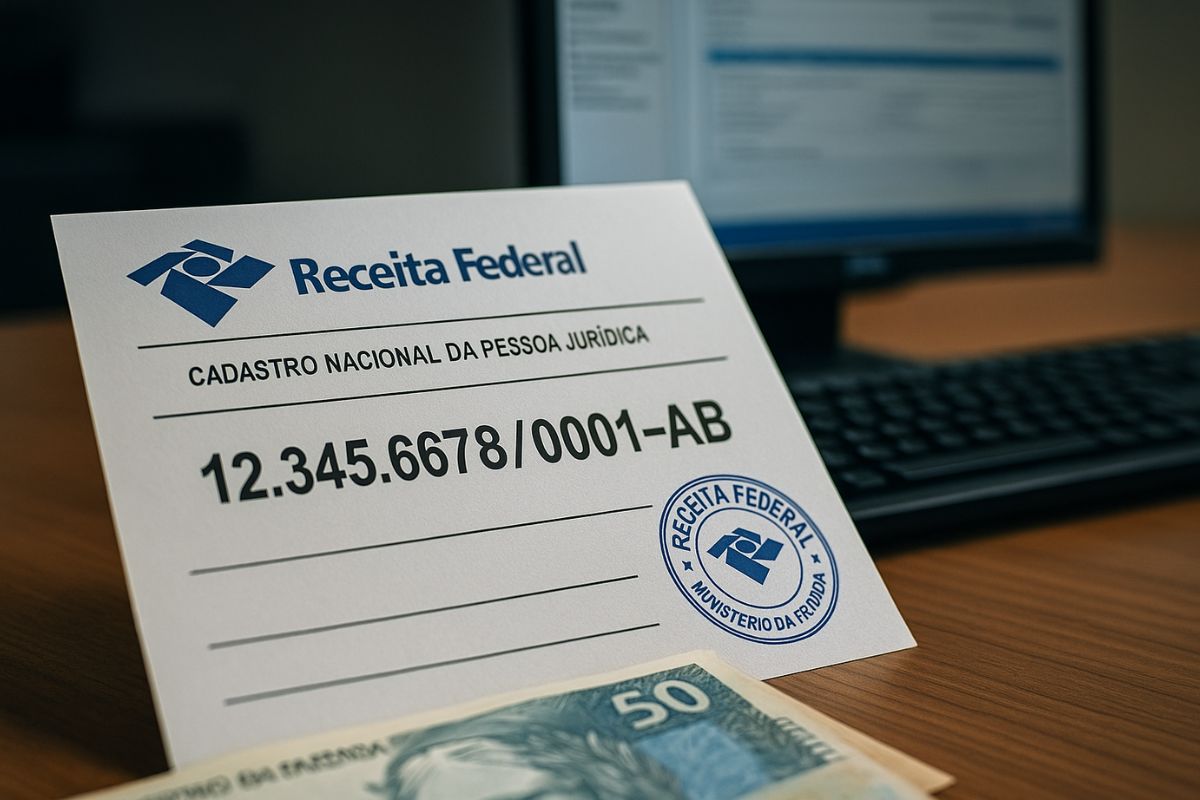


CNPJ With Letters Will Be Issued Starting in July 2026, Only for New Registrations, and Ensures Continuity of Registration After 63 Million Records Already Issued in the Numeric Model.
The Federal Revenue confirmed to G1 that the CNPJ with letters will start being issued in July 2026. The measure aims to expand the system’s capacity, which has already exceeded 63 million issued records since the registration was created. Currently, the 14-digit numeric model is nearing exhaustion, as each number is unique and cannot be reused, even when the company is dissolved.
According to the Revenue, more than 24.9 million CNPJs are active and another 29.2 million have already been deactivated, which puts pressure on the need for modernization. The new alphanumeric format will allow the inclusion of letters from A to Z in specific positions, exponentially increasing the possible combinations.
Who Will Be Impacted by the Change
The CNPJ with letters will be applied only to new registrations made starting in July 2026. This includes newly created companies, branches, condominiums, farmers, and self-employed professionals.
-
Major Company Shuts Down 70-Year-Old Factory in Brazil, Relocating Production and Impacting Over 100 Families

-
Toyota Shuts Down Brazilian Plant After Producing Over 1 Million Vehicles, Plans Special Destination for Final Corolla Produced Following $2.1 Billion Investment and Expansion.
-
Shoe Factories Close, Leaving 528 Workers Jobless in Sudden Turn of Events Affecting Hundreds of Families After Decades of Operation.
-
Chinese Automaker Plans Second Mega Factory in Brazil with $2 Billion Investment to Produce Electric and Hybrid Cars in Strategic Location.


Current CNPJs will remain valid without the need for replacement or update.
For companies already in operation, there will be no requirement for exchange.
All public and private systems, such as those for issuing invoices and tax control, will be adapted to recognize both the old and the new model.
How the New Format Will Work
The CNPJ will continue with 14 characters, but will be able to mix letters and numbers.
The Verification Digit (DV), which authenticates the registration, will still be calculated using the Module 11 method, now adapted to include letters.
For this, each character will be converted into a numeric value based on the ASCII table.
The Revenue also stated it will provide calculation routines in popular programming languages to facilitate software and database adaptation.
The implementation schedule will be announced gradually, with sectors being incorporated in stages.
Challenges and Costs for Companies
Although not requiring direct action from taxpayers, the change will bring technical impacts.
Companies that use management systems, invoice issuance, and databases will need to update their platforms to recognize the new alphanumeric standard.
Temporary failures in document issuance, difficulties with suppliers, and delays in meeting tax obligations may occur.
The Revenue promises to provide support tools to reduce the cost of this adaptation, but experts warn that smaller companies may face extra expenses to update their systems.
Connection with Tax Reform
The announcement of the CNPJ with letters is also part of the modernization process linked to the tax reform.
The new registry will help integrate systems that will eventually operate with the CBS (Contribution on Goods and Services) and the IBS (Tax on Goods and Services).
According to the Revenue, the change will facilitate fiscal control, the separation between personal and professional expenses, and the automation of routines such as tax credit recovery.
In practice, the new model paves the way for the Brazilian tax system to be more efficient and resilient to the growth in the number of companies.
With the start of the issuance of the CNPJ with letters, Brazil gains momentum to register new companies without the risk of exhausting the system.
Although it brings adaptation costs, the measure is seen as necessary to ensure legal security and continuity of economic operations.
And you, do you believe this change will really simplify the life of entrepreneurs or will it be just another bureaucratic challenge? Leave your opinion in the comments — your experience can help enrich the debate about the impact of the new alphanumeric model.