Portuguese
  Spanish


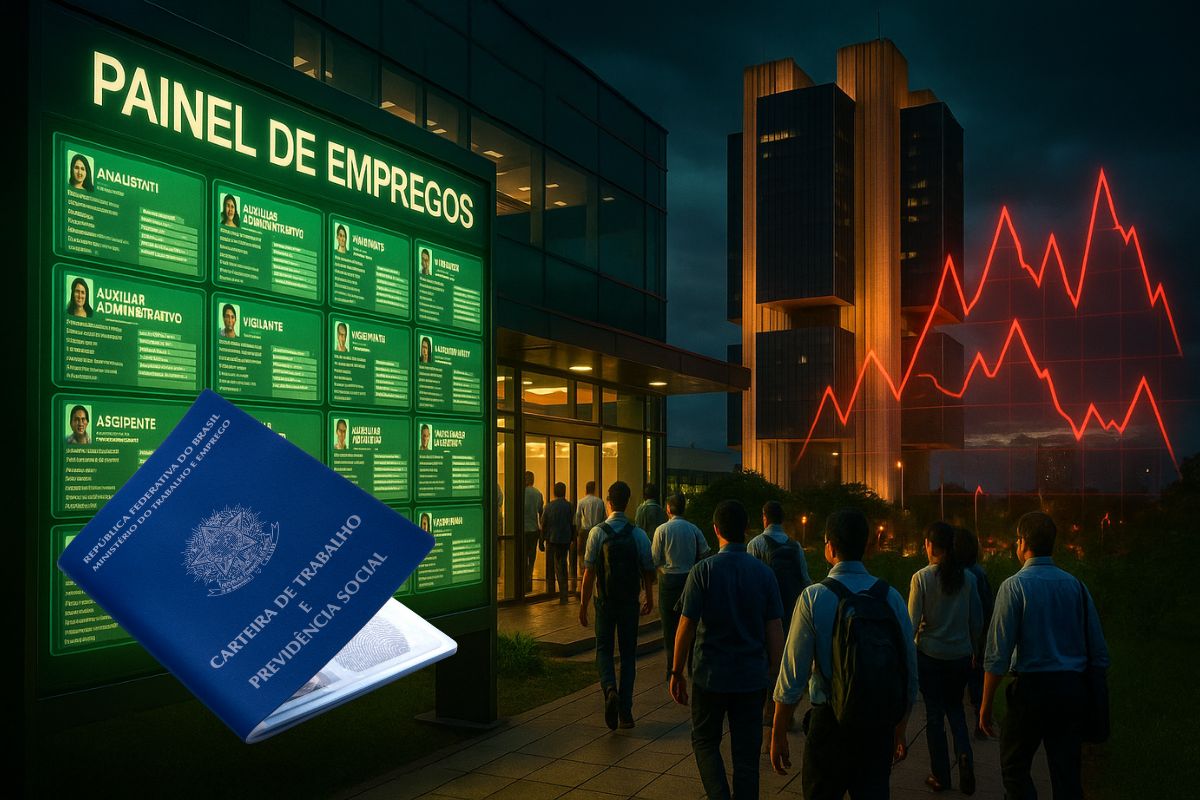

Historical Records in Employment Show the Strength of the Labor Market, but the Central Bank Keeps Interest Rates Locked Until 2027 Due to Inflation.
Brazil registered historical records in employment in the quarter from May to July, according to data from the Continuous PNAD released by the IBGE. The result confirms the strength of the labor market, even amid monetary tightening and economic uncertainties. However, the Central Bank, as highlighted by the Times Brasil (CNBC), reiterates that the benchmark interest rates must remain high until 2027 due to persistent inflation.
The unemployment rate fell to 5.6%, the lowest since the beginning of the historical series in 2012. This represents 6.1 million unemployed Brazilians, down from 7.3 million during the same period in 2024.
The number of employed reached 102 million workers, another record. Nevertheless, the Central Bank warns: there will be no reduction in the Selic rate while the inflation expectation for 2027 is not anchored to the 3% target.
-
Trump’s 50% Tariff on Brazilian Goods Cuts U.S. Exports by 30%, Brazil Sets Records in 42 Countries and Germany Becomes Top Coffee Buyer

-
Brazil Harvests Record 358 Million Tons of Grain but Lacks Storage for 134 Million Tons

-
A New Bakery Opens Every Six Minutes in Brazil, Highlighting a Surge of 26,400 Small Businesses in Early 2025
-
Brazil’s Lula Government Allocates $463 Million Quota for Electric Car Parts, Waives Import Tax Until December, Sparking Competition Among BYD, Automakers, and Unions as Consumers Question Impact on Prices and Local Industry


Employment Hits Records in Brazil
The IBGE recorded improvements in nearly all indicators. The wage mass, which is the sum of the earnings of all workers, reached the highest level ever measured.
This occurred because, in addition to more people being employed, there was an increase in average income to R$ 3,484, a real growth compared to the previous year.
Another highlight was the increase in the number of formal workers, which reached 39.1 million.
The informality rate fell to 37.8%, indicating more intense formalization in the market. This data reinforces that the historical records in employment are supporting consumption and revenue in the country.
Underutilization Declines and Occupancy Rate Rises
The underutilization rate of the workforce fell to 14.1%, the lowest level in the historical series. This indicator includes unemployed individuals, underemployed due to insufficient hours, and potential labor force.
The decline shows that more Brazilians are succeeding in finding jobs with adequate hours.
The occupancy rate rose to 58.8%, the highest since 2012. This means that more people of working age are, in fact, integrated into the market.
Experts assess that this expansion confirms the solidity of the recovery, even under the impact of high interest rates.
The Interest Rate Lock: Why the Central Bank Resists
Even with historical records in employment, the Central Bank keeps the Selic at 15% and has made it clear that cuts will only occur after 2027.
The reason is the inflationary risk. According to the Times Brasil (CNBC), the Central Bank fears that rising income and employment will put pressure on prices, especially in the services sector.
The institution repeats that, as long as inflation expectations do not converge to 3%, there is no room for flexibility.
This firm stance has a direct impact on credit, consumption, and investments, raising criticism from business owners and workers.
The Dilemma of the Brazilian Economy


The economy lives in a paradox: on one side, employment and income at record levels; on the other, a persistent monetary tightening that hinders investment and makes credit more expensive. This raises doubts about the sustainability of growth, since a heated labor market typically puts pressure on inflation.
Analysts assess that the future will depend on the evolution of wages. If they continue to rise without generating strong pressures on prices, there may be room for early cuts to the Selic.
Conversely, the interest rates locked until 2027 should remain the main anchor against inflation.
Brazil experiences a historical contrast: records in employment on one side and stagnant interest rates on the other.
This duality exposes the challenges of economic policy and brings into debate the priorities for the coming years.
Do you agree with the Central Bank’s decision to keep the Selic high even in the face of historical records in employment? Does this help contain inflation or harm the real economy?
Leave your opinion in the comments; we want to hear from those who feel these effects in their daily lives.