Portuguese
  Spanish


New European Union rule pressures exports from the world’s largest cocoa producer, while less than half of the beans have proven origin
The global cocoa supply chain has entered a decisive phase before the new anti-deforestation law of the European Union.
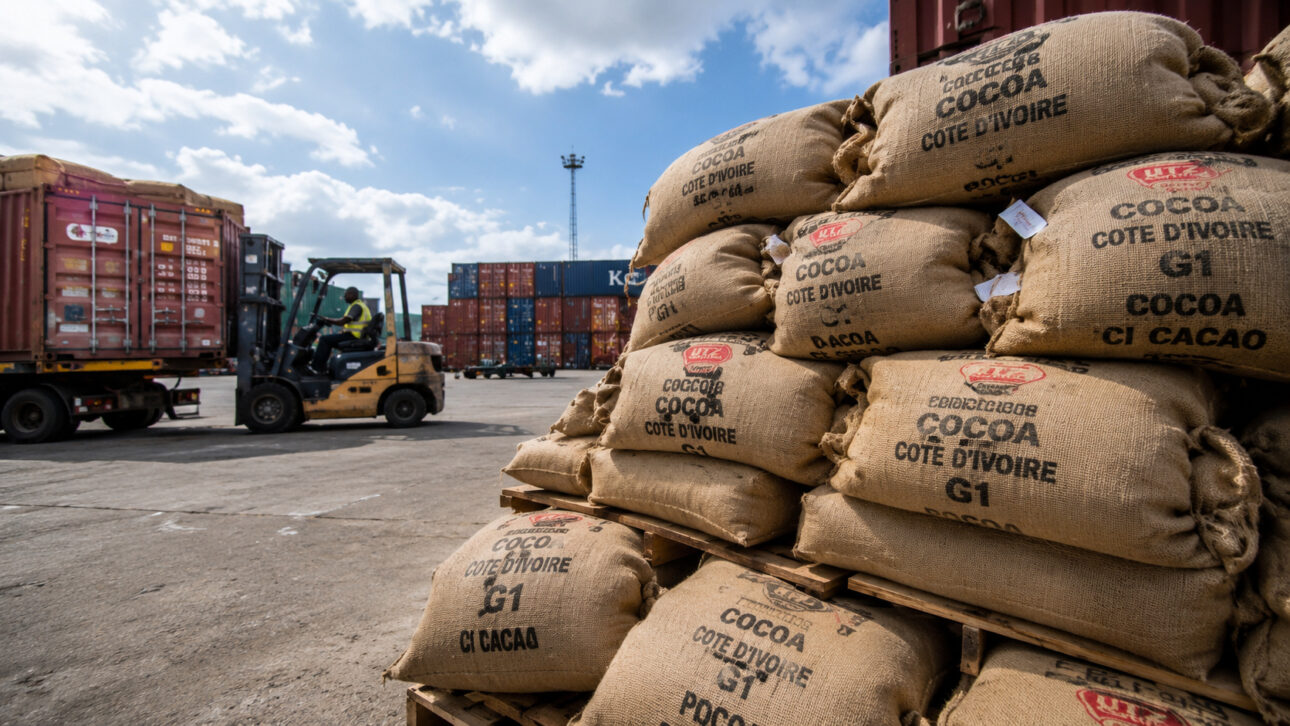
Ivory Coast, the world’s largest producer of the commodity, proved the origin of only 48% of cocoa exports in 2024, according to an analysis by the British organization Trase, released on Tuesday, 12.
The survey, echoed by Reuters Agency, shows that less than half of the exported beans can be traced back to the agricultural cooperatives responsible for cultivation.
-
23-Year-Old Brazilian Turns Beekeeping into College Tuition, Harvesting Honey Twice a Year from 50 Hives

-
10-Year-Old Boy Persists After Being Told He’s Too Young, Now Helps Manage Brazilian Farm and Launches New Project
-
Chinese Farmers Develop “Blanket Greenhouses” to Grow Vegetables in Extreme Winter Without Heaters

-
Centuries Before Modern Greenhouses, English Gardeners Used Horse Manure to Grow Pineapples in Cold Climates




The warning grows because the European legislation comes into effect in December and will require proof that imported products were not produced in deforested areas.
The pressure increases because the European Union buys about 66% of Ivorian beans. Ivory Coast accounts for just over a third of global cocoa production.
Limited traceability threatens cocoa exports
The main difficulty lies in the indirect supply chains, which still concentrate a large part of the Ivorian cocoa trade.
In these cases, the beans pass through several intermediaries before reaching international buyers.
This path makes it difficult to verify the origin of the production and reduces visibility over possible environmental impacts.
According to Trase, the predominance of this indirect supply compromises the monitoring of the production chain.
Low traceability also hinders the fight against issues such as deforestation and child labor, according to the organization’s assessment cited by Reuters.
New European law expands environmental requirements
The European Union Regulation for Deforestation-Free Products, known as EUDR, will require new proofs from importing companies starting in December.
The rule covers commodities such as cocoa, soy, coffee, and beef.
Companies will need to demonstrate that these products are not linked to deforested areas.
The legislation is considered one of the most ambitious measures in the world to reduce emissions associated with deforestation.
Exporting countries, however, claim that the requirements are complex and have high operational costs.
Brazil, Indonesia, and the United States are among the countries that have already shown resistance to the new rules.
The European Union itself has postponed the full implementation of the legislation twice due to diplomatic and economic pressure.
Loss of forests exposes the size of the challenge
Ivory Coast lost or degraded about 79% of its forests between 2000 and 2024, according to analyses cited by Trase.
During much of this period, the expansion of cocoa plantations accounted for nearly half of the forest loss.
Trase states that the recent drop in overall deforestation rates also reflects a worrying factor.
The reduction occurred, in part, because there is a limited amount of forest left in the country.
The advance of cultivation over natural areas has become a symbol of a global challenge for the sector.
The supply chain needs to balance agricultural production, environmental conservation, and income for small producers.

Government seeks digital system to prove origin
The Ivorian government is betting on a digitized cocoa trading system in response to international pressure.
The proposal aims to enhance grain traceability and validate the origin of production before the new European requirements.
Producing countries claim that much of the adaptation costs fall on low-income farmers.
Consumer markets, in turn, demand increasingly stringent environmental standards.
This impasse places small producers at the center of the discussion on international trade, climate, and economic security.
Cocoa becomes a symbol of the dispute between trade and climate
Deforestation is currently the second largest cause of climate change on the planet, second only to the burning of fossil fuels.
The case of Ivory Coast has gained international weight by uniting exports, the environment, and traceability.
The new European rule tries to reduce the environmental impact of global consumption.
However, the low traceability of cocoa shows that the transition will be complex for producing countries.
Exporters try to preserve access to the European market. Producers seek to maintain income. Buyers need to prove environmental compliance.
The challenge goes beyond the cocoa market and shows how global trade will increasingly be pressured by climate demands.
Will Ivory Coast be able to prove the origin of cocoa in time to protect its exports without increasing pressure on small farmers?