






 Portuguese
  Spanish
  3 min of reading
  0 comments


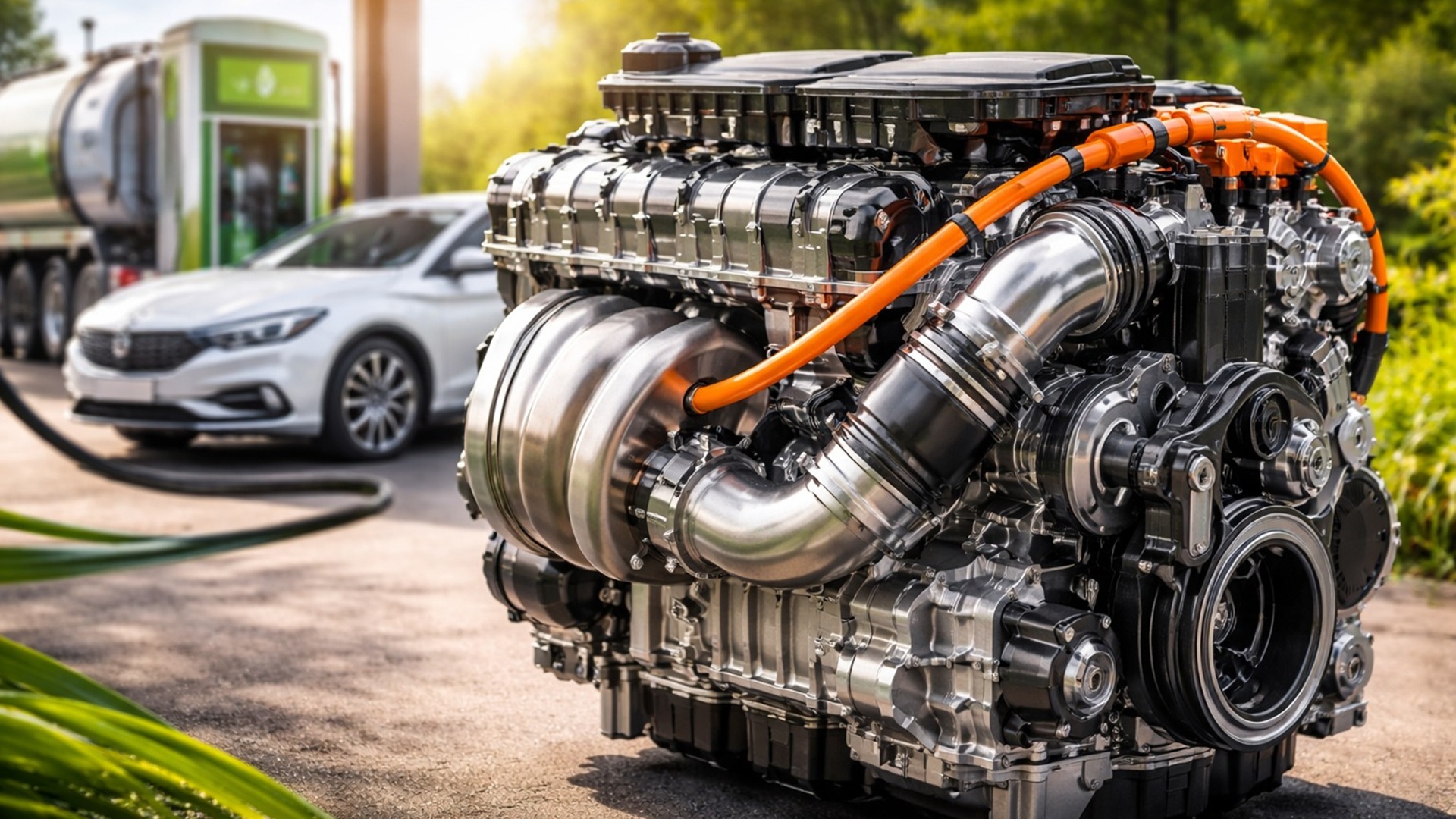
Hybrid Technology H12 Developed by Horse Powertrain in Partnership with Repsol Achieves Thermal Efficiency of 44.2%, Registers Up to 30 km/l in the WLTP Cycle and Aims to Reduce 1.95 US Tons of CO₂ per Year, with Demonstrator Vehicle Expected for 2026
A 40% Reduction in Fuel Consumption is the goal of the new hybrid concept H12 from Horse Powertrain, presented to operate with 100% renewable gasoline, with thermal efficiency of 44.2%, up to 30 km/l in the WLTP and a demonstrator vehicle expected for 2026.
With the aim of enhancing the relevance of combustion technology in a low-carbon era, Horse Powertrain unveiled a hybrid powertrain concept designed for fully renewable gasoline. The first demonstrator vehicle is expected to launch in early 2026.
Founded in 2024 as an independent supplier, the company consolidated the internal combustion and hybrid engine operations of Geely and the Renault Group. The joint venture is owned 45% by Geely, 45% by the Renault Group, and 10% by Aramco.
-
Bacteria hidden in the freezing waters of Antarctica intrigues scientists by producing a rare compound that targets melanoma cells without affecting healthy tissues.

-
The “Chinese invasion” has arrived: BYD already dominates almost 45% of the electric buses registered in Brazil in May 2026, while 80% of the entire electric fleet in the country is concentrated in São Paulo with 1,300 vehicles.

-
From toy to track machine: Koenigsegg Sadair’s Spear made with over 327,000 Lego pieces reaches 111 km/h and surpasses the former Bugatti Chiron record.
-
Deep-sea marine animal can go more than 5 years without eating, combining physical adaptations and genetic mechanisms to survive in environments with extreme food scarcity; meet the Bathynomus.




The company provides engines and hybrid systems for Renault, Geely Auto, Volvo Cars, Nissan, Mitsubishi Motors, and Proton. This presentation positions the supplier linked to Geely among the leading global players focused on incremental efficiency gains in hybrid architectures.
40% Reduction in Fuel Consumption and Thermal Efficiency of 44.2%
The Horse-Repsol H12 concept establishes maximum braking thermal efficiency of 44.2%. Developed in collaboration with Repsol, the system is based on a previous hybrid architecture from the company.
According to CarNewsChina, in standardized WLTP tests, the system achieves approximately 71 miles per gallon, about 30 km/l. This result represents an improvement of around 40% compared to the European average for newly registered passenger vehicles in 2023.
This performance reinforces the 40% Reduction in Fuel Consumption as a benchmark for the project. The figure positions the system among the combustion hybrids currently in production with the highest declared efficiency.
H12 Architecture Prioritizes Thermodynamic Performance and Energy Recovery
The concept incorporates a compression ratio of 17:1, a reworked exhaust gas recirculation system, and an optimized turbocharger. The transmission calibration has been adapted specifically for hybrid operation.
The modifications aim to enhance combustion efficiency and improve energy recovery in the hybrid architecture. The system extracts more usable power from each combustion cycle while supporting electrified performance.
The configuration has been optimized to operate with fully renewable gasoline supplied by Repsol. The fuel is produced from renewable raw materials, rather than fossil sources.
Estimated Impact on Emissions and Annual Mileage Considered
The companies estimate that a mid-size vehicle equipped with the hybrid system could reduce carbon dioxide emissions by approximately 1.95 US tons per year.
The estimate considers annual mileage of about 12,550 kilometers, equivalent to 7,800 miles, compared to a conventional gasoline vehicle. The calculation reinforces the proposal of a 40% Reduction in Fuel Consumption along with reduced emissions.
From Bench Tests to Demo Forecast in 2026
The development has moved beyond the design phase. Two prototype engines have already been assembled and are in the validation testing phase.
The first demonstrator vehicle integrating the new hybrid system is expected to be presented in early 2026. This stage marks the next step towards potential commercialization.
The presentation occurs at a time of accelerated development of hybrid systems, even with the expansion of battery electric vehicles. Automakers and suppliers are seeking a diverse combination of propulsion technologies.
Regional differences in infrastructure, energy availability, and regulatory standards shape these strategies. Companies adapt solutions for specific markets, aiming to balance performance, efficiency, and environmental impact.
By promoting hybrid systems alongside electrification, manufacturers hope to offer options with lower emissions. The 40% Reduction in Fuel Consumption is part of this movement, which seeks to facilitate the transition to fully electric mobility, even in scenarios of uneven infrastructure.








-

-

4 people reacted to this.