Portuguese
  Spanish


Child marriage rises in the Rohingya camps of Cox’s Bazar, Bangladesh, after aid cuts close schools and leave almost 500 thousand Rohingya children without learning. A report published by Reuters in August 2025 shows families pushed to child labor in the face of hunger, fear, and abandonment.
Child marriage has once again become a concern for humanitarian agencies in the Rohingya camps of Cox’s Bazar, Bangladesh, after funding cuts closed schools and affected nearly 500 thousand Rohingya refugee children. The situation was reported by Reuters in an article published on August 22, 2025.
According to information published by Reuters, the case of Begum, a 35-year-old Rohingya mother, exposes the severity of the crisis. She stated that she married off her 16-year-old daughter out of fear of what could happen to girls out of school in the overcrowded settlements, while organizations warn of increased child labor and loss of access to education.
School closures pushed families to extreme decisions
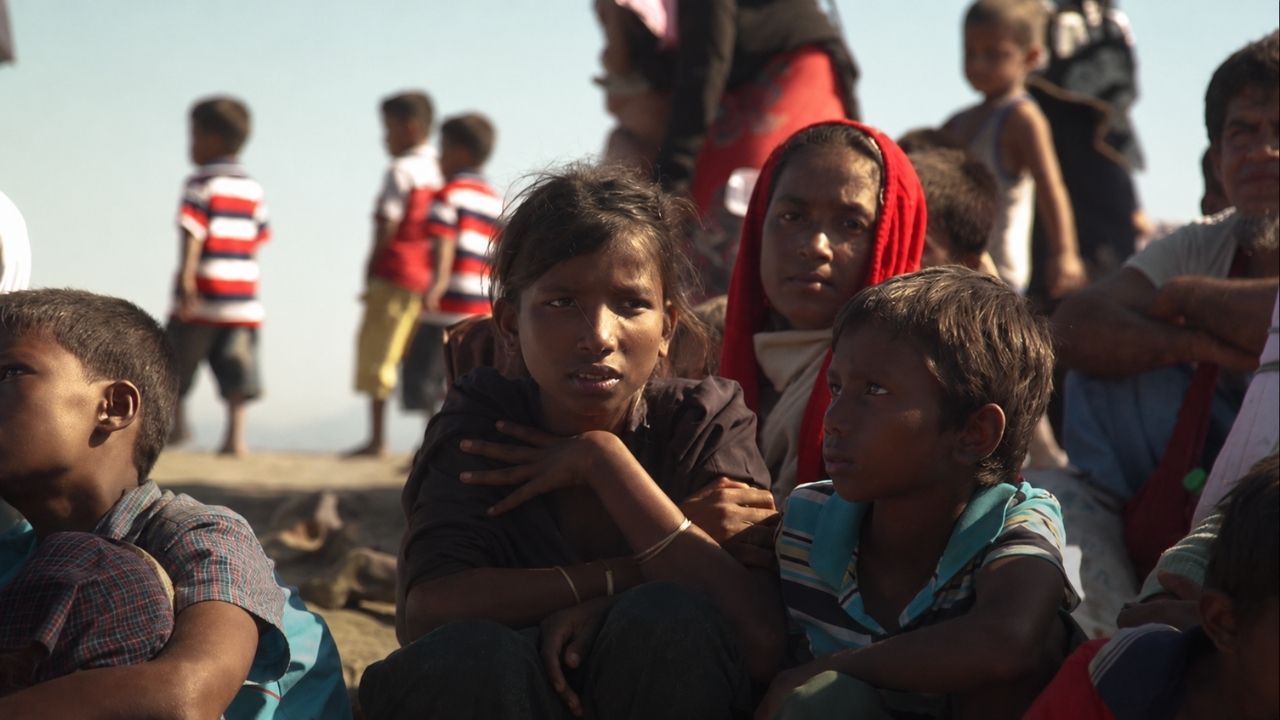
In the camps of Cox’s Bazar, the closure of thousands of classrooms left families without one of the few protective structures available for refugee children. When school disappears, girls and boys become more exposed to idleness, informal work, social pressure, and forms of exploitation.
-
18-Year-Old Student Designs Modular Microhouse from Fiberglass and PET to Combat Homelessness in Brazil, Plans to Live in Prototype for a Year to Demonstrate Quick Assembly

-
The Frenchman Who Brought the World Cup to Life: Overcoming Resistance and Crossing the Atlantic with the Trophy to Create Football’s Biggest Tournament

-
Archaeologists Reexamine 4,500-Year-Old Tombs in Ancient Mesopotamia, Suggesting Some Early Kings May Have Been Powerful Women
-
The North Face Co-Founder Donates Vast South American Lands to Create National Parks in Patagonia, Turning Private Wealth into Environmental Legacy


For Begum, the absence of school became a daily fear. The mother, who lives in a bamboo shelter and has seven children, told Reuters that she felt pressured to marry off one of her daughters before the situation worsened, stating that she hoped the husband would allow the teenager to continue studying.
The decision does not appear as a simple choice, but as a symptom of a larger crisis. Child marriage emerges in the report as a desperate response from a family surrounded by poverty, insecurity, and lack of prospects within the camps.
Begum did not reveal her full name for fear of reprisals. This detail shows how sensitive the topic is even within the refugee community, where social norms, stigma, and survival mix in an environment of extreme vulnerability.
Almost 500,000 Rohingya children are without access to education
Bangladesh hosts about 1.2 million Rohingya refugees, half of them children. Most fled Myanmar in 2017, following a military crackdown described by UN investigators as a classic example of ethnic cleansing.
Eight years after that mass displacement, education has collapsed again. The International Rescue Committee estimates that up to 500,000 Rohingya children are without access to learning in Cox’s Bazar.
The situation is even more severe for those under 12 years old. According to the IRC, no Rohingya child below this age in the settlements currently has access to formal education.
UNICEF, responsible for many learning centers, stated that it suspended activities at more than 4,500 schools in June. The measure left more than 227,500 children without classes and nearly 1,200 Bangladeshi teachers unemployed, as well as affecting many Rohingya teachers.
Child marriage and child labor have increased with the crisis
Humanitarian agencies warn that the reduction of services is already producing concrete consequences. According to the IRC, reported cases of child marriage have increased by 3% this year, while child labor has risen by 7%.
These numbers may be lower than reality. The organization itself points out that limited monitoring and social stigma make it difficult to identify all cases, especially in communities where families fear exposure or punishment.
When basic services disappear, children bear the burden of adult survival. Girls may be given into marriage, while boys and girls may be pushed into work, exploitation, or dangerous activities.
Hasina Rahman, director of the IRC in Bangladesh, warned that more families may resort to extreme survival measures, including selling children for marriage, forced labor, and increased risk of sexual abuse. The statement reinforces the urgency of the situation.
Aid cuts threaten food, health, and protection
The educational crisis is just part of a larger problem. UNHCR reported that it needs about $256 million to support displaced Rohingya this year, but has received commitments equivalent to only 38% of the total.
Globally, the UN refugee agency expects to receive only a third of the $10.6 billion needed to assist displaced populations. This threatens essential services in different regions, including Bangladesh.
In the Rohingya camps, the lack of resources can affect food, health, cooking gas, soap, and education. The interim UNHCR representative in Bangladesh, Juliette Murekeyisoni, stated that the community has already lost everything and now faces a severe lack of funding.
Without additional support, vital services may be interrupted or severely damaged. For families already relying on humanitarian aid to survive, any cuts create a chain of effects that quickly reach the children.
Teachers see a generation losing the future
In the camps, teachers describe children wandering between bamboo shacks, mud, and rain, without a study routine. Naser Khan, a Rohingya teacher, stated that the children are forgetting what they learned and called the scenario a lost generation.
The statement reveals the silent impact of school interruption. The loss is not just of content; it is of routine, protection, social interaction, adult reference, and hope for future mobility.
For many Rohingya children, school was one of the few bridges between the camp and the possibility of another destiny. Without classes, the days become empty and more dangerous.
Kafayat Ullah, a 45-year-old math teacher, said he dreamed of seeing students become doctors or engineers. Now, according to him, without classes, these dreams are being destroyed within the camps themselves.
A girl wanted to be a doctor but was left without school


Reuters also reported the case of Nahima Bibi, nine years old, who now spends her days playing in the muddy alleys of the camp. She asked how she could become a doctor if she cannot go to school.
The phrase sums up the human dimension of the crisis. Behind the numbers on funding, closed schools, and children without classes, there are life projects interrupted before they even begin.
Childhood in the Rohingya camps is being compressed between displacement, poverty, and international abandonment. Children who survived the escape from Myanmar now face another type of loss: the slow erosion of the future.
This absence of education also increases the risk of child marriage, child labor, and exploitation. Without school, children become more vulnerable to decisions made by families pressured by survival.
Cox’s Bazar became the largest refugee settlement in the world
The Cox’s Bazar region became the world’s largest refugee settlement after more than 700,000 Rohingyas crossed the Myanmar border into Bangladesh within a few days in 2017.
Since then, the camps have grown under constant pressure. In the last 18 months cited by Reuters, up to 150,000 new Rohingyas have arrived in the region, increasing the demand on already overloaded services.
The current crisis shows that displacement does not end when the family crosses the border. Physical survival can be ensured by shelters and food, but dignity, education, and protection require continuous funding.
When this support fails, the consequences appear in the most fragile spaces: closed classrooms, girls married early, children working, and families without safe alternatives.
Rohingya crisis reveals the human cost of international cuts

Begum’s case cannot be read in isolation. It represents the pressure that thousands of families face when international aid decreases, schools close, and life in the camps loses any prospect of improvement.
Child marriage emerges as an extreme consequence of a collapsing system. It is not a tradition seen in the abstract, nor an individual decision disconnected from the context; it is a survival response within a prolonged humanitarian crisis.
When nearly 500,000 children are left without access to education, the damage is not limited to the present. It creates a generation with less protection, less training, and a higher risk of exploitation.
And you, do you believe that the international community should prioritize reopening schools in the Rohingya camps before more children are pushed into child marriage and child labor? Leave your opinion in the comments.