






 Portuguese
  Spanish


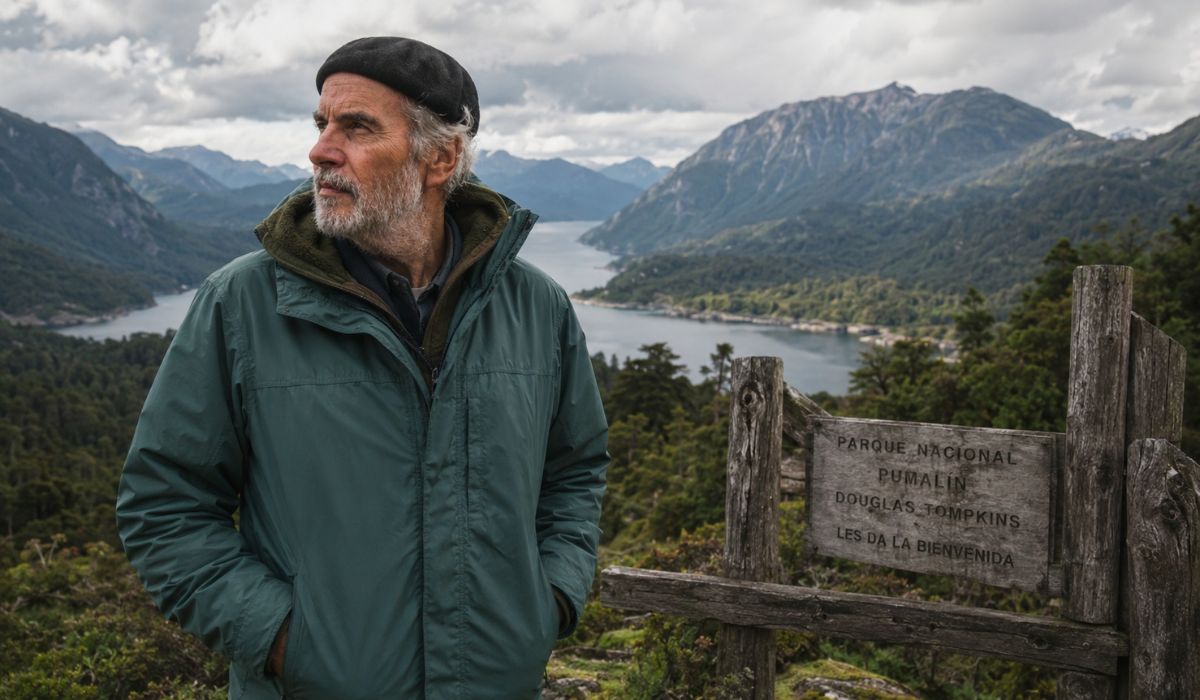

The journey of Douglas Tompkins combines business, environmental conservation, and territorial disputes in areas of South America that later became part of national parks in Chile and Argentina.
Douglas Tompkins, an American businessman linked to the creation of The North Face and Esprit, used part of the resources accumulated in the fashion and outdoor equipment sector to buy large tracts of land in Chile and Argentina.
According to Tompkins Conservation, the purpose was to restore ecosystems and transfer areas to national parks managed by the two countries.
The purchases mainly took place from the 1990s onwards and were concentrated in regions of Patagonia and northeastern Argentina.
-
From Rural Brazil to Global Tech: Entrepreneur Builds a 800-Employee Company with Over $40 Million Annual Revenue in 19 Countries

-
Brazilian Farmer Transforms Soybean Land into Thriving Banana Plantation with 15,000 Trees Using Solar Power and Irrigation, Selling at $5 per Kilo
-
Canadian Entrepreneur Sells Company to Build Community with 99 Tiny Homes for the Homeless, Offering Jobs and Solar-Powered Amenities

-
Isolated Residents in Brazil’s Pantanal Create 8 km Road After Waterway Blocked by Aquatic Vegetation



Part of these properties was later incorporated into public conservation units, in agreements made with national governments.
The process involved areas such as Pumalín, Patagonia National Park, Iberá, and Perito Moreno.
Douglas Tompkins and the origin of environmental projects
Douglas Rainsford Tompkins was born in 1943, in the United States, and died in 2015, after a kayaking accident on Lake General Carrera, in Chilean Patagonia.
Before dedicating himself to environmental conservation, he worked in the business sector and became known for his relationship with two international brands: The North Face and Esprit.
After leaving the business world, Tompkins began investing in environmental projects in South America.
Tompkins Conservation states that he left his business career in 1990 to focus on conservation initiatives, land acquisition, restoration of degraded areas, and park creation.
Kristine McDivitt Tompkins, a former Patagonia executive, began working alongside him on these projects.
After Douglas’s death, she continued to lead initiatives linked to Tompkins Conservation, Rewilding Chile, and Rewilding Argentina, participating in negotiations with governments and environmental organizations.
Land purchase in Patagonia and environmental restoration
Patagonia concentrated an important part of the projects associated with Douglas and Kristine Tompkins.
The region hosts temperate forests, mountains, rivers, lakes, fields, glacial areas, and endangered species, according to conservation organizations operating in the territory.
The model adopted by them involved the purchase of private properties, the recovery of areas affected by previous uses, and, when there was an agreement with the governments, the incorporation of these lands into public parks.
Tompkins Conservation describes this strategy as part of a policy for biodiversity protection and ecological restoration.
In Chile, one of the first high-profile projects was Pumalín.
Douglas began buying land in the region in the early 1990s, focusing on the protection of temperate forests in the south of the country.
The site was transformed into the Pumalín Douglas Tompkins National Park, officially established on February 28, 2018, in the Los Lagos Region.
According to Rewilding Chile, the park has 994,332 acres, of which 724,854 acres were donated by the organization.
The area includes forests, rivers, lakes, volcanoes, and natural formations associated with the temperate forest ecosystem.
Agreement with Chile expanded national parks
In Chile, the largest phase of land transfer occurred after an agreement between Tompkins Conservation and the Chilean government.
In March 2017, then-President Michelle Bachelet and Kristine Tompkins signed a commitment to create and expand national parks in the country.
In January 2018, decrees formalized the creation of a network of five new parks and the expansion of three others.
According to Tompkins Conservation, the initiative added more than 10 million acres to the Chilean national park system, combining about 1 million acres donated by the organization and approximately 9 million acres of federal lands incorporated by the Chilean state.
The Patagonia National Park, also in Chile, was part of this process.
Tompkins Conservation reports that the 2017 protocol formalized the donation of about 206,983 acres.
These lands were combined with the Jeinimeni and Tamango national reserves to form the park.
The area that gave rise to the project included rural properties previously used for livestock.
According to the organization, the work involved field restoration, fence removal, habitat recovery, and actions aimed at native wildlife.
Land donations in Argentina
In Argentina, the Tompkins’ efforts also involved purchasing, restoring, and subsequently donating lands to the State.
One of the most cited cases by the organization is the Esteros del Iberá, in the province of Corrientes, a wetland known for its biodiversity and species reintroduction projects.
On November 10, 2017, Tompkins Conservation announced the donation of over 103,000 acres to the future Iberá National Park, in San Nicolás, Argentina.
The transfer was made by Kristine McDivitt Tompkins and described by the organization as the second major donation aimed at expanding the park.
The Iberá National Park was created in 2018 by the Argentine Congress, according to Tompkins Conservation.
The organization reports that CLT-Argentina, now linked to Rewilding Argentina, acquired about 370,000 acres in the wetlands region since 1997.
Part of these lands was donated to the national government for the formation of the park.
Another record related to Argentina involves the Perito Moreno National Park, in the province of Santa Cruz.
Tompkins Conservation reports that Douglas Tompkins and the Conservation Land Trust donated about 37,000 acres in 2013 to expand the conservation unit.
Questions about sovereignty and territorial control
The acquisition of large areas by foreigners provoked public questions in Chile and Argentina.
Records on the case cite criticisms related to sovereignty, territorial control, use of natural resources, and impact on local communities.
AIDA, the Interamerican Association for Environmental Defense, reports that Tompkins was accused, during the period of greatest expansion of purchases, of acquiring lands at low prices, displacing residents, and attempting to control freshwater reserves.
The subsequent history of the case itself shows that part of these accusations coexisted with formal negotiations for the donation of lands to national governments.
The incorporation of the properties into public parks changed the legal nature of areas that were previously under private control.
In Chile, the formal handover of Pumalín and Patagonia to the Chilean State occurred in 2019, within the agreement that had been signed two years earlier.
In Argentina, areas of Iberá and Perito Moreno also became part of public conservation units.
This format placed private conservation in dialogue with public policies.
On one hand, environmental organizations point to ecosystem restoration and park expansion as results of the projects.
On the other hand, the criticisms recorded over the years show that the purchase of large extensions by individuals may require transparency, state control, and participation of affected communities.
Private lands converted into public parks
The projects linked to Douglas and Kristine Tompkins resulted in land donations to Chile and Argentina and the expansion of protected areas in regions of high environmental relevance.
The initiatives involved purchasing properties, ecological restoration, negotiations with governments, and transferring areas to national parks.
In Chile, Pumalín and Patagonia National Park became the most directly associated cases with land donation by Tompkins Conservation.
In Argentina, Iberá and Perito Moreno appear among the main official records of area transfer for public conservation.
The trajectory of Douglas Tompkins brings together business, environmental, and political elements.
The entrepreneur bought land on a large scale, faced criticism, and participated in a process that ended, in part, with the incorporation of these areas into the public heritage of two South American countries.


