






 Portuguese
  Spanish


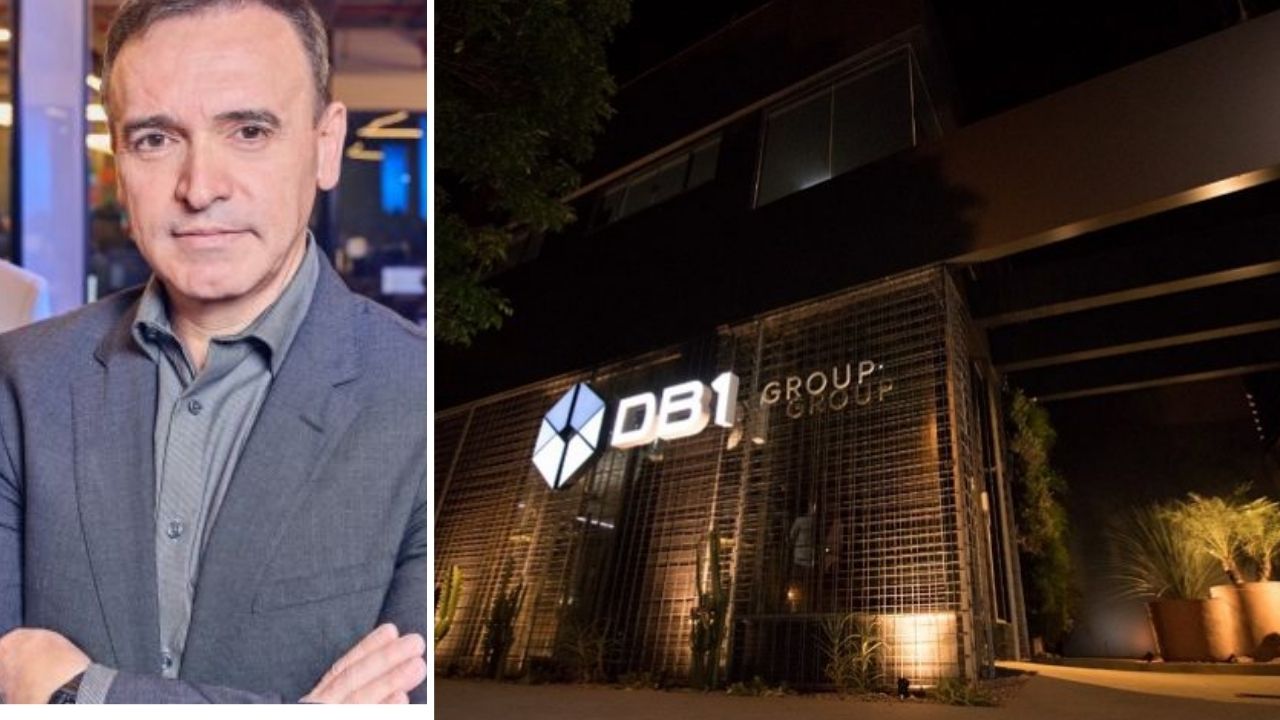

DB1, a technology company founded by Ilson Rezende in Maringá, gathers around 800 employees, has a presence in 19 countries, and an annual revenue above R$ 200 million. According to InfoMoney, the CEO attributes the scale to organizational culture, leadership, and management decisions during phases of accelerated international growth.
The DB1 Group technology company, founded by Ilson Rezende along with partners, evolved from a software operation in Maringá, Paraná, to a structure with around 800 employees, presence in 19 countries, and annual revenue exceeding R$ 200 million.
The journey was reported by InfoMoney on February 11, 2026, in the podcast From Zero to Top. Although Rezende’s personal background involves a childhood in a rural area and first contact with a computer in adolescence, the central point of the business story is the building of organizational culture, leadership, and management model to sustain scale.
Computer became a professional direction before becoming a business
Ilson Rezende encountered a computer for the first time in adolescence and identified it as a professional area. According to the account to InfoMoney, the initial plan was not to become an entrepreneur, but to work in the technology market, where he worked for years as a programmer, analyst, and software professional.
-
Brazilian Farmer Transforms Soybean Land into Thriving Banana Plantation with 15,000 Trees Using Solar Power and Irrigation, Selling at $5 per Kilo

-
Canadian Entrepreneur Sells Company to Build Community with 99 Tiny Homes for the Homeless, Offering Jobs and Solar-Powered Amenities

-
Isolated Residents in Brazil’s Pantanal Create 8 km Road After Waterway Blocked by Aquatic Vegetation
-
Over 60,000 People Displaced in Brazil’s Maceió After Sinkholes Expose 35 Underground Salt Mines Linked to Braskem Disaster


This beginning helps to understand the technical foundation of DB1. Before becoming founder and CEO, Rezende went through the operational work of the area, dealing with programming, analysis, and system delivery. This experience appears as part of the training of someone who would later need to lead a growing technology company.
The relevant fact is not the rural origin itself, but the transition to a technical career that became a scalable business. The discovery of the computer worked as a sector choice, while the subsequent growth required management, culture, leadership development, and business decisions.
DB1 was created in Maringá and grew from software development. Over time, it ceased to be just a technical operation and began to function as a technology group with international presence, products, services, and distributed teams.
DB1 started operating on an international scale


Years after Rezende entered the technology market, the DB1 Group reached around 800 employees and presence in 19 countries. The annual revenue reported by InfoMoney exceeds R$ 200 million, placing the company on another level within the Brazilian software sector.
Exame reported in February 2026 that the group ended 2025 with revenue of R$ 202 million and projected to reach R$ 240 million in 2026. The publication also mentioned operations in Latin America and the United States, as well as clients in more than 19 countries.
Scaling a technology company does not only depend on selling more software, but on sustaining delivery, leadership, and decision-making standards. This point is strongly highlighted in Rezende’s account, who attributes an important part of the growth to organizational culture.
DB1 is also presented as an ecosystem of digital solutions. Among the products mentioned in publications about the group are ANYMARKET, Predize, Koncili, Mixtra, Consignet, and My Kids, aimed at different fronts of software and digital services.
Organizational culture became a management tool
For Ilson Rezende, the main asset of DB1 was not just technology or commercial strategy. In an interview with InfoMoney, he stated that organizational culture was decisive in sustaining growth and preventing the company from losing its identity over the years.
The statement is important because it shifts the focus from the product to the management system. In software companies, processes help, but do not always solve leadership, delivery, and decision-making problems alone. According to Rezende, the turning point happened when the company started to work on behavior, culture, and skill.
The culture stopped being an institutional discourse and started to function as a practical decision-making criterion. This type of approach seeks to align teams, reduce internal noise, and maintain consistency even when the company grows in number of people, clients, and markets.
In the account to InfoMoney, Rezende states that processes were structured over months, but were not enough to solve the problems of the expansion phase. The answer came when the company reduced part of the bureaucracy and focused attention on behavior and principles of action.
Growth brought leadership challenge
One of the most sensitive moments for DB1 occurred when the company grew to 30 or 40 people. According to Rezende, it was at this stage that the need arose to bring in leaders and change the way he himself operated within the company.
Until then, the founder was closer to the operation. With the increase in the team, he began to lead leaders, a role different from technical execution. This change is common in companies that move out of the initial phase and need to structure management layers.
The challenge was no longer just delivering projects but forming people capable of making decisions. In a technology company, leadership affects deadlines, quality, client relationships, contract margins, and maintaining culture.
Rezende also reported that he needed to learn disciplines he originally did not master, such as marketing, people management, and organizational culture. This adaptation shows how the growth of a company requires the evolution of the founder himself.
Processes did not prevent losses in projects
During the company’s first major leap, DB1 faced a drop in efficiency and losses in some projects. InfoMoney reports that there were deliveries that worked well and others that did not succeed, negatively impacting the company.
The initial attempt was to reinforce processes. The company spent about six months structuring procedures, but the result did not sufficiently solve the problem. For Rezende, the difference in software is dealing always with something new, and not just repeating a defined flow.
This understanding is typical of technology companies: processes organize, but do not replace judgment, adaptation, and responsibility. Digital projects change according to the client, scope, team, deadline, and problem to be solved.
Therefore, DB1 started to train culture, behavior, and skills. The idea was to reduce dependence on rigid rules and increase the teams’ ability to make decisions aligned with the company’s principles.
Business between people, not just between companies
One of Rezende’s central phrases to InfoMoney is that there is no business just between CNPJs, but between people. The vision reinforces an important understanding for software companies: behind every contract there are users, clients, teams, and practical impacts.
When a programmer writes code, there is someone on the other side who depends on that system. This reasoning helps connect organizational culture to real delivery, preventing technology from being treated just as a technical product without consequence for those who use it.
In the model advocated by the CEO, culture also serves to remind the team of who is affected by each decision. This includes the client, end user, collaborator, and leadership.
This approach can help explain why DB1 associates growth with the preservation of principles. For Rezende, losing the culture would be one of the greatest risks for the company, especially during a phase of international expansion and high revenue.
Company aims for growth while preserving identity
The future of DB1, according to the founder, depends less on an isolated financial strategy and more on maintaining the company’s identity. The phrase summarizes the long-term vision presented in the podcast: if the company preserves who it is, growth tends to come as a consequence.
This stance also appears in other information about the company. DB1 is described as a group that combines expansion, internal leadership development, and investment in innovation, while keeping an eye on culture as a management system.
The business history shows that scaling without identity can become an operational risk. For a technology company with 800 employees and presence in 19 countries, the challenge is not just to grow, but to maintain coherence between areas, products, and markets.
The case of Ilson Rezende and DB1 indicates that technology was the entry point, but management became the supporting axis. The question for other Brazilian companies is whether organizational culture can be treated as a concrete growth tool, and not just as a corporate presentation phrase.
Do you think technology companies grow more due to product, culture, or the ability to develop leaders? Leave your opinion in the comments and tell us if DB1’s example shows a possible path for Brazilian businesses that want to scale without losing identity.


