Portuguese
  Spanish


The lost work, called Vision of Zechariah in the Temple, was off the radar for 65 years after the official catalog rejected it in 1960. It only took the family bringing the canvas to the Rijksmuseum in Amsterdam for the museum to confirm it was an authentic Rembrandt painting, estimated to be worth millions.
The question that changed everything was almost naive: the owner just wanted to know if the painting hanging at home was Dutch. It was with this simple doubt that an anonymous family approached the Rijksmuseum in Amsterdam, without imagining they had an original Rembrandt painting in their hands, missing from the art world for 65 years. The story was reported by O Povo, based on a BBC report.
The result came out in March 2026, when the museum announced that the canvas was indeed by Rembrandt van Rijn and put it on display. It was the lost work Vision of Zechariah in the Temple, painted in 1633, which had been removed from the master’s official list in 1960 and disappeared into a private collection shortly after. What was worth little as a supposed copy became a Rembrandt painting valued at millions once again.
The naive question that unlocked a find
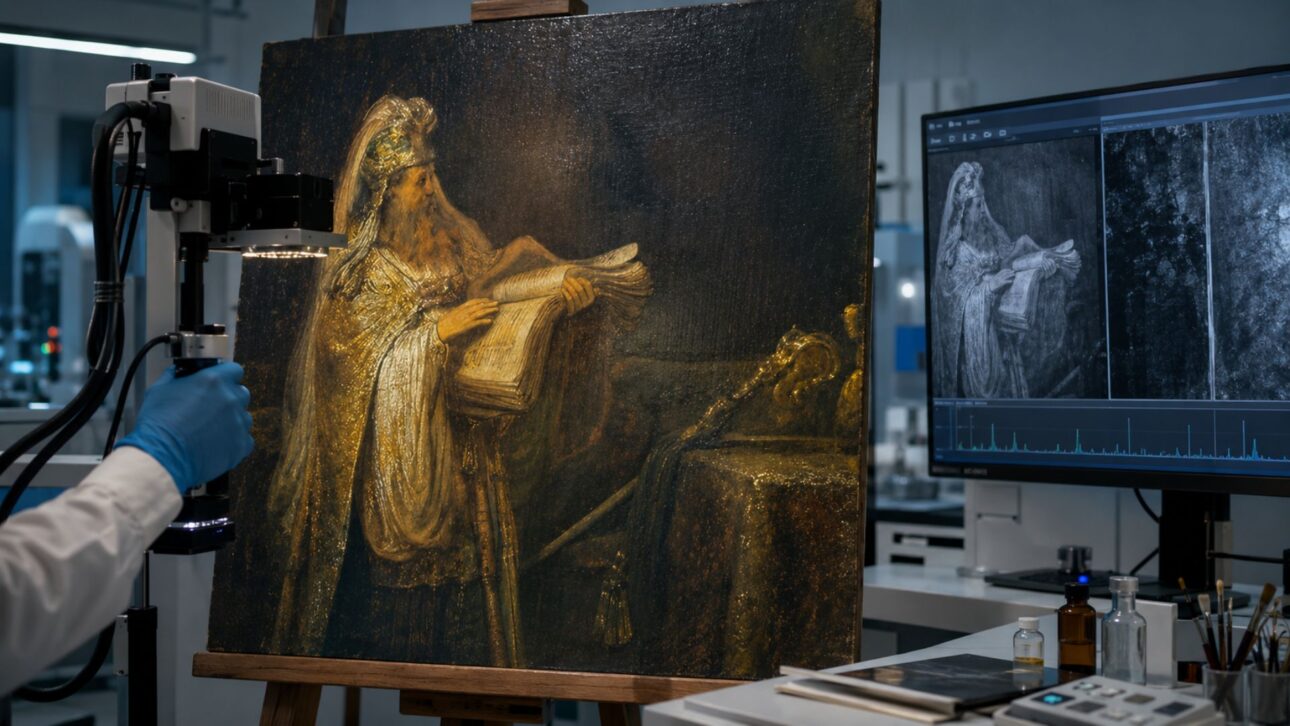
The family that inherited the painting did not arrive at the Rijksmuseum announcing a discovery or asking for a million-dollar appraisal. They just wanted to preserve the canvas darkened by time and resolve a basic doubt about its origin, whether it was Dutch art.
-
Man Buys Abandoned Warehouse for $450 and Discovers 1980s Art Collection Worth Nearly $50,000 at Auction

-
NASA captures heart-shaped pink lagoon in Argentina’s salt flats
-
Mistaken Click on Online Lottery Ticket Leads to $251,000 Win in Michigan
-
Gifted 10-Year-Old Brazilian Boy Discovers Unique Number Cycle, Earns Spot at Brazilian Mathematical Society Biennial


This modesty is what differentiates the story from other rediscoveries. Instead of a savvy dealer sniffing out profit, it was an ordinary, curious owner who handed the museum the chance to examine the lost work for the first time in 65 years. The simple question opened the door to two years of investigation that would ultimately confirm a genuine Rembrandt painting.
Why the painting was downgraded in 1960
To understand the magnitude of the turnaround, it is necessary to go back to the previous humiliation. In 1960, the Vision of Zacharias in the Temple was excluded from Rembrandt’s official catalog and reclassified as a studio work, meaning something probably painted by the master’s students, and not by him. From a noble piece, it became a secondary one.
The following year, in 1961, the canvas was purchased by a private collector and disappeared from public life. Its last major appearance had been back in a Rembrandt exhibition in Amsterdam, in 1898. After that, the lost work went through decades forgotten, precisely because no one considered it a Rembrandt painting worth studying anymore. It was these 65 years of ostracism that the museum eventually interrupted.
How the Rijksmuseum confirmed it was Rembrandt
The rehabilitation did not come from a guess, but from technology. The Rijksmuseum conducted a study of about two years, with techniques that did not exist in 1960, to confirm the authorship. According to Euronews, the exams showed that the pigments used appear in other Rembrandt works from the same period.
The technical details closed the case. X-ray scans revealed composition changes made during the painting, the so-called pentimenti, typical of a master experimenting while working. The oak wood of the panel came from southeastern Lithuania, a source Rembrandt used to use, and the way of layering the paint matched that of the artist’s early years. All in all, the Rijksmuseum concluded that the lost work was authentic, returning to the family a legitimate Rembrandt painting.
What the Vision of Zacharias in the Temple depicts
The Vision of Zacharias in the Temple shows the biblical moment when the archangel Gabriel appears to the high priest Zacharias and announces that he and his wife, already elderly, will have a son, John the Baptist. It is a moment of astonishment and disbelief, and Rembrandt resolved it in a bold way.
The most interesting thing is what the painter chose not to show. Instead of drawing the angel in full body, he suggests the divine presence only with an intense light in the upper right corner, leaving the incredulous face of Zacharias to carry all the emotion. This type of solution is a signature of the master, and reinforced for the Rijksmuseum that they were in front of a Rembrandt painting, not a studio imitation.
How much is the rediscovered Rembrandt painting worth?
This is the inevitable question, and the answer requires caution. Reports describe the lost work as valued in millions, but there is no official price disclosed, especially since the canvas is not for sale. It entered the Rijksmuseum on a long-term loan from the family and was put on permanent display starting March 4, 2026.
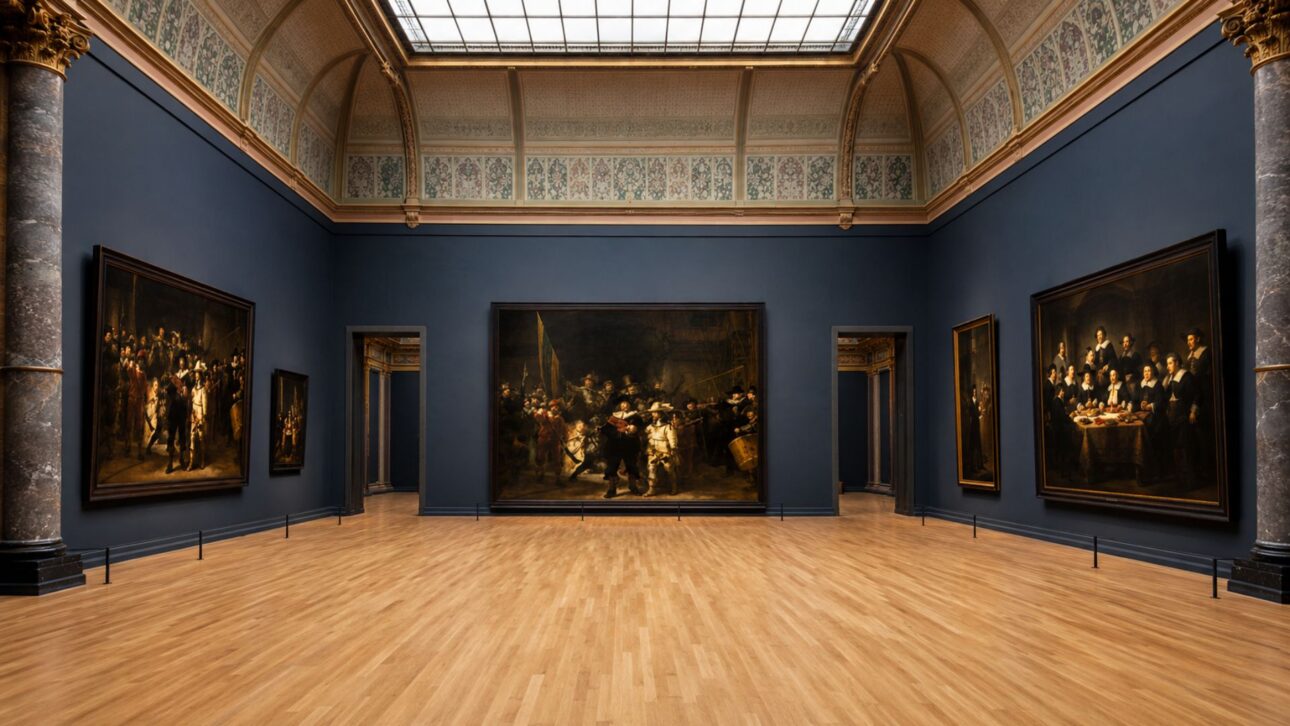
The true gain might not even be the dollar sign. Once confirmed, the piece joined the collection of 25 Rembrandt works at the Rijksmuseum, the largest collection of the painter in the world. Moving from a disregarded copy to joining this select group, after 65 years in the dark, is an appreciation that goes beyond what any auction could measure, even though the Rembrandt painting is indeed worth a small fortune.
When a simple doubt becomes art history
In the end, the case enchants because it mixes chance, modesty, and science. A lost work for 65 years, a family that just wanted to know if the canvas was Dutch, and a museum willing to investigate thoroughly: it was this combination that resurrected the Vision of Zacharias in the Temple and returned to the world a Rembrandt painting that almost became a footnote.
And you, do you think you might have, in a family member’s house, some old painting that no one looks at properly and that could hide such a surprise? Share in the comments if you’ve ever been curious to discover the origin of something stored at home.