Portuguese
  Spanish


The private equity giant KKR bought CoolIT in 2023 and gave shares to all employees. When it sold the Calgary manufacturer to Ecolab for US$ 4.75 billion, the workers received checks averaging US$ 240,000, and the longest-serving employees took home nearly half a million.
On March 25, 2026, while an untimely snowstorm covered Calgary, Canada, about 600 employees of CoolIT squeezed under a huge tent for a meeting no one wanted to miss. What seemed like another corporate announcement ended with factory workers crying and speechless upon discovering they would take home checks averaging US$ 240,000. The scene was reconstructed by Fortune, which detailed how production line workers pocketed amounts close to Wall Street bonuses.
The reason for the money was an unusual detail in the world of private equity. Three years earlier, when buying CoolIT, the KKR fund had distributed company shares to all workers, not just executives. When the company was sold to Ecolab for US$ 4.75 billion, this share turned into cash in the account of each one, from the engineer to the assembler.
The scene in the tent during the snowstorm
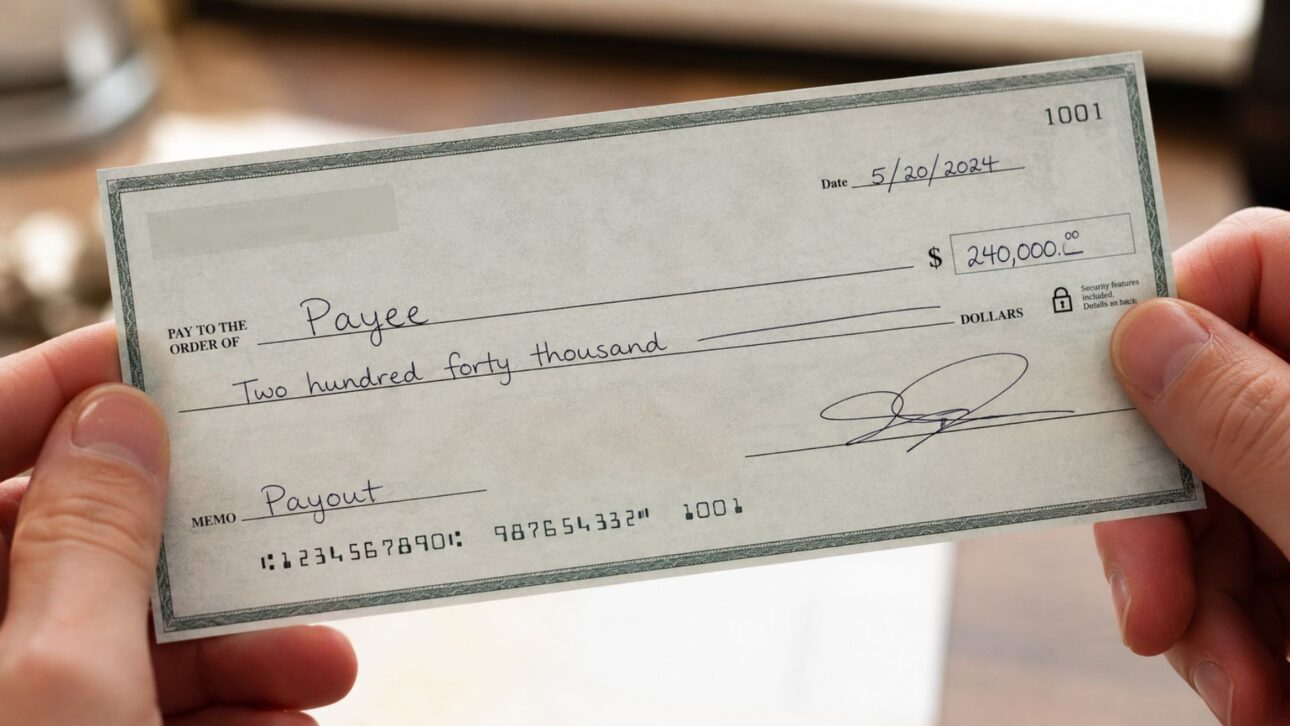
Just five days earlier, CoolIT employees learned that the company would be sold, and anticipation was high when Kyle Matter, director of KKR and president of the manufacturer, took the makeshift stage in the tent. It was there, in the cold of Calgary, that the individual figures were revealed.
-
Brazilian Politician Goes Undercover as Garbage Collector to Investigate Delays in Waste Collection Services

-
The Story of Jesús Malverde: The Legendary Mexican “Saint of Drug Traffickers” Known as a Robin Hood Figure

-
German Man Sells Everything, Embarks on 5,000 km Jet Ski Adventure Across 13 Countries with Girlfriend and Dog, Spending Over 7,000 Euros on Fuel

-
Strawberry Moon to Be Visible in Brazil on Monday (29th); Here’s When and How to Watch




The reaction was marked. According to the report by CBC News, some cried, some were speechless, and some couldn’t believe the amount printed on the paper. For many factory workers, those $240,000 checks represented several years’ worth of salary at once, something that would immediately change their family’s life.
Why factory workers became company owners
The explanation lies in a program that KKR adopts in the companies it buys. When the private equity fund took over CoolIT in 2023, it implemented the shared ownership model that distributes shares to the entire staff, not just the top. The idea, advocated within KKR since 2011, is to align the interests of those on the front line with the success of the business.
In practice, each employee came to own a share that would only turn into money on the day of a sale or public offering. That day came with Ecolab. That’s why the doorman, the welder, and the quality analyst shared in a pie that, in other companies, usually remains entirely in the hands of partners and funds. It was this engineering that turned factory workers into actual shareholders.
How much did each CoolIT employee receive?
The amount was not the same for everyone, and that matters. The average was around $240,000 checks, but the size depended on the length of service and type of contract. Those hired more recently received the equivalent of about five times their annual salary, already a good amount for any factory worker.
The veterans were ahead. Employees admitted in 2016 or earlier had a multiplier of eight times, and received at least $490,000 each, almost half a million dollars. For KKR, this sale of CoolIT marked the largest payment per person ever recorded in its participation program, precisely because the average $240,000 checks concealed much larger cases among the more senior employees.
The $4.75 billion sale to Ecolab

The Calgary company produces liquid cooling systems for data centers, the technology that prevents artificial intelligence servers from melting under their own load. With the explosion of AI, this type of product has become a sought-after item, and that’s what inflated the business’s value so much.
The buyer, Ecolab, is a giant in water treatment and industrial solutions that wanted to enter this cooling market strongly. The $4.75 billion paid represented about 18 times the value that CoolIT had when KKR took over, around $270 million. In three years, the private equity fund multiplied the investment, and this time part of the gain trickled down to the factory floor.
The other side: the criticism of equity-washing
Not everyone applauds the model, and ignoring this would be telling half the story. Critics call the practice “equity-washing,” the idea that private equity uses the aesthetics of shared ownership to improve its own image and raise the value of companies, without giving workers real power. The argument is that the employee receives a one-time check, dependent on the decision to sell, but has no seat on the board, no vote, and no control over the business’s future.
The overall numbers reinforce the caveat. Cases like CoolIT are the exception, not the rule: on average, across the entire KKR portfolio, the benefit per employee in 2024 was a few thousand dollars, far from the $240,000 checks of the Calgary manufacturer. Program defenders counter that, even imperfect, it transfers real wealth to those who would never have access to it, and that cases like Ecolab show the potential when the sale is large. Both interpretations coexist, and the reader deserves to know both.
What this story shows about profit-sharing
In the end, the case of CoolIT is powerful precisely because it is rare. Workers who expected, at best, a raise, ended the meeting in the tent with $240,000 checks and the feeling of having been treated as owners. The sale to Ecolab proved that it’s possible to include the factory floor in the equation when a private equity deal closes billions, even if the debate about how fair this is remains open.
And you, do you think this KKR model should become the rule, with every employee getting a share of the company, or do you agree with the criticism that it’s just a facade without real power? Share your thoughts here in the comments about profit-sharing with those who do the work.