






 Portuguese
  Spanish


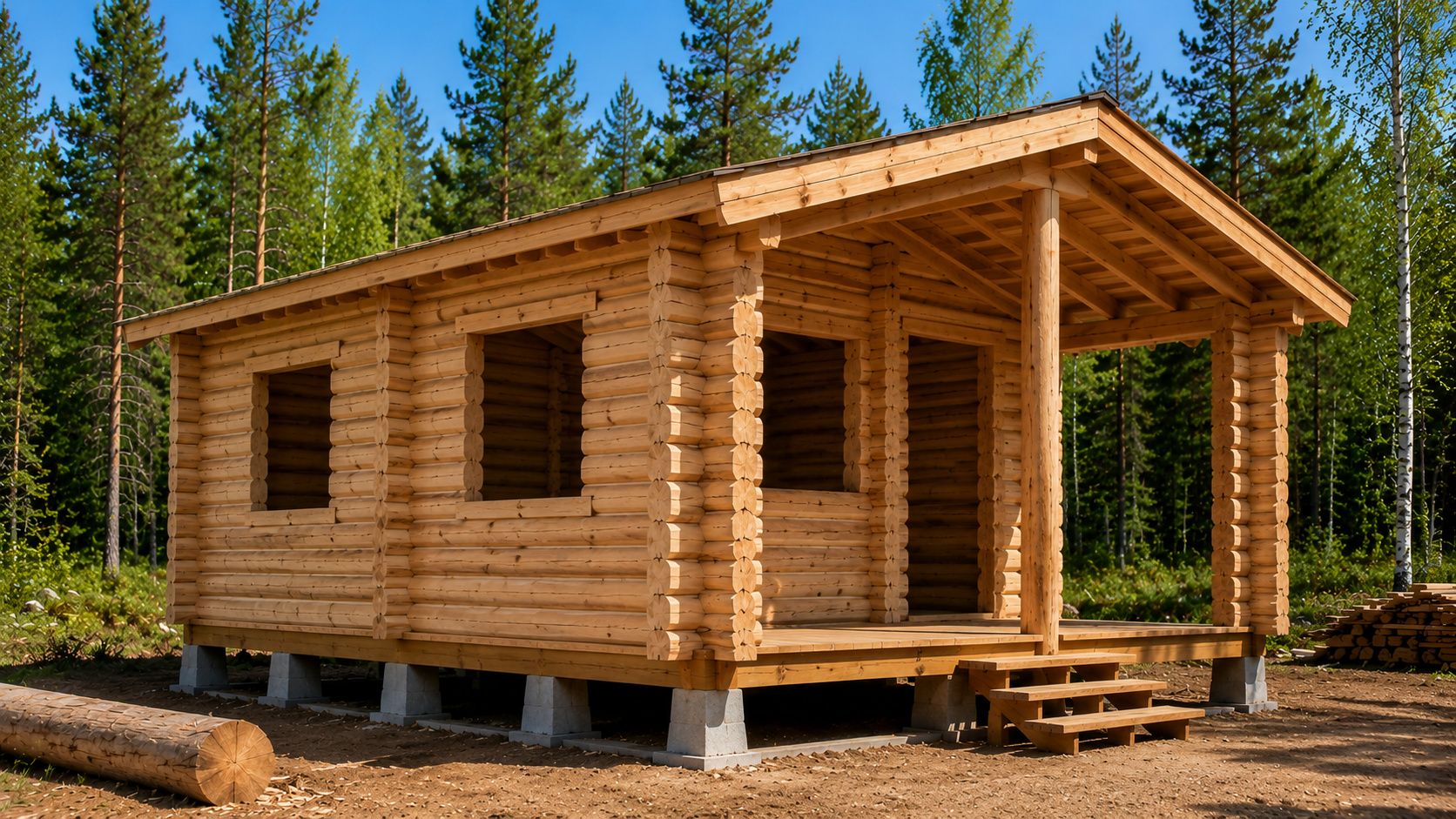

Learn how a 5×5.70 m detachable wooden cabin uses reused wood and modular construction to reduce costs and waste.
Building a wooden cabin using reused logs of 70 mm is an alternative that combines economy, practicality, and sustainability. The 5×5.70 meters project shows that, with correct carpentry techniques and planning, it is possible to create a sturdy, detachable structure ready for future expansions without generating significant waste.
According to Super Rádio Tupi on June 24, 2026, the concept uses a system of joints that dispenses with glue and permanent structural nails. This allows each wall to be dismantled without compromising the pieces, facilitating both transport and possible renovations. Furthermore, the reuse of materials reduces costs and reinforces the principles of sustainable construction, increasingly valued in residential and leisure projects.
Wooden cabin uses smart joints to ensure resistance
The operation of the wooden cabin is relatively simple. The logs are stacked horizontally and remain united by joints at the ends, responsible for preventing lateral displacements and keeping the entire structure stable.
-
Transform Your Bathroom with Paint, Mirrors, LED Lighting, and Accessories for a Quick, Cost-Effective Makeover

-
Couple Converts 1925 Detroit Bank into Home, Earns $40,000 Annually on Airbnb

-
Tired of Seeing People Sleep in the Cold, London, Canada Opens First Modular Shelter for Homeless with 60 Cabins, Heating, Meals, and Dog Area
-
Brazil’s $1.3 Billion, 870-Meter Immersed Tunnel to Be Latin America’s First of Its Kind, Featuring Special Public Facilities and Information Center


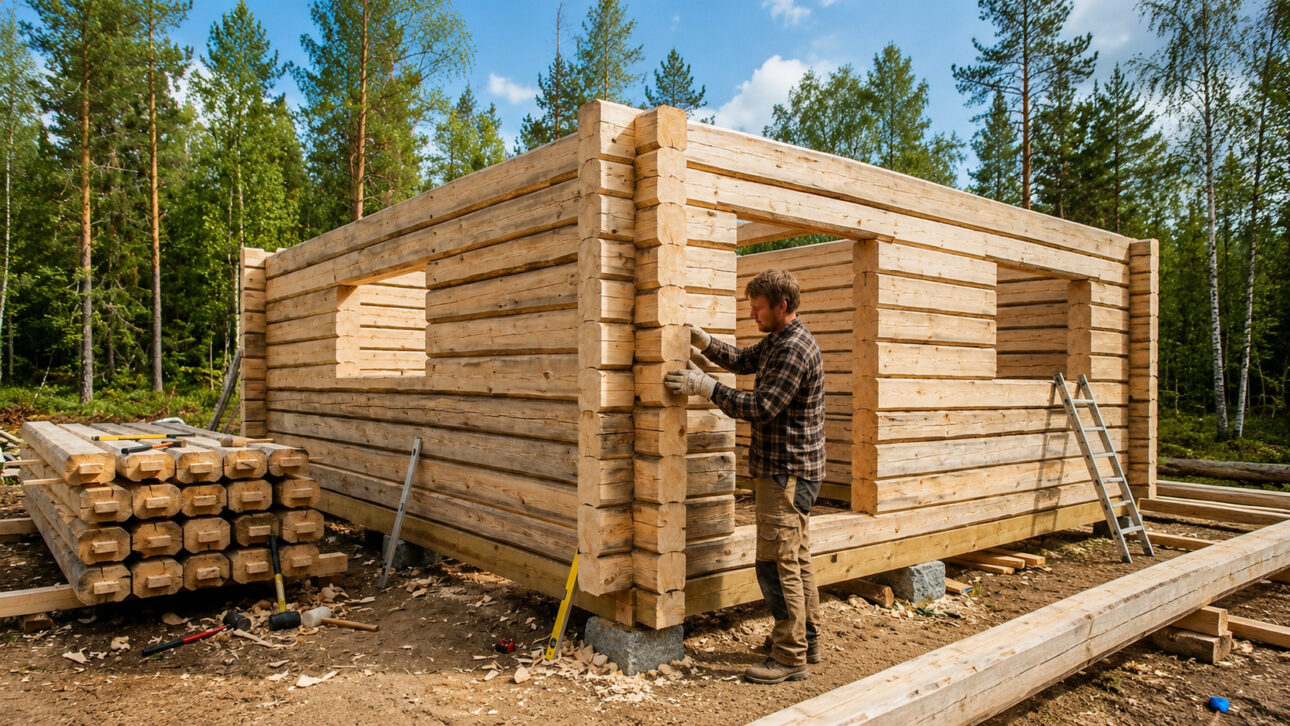
In detachable constructions, the most common joint is the male and female system, machined along the pieces. In this way, each log fits perfectly into the one below, creating a continuous seal that reduces gaps and improves stability even with changes in temperature and humidity.
Since there is no permanent fixation with glue or structural nails, each wall can be dismantled separately, preserving practically all components of the structure.


Reused wood requires inspection before starting assembly
The use of reused wood represents significant savings, especially because many pieces have already gone through the natural drying process, reducing the risk of future deformations.
However, before starting the work, all the wood must undergo a careful selection. The goal is to ensure that only pieces in good condition are used.
The main inspection points include:
- deep cracks;
- signs of termites or other insects;
- twisting and warping;
- moisture above 18%;
- presence of nails, screws, or hidden hardware.
Even when the wood appears to be in good condition, the preventive application of immunizing products is still recommended to increase its durability.
Modular construction facilitates transport and future expansions
One of the biggest advantages of modular construction is flexibility.
Since the structure can be dismantled almost piece by piece, the owner can transport the building to another site or make expansions without needing to demolish entire walls.
This system also simplifies future maintenance. If any log shows wear after years of use, it can be replaced individually, preserving the rest of the structure.
This feature makes the demountable cabin an interesting solution for farms, rural properties, leisure areas, rural offices, and small residences.

Foundation needs to offer stability without losing mobility
Even being a removable structure, the foundation must support the entire weight of the construction.
The most commonly used solution consists of installing concrete blocks or pre-molded footings distributed at the corners and approximately every 1.20 meters along the perimeter. These supports usually rest on a layer of compacted gravel to improve drainage.
Treated wooden beams are installed on top of them, forming a leveled sill where the construction walls begin.
Since this base does not receive permanent fixings, it preserves the concept of modular construction, allowing future dismantling without major interventions.
Well-executed corners make all the difference in the demountable cabin
The corners are considered one of the most important points of the demountable cabin.
It is in them that the walls meet, making a precise fit indispensable to ensure resistance and prevent infiltrations or misalignments.
The dowel system is among the most used. In this model, one log extends beyond the end of the other and fits perfectly into a corresponding groove.
During assembly, it is also important to frequently check the square of the construction. According to the project, a difference greater than 5 mm between the diagonals of the plan indicates that it will be necessary to correct the alignment before continuing the stacking.
Another important precaution is to use a level regularly every few courses, preventing small deviations from compromising the entire structure.
Light roofing increases the lifespan of the structure
The roofing plays a fundamental role in the durability of the construction. As the walls are formed by 70 mm logs, the roof must be light enough not to generate excessive overload.
Among the most used alternatives are metal tiles, fiber cement tiles, and other models compatible with light structures. Regardless of the choice, the roof must have an adequate slope to facilitate the drainage of rainwater.
Larger eaves also help protect the walls from constant moisture, reducing the need for maintenance over the years.
Modular construction speeds up assembly when there is planning
A large part of the agility of this project depends on the advance preparation of materials.
According to the presented information, a structure of 5×5.70 meters can be assembled in between four and six days by a team of two people with carpentry experience. This timeframe considers that the foundation is already ready and that all logs have been previously cut, classified, and machined.
In practice, stacking usually takes less time than preparing the pieces. Leveling the base, checking the fittings, and correctly positioning the openings usually require more attention.
This planning is precisely one of the factors that make modular construction so efficient.
Reused wood reduces costs, but requires organization
Those who intend to use reused wood need to dedicate time to organizing the material before starting the construction.
The recommendation is to pre-separate all pieces in good condition, make the necessary fittings, and label each component to facilitate assembly.
It is also advised to keep a reserve of approximately 15% to 20% of logs beyond the initially calculated amount. This margin reduces the risk of interruptions if any piece needs to be discarded during construction.
The main precautions include:
- separating only structurally safe logs;
- eliminating pieces with severe defects;
- conducting preventive pest treatment;
- storing the wood protected from moisture until assembly.
This process increases productivity and reduces unforeseen events during execution.
Detachable cabin can meet different needs
Versatility is another strong point of this type of project.
A detachable cabin of 5×5.70 meters can be used for different purposes without requiring significant structural changes.
Among the most common uses are:
- compact residence;
- leisure chalet;
- office on rural property;
- equipment storage;
- workshop;
- guest space.
If it is necessary to expand the property in the future, the system allows dismantling part of the walls and incorporating new modules without material waste.
This flexibility differentiates the project from conventional construction methods.
Sustainable construction makes better use of available resources
Sustainable construction goes far beyond financial savings.
By using reused wood, the project extends the lifespan of materials that still have good structural conditions, reducing the need for new wood extractions.
Another important benefit is the reduction of waste generated during renovations or relocations. Since the walls can be dismantled without destroying the pieces, a large portion of the components remains usable for many years.
Additionally, maintenance also becomes simpler. If only one log shows wear, it can be replaced individually, preserving the entire existing structure.
A project that combines economy, mobility, and durability
The proposal to build a wooden cabin using reused logs of 70 mm demonstrates that careful planning and execution can result in a resistant, functional structure prepared to meet different needs over time.
By combining concepts of modular construction, use of reused wood, techniques aimed at sustainable construction, and a detachable cabin system, the project offers a practical solution for those who wish to build with less waste and greater flexibility. With an estimated assembly time of four to six days, the possibility of reusing materials, and ease for future expansions, this model stands out as an efficient alternative for small residential projects, leisure spaces, and constructions on rural properties.


