Portuguese
  Spanish


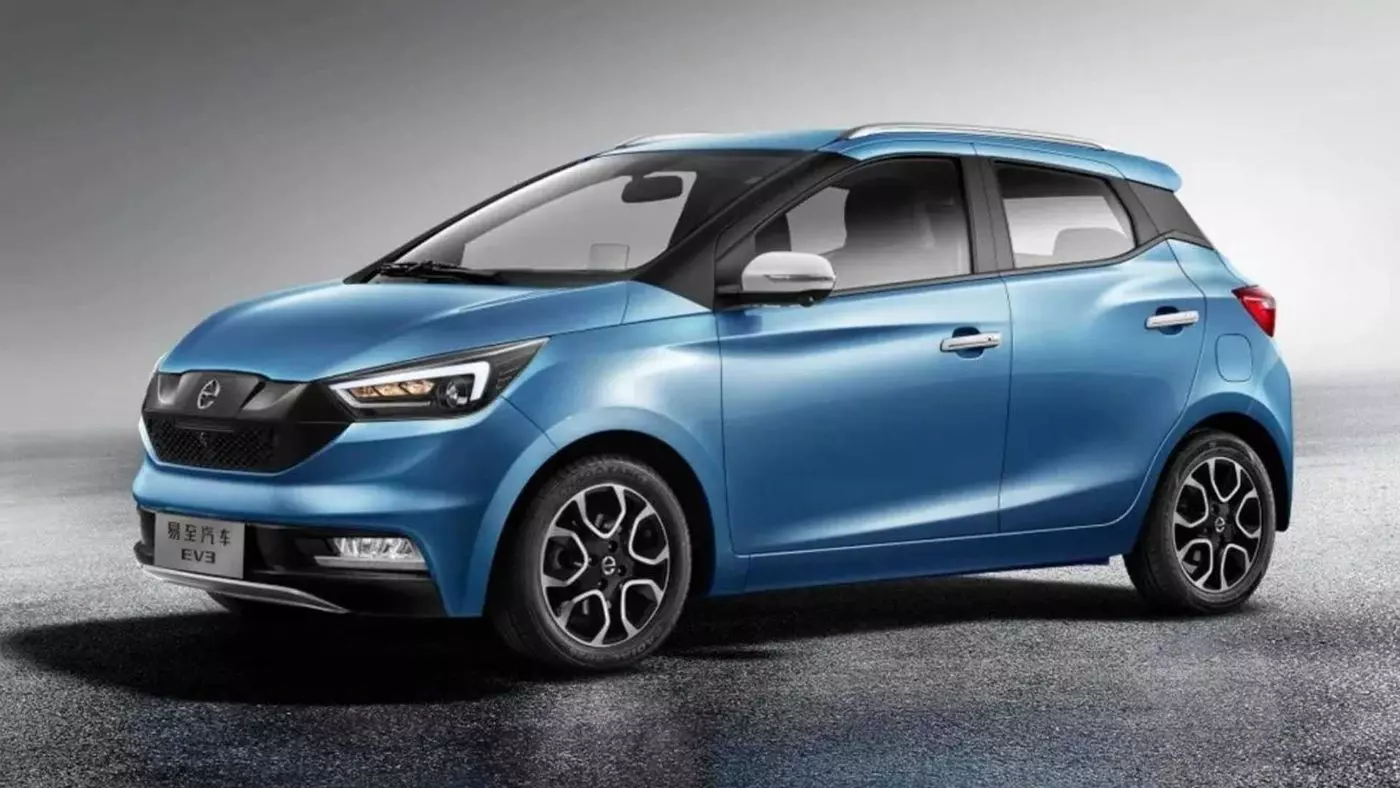

Renault Has A New Electric Car Project With Sodium Battery That Could Revolutionize The Automotive Industry. Vehicle Set To Be Produced In June.
Renault, in partnership with Jiangling Motors Electric, a Chinese company, has created the first electric car equipped with a sodium battery and is about to launch the model in the market, becoming a pioneering company in the sector. The car called EV3 will prominently feature its next-generation batteries, which bring a series of benefits to the automotive industry.
Renault Electric Car To Start Production On June 30
The new sodium battery installed in Renault’s electric car is cheaper to produce and has a much faster recharge capability, something that can significantly reduce complaints from electric car owners equipped with traditional lithium-ion batteries.
Farasis Energy, Renault’s partner, has already begun to transform its lithium-ion battery production lines to sodium ones and, thus, will be ready to meet the demand from Jiangling Motors and Renault to equip the electric car starting June 30, the expected date for the mass production of Renault’s new electric vehicle for the automotive industry.
-
Suitcase-sized hydrogen engine spins at 25,000 rpm, nearly doubling the efficiency of conventional cars and replacing exhaust smoke with water vapor

-
1983 Chevrolet Runs Over 100,000 km Without Gasoline, Powered by Wood Chips, Reaches 125 km/h in Airport Test

-
Workshop Converts Giant Tractor Tire Tricycle into a Three-Wheel Drive Hybrid with 36,000-Watt Electric Motor Capable of Climbing Hills

-
Chery Offers Lifetime Battery Warranty and Car Replacement for Major Failures Under New Chinese Regulations


As a promise still in the development stage, the sodium battery is gaining momentum at a very fast pace. Just days ago, Hina Battery, another Chinese company, announced three types of sodium cells and began manufacturing test units for a version of the JAC e-JS1, there named Sehol E10X.
In the case of the compact JMEV EV3, a model that is unknown in Brazil, this will be equipped with an electric motor of 47 horsepower and a 32 kWh battery certified for a range of 302 km under the CLTC cycle, more optimistic than the WLTP standard. Thus, one can expect a real range of approximately 250 km with the sodium battery.
Renault’s New Sodium Battery To Focus On Urban Environment
In general, sodium-ion batteries are very similar to lithium-ion ones; however, as mentioned earlier, the new component is cheaper, fast to charge, and can replace lithium models in applications with relatively low energy density demands.
The sodium battery models present in the market are mainly used in the energy storage sector and are rarely used in electric cars because these need a component with higher energy density.
However, in the case of compact and light electric cars for urban use, these batteries should deliver greater performance for the automotive industry. But this does not mean the end of lithium batteries; that is, there should still be room for various types of chemical compositions, depending on the application, vehicle size, sector, or need for extended range.
Other Automakers Also Focus On Sodium Battery To Unlock The Electric Car Market
In addition to Renault, three more automakers are also focusing on developing sodium batteries to lower production costs of electric vehicles in the automotive industry and, subsequently, generate benefits to the end consumer with more affordable prices.
According to the Electrive website, JAC Motors, Volkswagen, and BYD are working on similar fronts to what has been announced by Renault.
JAC, for example, intends to equip a compact model from Sehol, its subsidiary in China, with batteries developed by Hina Battery, a rival of Farasis Energy. In the USA and Sweden, there are already projects underway to attempt the mass production of sodium-ion batteries for electric cars through Natron Energy and Altris, respectively.