






 Portuguese
  Spanish


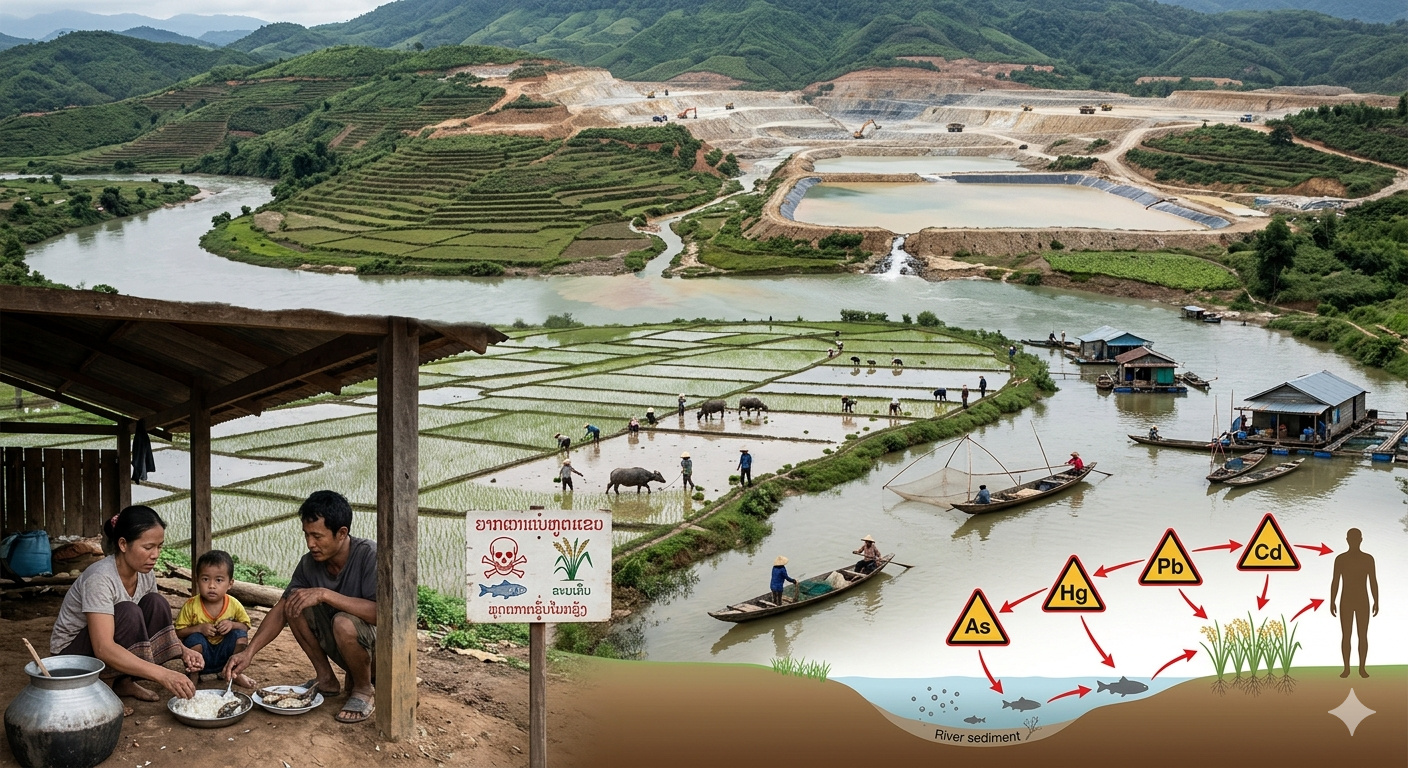

Researchers warn that heavy metal contamination is spreading through the Mekong River, threatening agriculture, fishing, and the food security of millions in Southeast Asia dependent on these vital, highly sensitive ecosystems.
In April 2026, reports and scientific surveys highlighted a growing concern in Southeast Asia: the expansion of rare earth mining in areas near the Mekong River system, one of the most productive agricultural and fishing regions on the planet.
The Mekong flows through countries such as Myanmar, Laos, Thailand, Cambodia, and Vietnam, supporting a system that integrates agriculture, fishing, and water supply for tens of millions of people. This set of activities makes the region frequently referred to as the “food basket” of Southeast Asia.
Heavy metal contamination begins to appear in rivers connected to the Mekong
Rare earth mining involves the use of intensive chemical processes that can release toxic substances into the environment. Among the main contaminants identified are heavy metals such as arsenic, mercury, lead, and cadmium. These elements can seep into the soil and reach rivers and groundwater, directly affecting the quality of water used for irrigation and consumption.
-
Abandoned Factory in Rio’s North Zone Becomes Urban Hazard with Standing Water and Debris

-
The U.S. Navy Conducts Submarine Tests in Idaho Lake to Detect Underwater Noises Hidden by the Ocean

-
British Factory Transitions from Mechanical Parts to Producing 420,000 Electric Power Units Annually, Supplying 70% of Ford’s Electric Cars Sold in Europe
-
France Launches Network to Recycle 20 Million Cookware Pieces by 2027, Accepting All Brands for Aluminum and Coating Separation


Recent reports indicate that tributaries of the Mekong are already showing signs of contamination, especially in areas near mining operations. The presence of these metals transforms an essential resource into a vector of environmental and food risk.
Food system of almost 70 million people directly depends on the river
The Mekong is responsible for sustaining one of the most productive food systems in the world. The region hosts extensive rice cultivation areas and one of the largest freshwater fish productions on the planet. It is estimated that about 70 million people directly depend on the river for food, income, and subsistence.
Fishing provides essential protein for millions of families, while irrigated rice paddies ensure large-scale agricultural production. Any significant change in water quality can directly impact the food security of this population.
Rice paddies and fishing are highly sensitive to water quality
Heavy metal contamination directly affects the main productive pillars of the region. In the case of rice paddies, contaminated water can compromise plant development and reduce productivity. Additionally, metals can be absorbed by crops, entering the food chain and posing risks to human health.
In fishing, the impact can be even more immediate. Aquatic species are sensitive to water quality, and the presence of contaminants can lead to population reductions or fish contamination. The effect is not limited to the environment but extends to human consumption.
Mining grows driven by global demand for technology
The expansion of rare earth mining is directly linked to the increase in global demand for modern technologies. These minerals are essential for the production of batteries, wind turbines, electronics, and electric vehicles. The growth of this sector has led to intensified exploration in regions where deposits are abundant, such as parts of Southeast Asia.
This movement creates a direct conflict between industrial development and environmental preservation. The same resource that supports the global technological transition can generate significant local impacts.
Environmental impact can compromise agricultural export chains
In addition to local consumption, the agricultural production of the Mekong region is also important for the international market. Countries like Vietnam are among the largest rice exporters in the world. Soil and water contamination can affect product quality, reducing competitiveness and generating trade restrictions.
This amplifies the economic impact of the problem, affecting not only local producers but also global markets. Food security is directly connected to the economic stability of the region.
Monitoring is still limited in mining areas
One of the challenges pointed out by experts is the difficulty of adequately monitoring mining areas, especially in remote regions or with limited oversight. The absence of rigorous control can allow contamination to advance without immediate detection, making it difficult to respond in time. This scenario increases the risk of cumulative impacts over the years. The lack of effective monitoring amplifies the vulnerability of the environmental system.
Local communities are the first to feel the effects
Populations living near affected areas are the most exposed to the impacts of contamination. Farmers and fishermen depend directly on natural resources for their subsistence.
Reduced productivity and potential food contamination can compromise income, food security, and quality of life. In many cases, these communities have limited access to economic alternatives. The social impact becomes as relevant as the environmental one.
Balance between mining and preservation becomes a central challenge
The need for strategic minerals for the global economy puts pressure on regions rich in natural resources. At the same time, the preservation of food systems requires rigorous control of industrial activities.
Finding a balance between these two interests is one of the main challenges for governments and international organizations. This involves regulation, oversight, and the adoption of more sustainable mining practices. The management of this conflict will be decisive for the future of the region.
Risk may intensify without effective control measures
Without adequate interventions, the trend is for contamination to advance and become more difficult to reverse. The accumulation of heavy metals in the environment can generate long-term effects, both in the soil and in the water. This process can compromise increasingly larger areas, expanding the impact on food production. Prevention becomes essential to avoid irreversible damage.


Global food basket faces silent pressure
The Mekong region represents one of the world’s most productive systems, but also one of the most vulnerable to environmental changes. The combination of intensive mining, contamination, and food dependence creates a scenario of increasing risk. What is at stake is not just a river, but one of the planet’s main food production systems.
With nearly 70 million people directly depending on the Mekong for food and income, do you believe that the expansion of mining could compromise this “food basket” before effective measures are adopted?









