Portuguese
  Spanish


Retirement no longer means stopping work in Brazil: occupation of the elderly grows 53% in ten years, more than half remain in informality, and the market reveals a silent crisis among those 60+
Brazil is facing a change that spans the streets, apps, small businesses, and informal services: more and more elderly people continue working, even after the age of 60. What seemed like an exception has become a national portrait. And the most striking data is alarming: the occupation of people 60+ has grown by 53% in ten years.
The scene is familiar to millions of families. Retirement no longer covers expenses, the cost of living is heavy, medications are expensive, rent is tight, and many older Brazilians continue seeking income wherever they can. Not always with a signed work card. Not always with protection. Often, in informality.
The advance that changes the face of the labor market
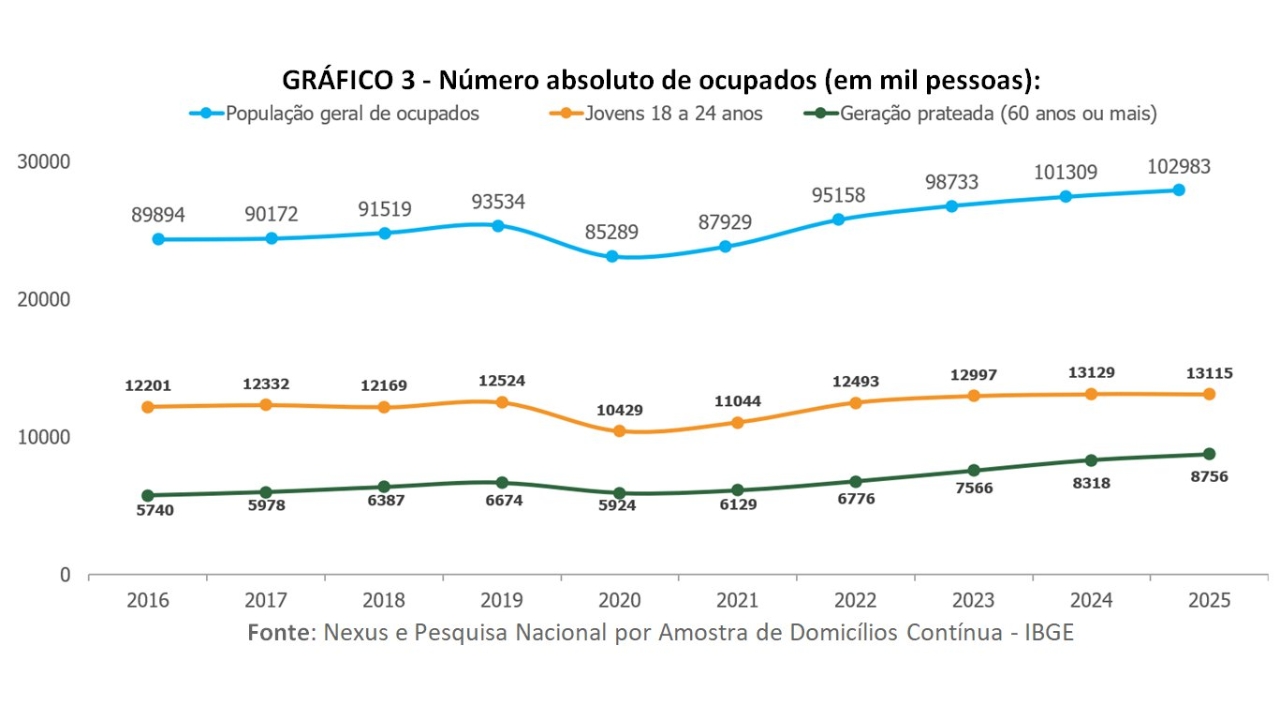
A survey by Nexus, based on the Continuous PNAD, shows that the number of Brazilians aged 60 or more working rose from 5.7 million to 8.7 million in a decade. In practice, the country gained about 3 million elderly workers in the period.
-
As Brazil Expands Social Welfare, Survey Reveals 40% Blame Poverty on Laziness, While 58% Cite Lack of Opportunities

-
China Tightens Control on Antimony, Driving Prices from $22,000 to Nearly $40,000 per Ton as U.S. Rushes to Bolster Strategic Reserves

-
BlackRock Freezes $1 Billion in Brazilian Renewable Energy, Impacting 1.5 GW of Planned Projects and Highlighting Investor Concerns Over Infrastructure Bottlenecks Cutting Up to 25% of Solar and Wind Generation
-
Labor Shortage: Despite Record Average Salary, 90% of Brazilian Bar and Restaurant Owners Struggle to Hire Key Roles Like Sushi Chefs and Head Cooks


The jump is noteworthy because it was faster than the actual aging of the population in this age group. While the 60+ group grew by 37%, the number of employed in this age group advanced by 53%.
This reveals a movement greater than a simple demographic change. Brazil is not just getting older. Brazil is getting older and working longer.
Today, one in four Brazilians aged 60 or more is active in the labor market. The employment rate reached 25%, the highest level recorded between 2016 and 2025 in the survey.
More work, but little protection
The number might seem positive at first glance. After all, more active elderly people can mean autonomy, experience, and economic participation. But the most delicate part appears when looking at the type of occupation.
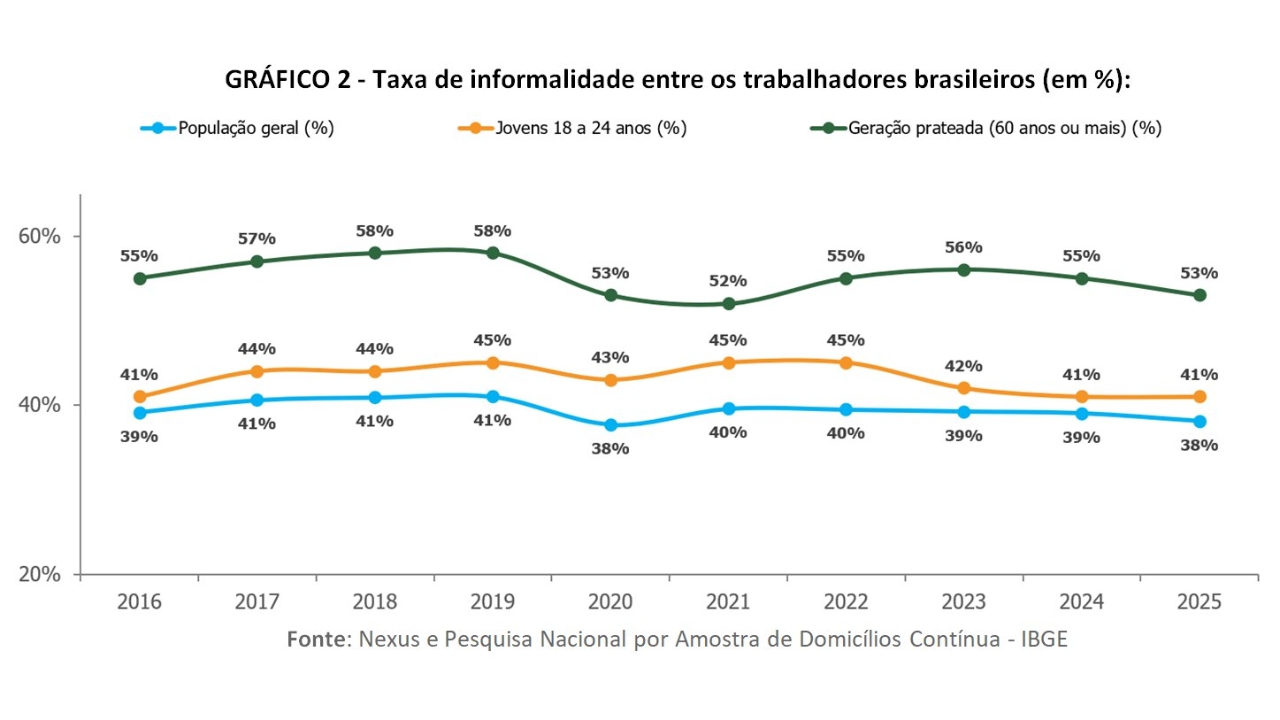
More than half of the workers aged 60+ are in informality. There are 53% working without the typical protection of a formal job, in activities such as odd jobs, freelance work, consulting without a contract, self-employed services, or occupations without a signed work card.
This percentage is much higher than the national average, which stood at 38% in the survey. In other words, elderly workers are more likely to be outside formal protection than the national average.
This is the point that turns the data into a warning. The increase in 60+ employment does not necessarily mean that the market has opened good positions for the elderly. In many cases, it shows that the family’s income does not balance without an additional source of money.
Young people grow little, elderly advance a lot
The comparison with young people makes the scenario even more impressive. In the same period, the number of employed young people grew only 8%, going from 12.2 million to 13.1 million.
Meanwhile, the contingent of workers aged 60+ soared 53%. The difference shows a profound change in the composition of the Brazilian workforce.
The paradox also appears in unemployment. Brazil had 1.8 million unemployed young people, a volume 8.3 times larger than the number of people aged 60+ in the same situation, estimated at 218 thousand.
But this does not mean that the elderly are living in a comfortable scenario. The unemployment rate for the 60+ generation fell from 4% in 2016 to 2% in 2025, but this low number may hide a harsh reality: many elderly cannot wait for an ideal position and end up accepting any form of income.
Retirement no longer ends professional life
The continued employment of the elderly has several explanations. One of them is increased longevity. People live longer, have more autonomy, and many want to remain productive.
But there is another much more sensitive side: the need to supplement income. Retirement, pension, or family assistance do not always keep up with the weight of monthly expenses. Health, food, housing, and transportation put pressure precisely on an age group that usually has high fixed expenses.
The IBGE had already shown that, in 2024, about one in four elderly people worked in the country. It also pointed out that the elderly population increased from 22 million to 34.1 million between 2012 and 2024.
Another important detail is the type of insertion. Among the employed elderly, self-employment represented 43.3%. This data helps to understand why so many older Brazilians appear in autonomous activities, small services, and occupations without traditional ties.
The social impact behind the numbers
The explosion of elderly people working also exposes an uncomfortable debate about ageism, social security, income, and the quality of jobs. Many companies still resist hiring older professionals, even when they have accumulated experience.
With less space in formal employment, part of this group ends up being pushed into informal work. This can mean flexibility, but also insecurity, unstable income, and lack of guarantees.
FGV also identified strong growth of the so-called silver generation in the market, with a significant increase of those aged 60+ employed between 2012 and 2024. This data reinforces that this is not a temporary change, but a structural trend.
Brazil is entering a phase where the aging population will alter consumption, social security, health, work, and family income. And the growing presence of the elderly in the market is one of the most visible faces of this transformation.
An older country, working more and with less security
The growth of elderly people working cannot be read only as a sign of willingness or vitality. It also reveals a country where many people reach old age without being able to stop.
The data of 53% increase in 60+ employment is impressive because it shows a rapid, profound, and unequal change. There are elderly people working by choice, by purpose, and for autonomy. But there are also millions working because the numbers don’t add up.
This is why the topic matters now. Brazil is aging, but it has not yet resolved how to ensure income, protection, and dignity for those who have spent decades working. And, while this answer does not come, more and more Brazilians over 60 continue in the streets, at counters, in apps, and in small businesses, trying to turn experience into survival.