Portuguese
  Spanish


The Moon, long considered just a natural satellite of Earth, has just become the stage for a revolution that could change the course of space exploration. A country already known for its technological and scientific achievements, China, has made a discovery that promises to shake the international community and possibly redefine the future of humanity off the planet Earth.
After decades of speculation and theories, China has taken a crucial step by identifying an essential element that until now remained elusive: molecular water.
This revelation, made by a team of Chinese scientists, not only confirms the presence of water on the Moon but also inaugurates a new era in the space race, a competition that now goes beyond exploration to the real possibility of lunar colonization.
According to Chinese scientists, the discovery was made through the analysis of lunar samples collected by the Chang’e-5 space probe. These samples revealed the presence of a new mineral containing water in its molecular structure. This is the first time complete H2O molecules have been found in lunar samples, marking a significant milestone in space exploration.
-
Scientists Develop Needle-Free Insulin That Penetrates Skin, Reduces Glucose in Animals Within an Hour, Paving the Way for Diabetes Patches and Creams for Humans

-
After 40 Years of Research, Powdered Coconut Water to Be Produced in Brazilian Biorefinery, Aiming to Revolutionize Health for Children, Elderly, and Hospital Patients
-
Queen Guitarist Brian May Collaborates with ESA Scientists to Study Asteroids Bennu and Ryugu Using 3D Simulations
-
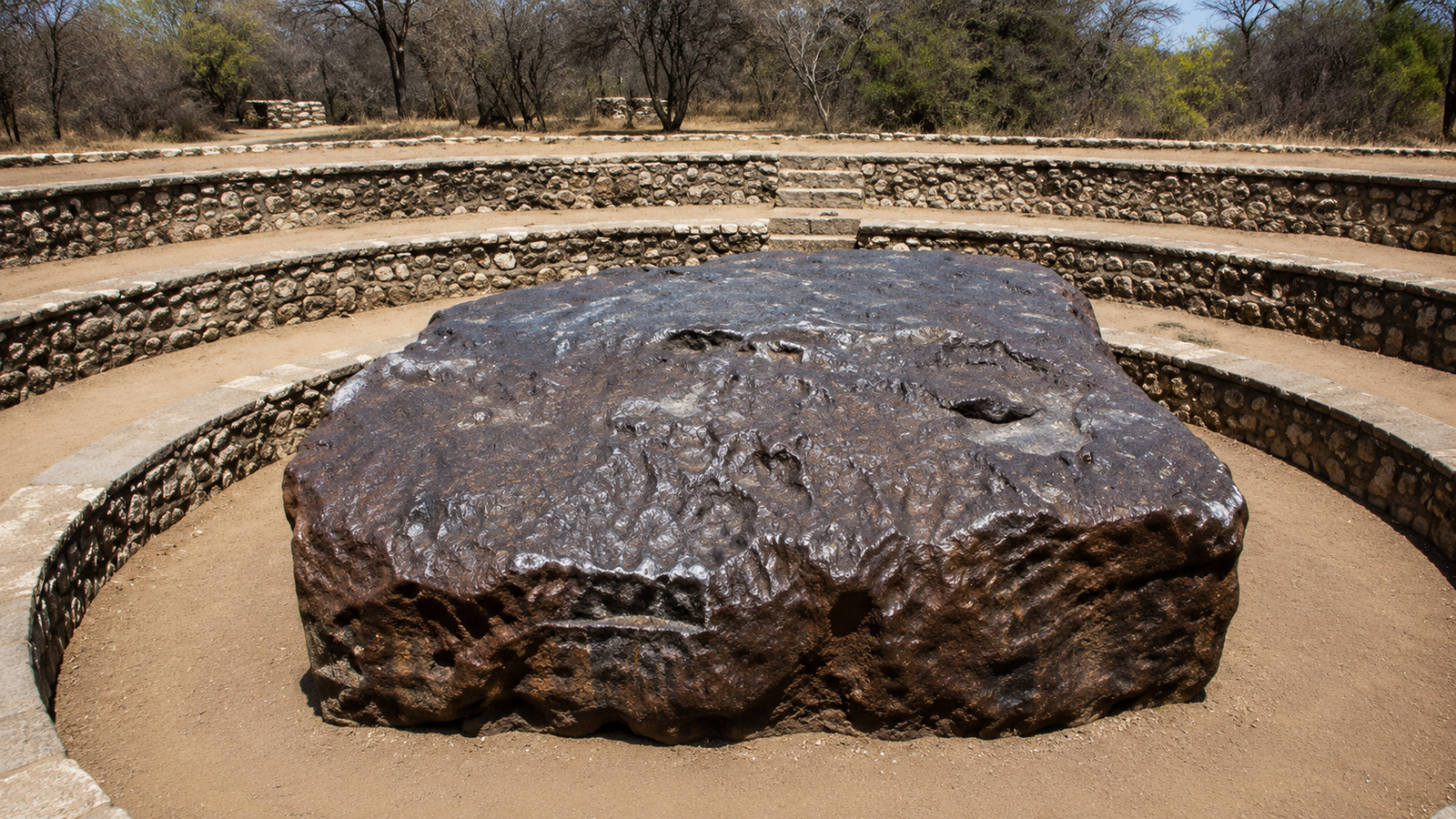
Largest Known Single-Piece Meteorite, Weighing 60 Tons, Puzzles Scientists with Its Intact Fall and Lack of Visible Crater


According to the researchers, the water molecules can persist in sunlit areas of the Moon in the form of hydrated salts. This suggests that there is a stable water source that could be used in the future to support long-term missions, or even to enable the construction of a permanent lunar base.
Previously, the existence of water on the Moon had been suggested by detections made by NASA and the Indian Space Agency, which found signs of water primarily in the form of ice. However, these detections were limited to indirect observations, without the recovery of physical samples. Now, China stands out by providing concrete evidence of the presence of water in a newly discovered lunar mineral.
Molecular Water Versus Hydroxyl: What Changes
In recent years, much has been discussed about the presence of hydroxyl on the Moon. While hydroxyl may suggest the existence of water in the past, it is not the molecular form of water that we know and that is vital for human survival.
The big difference in this discovery is that now we are talking about molecular water, H2O, which can be extracted and used directly, unlike hydroxyl, which requires complex processes to convert it into water.
This new lunar mineral, dubbed ULM-1, is composed of over 40% water, and also contains ammonia in its structure. As explained by Xiaolong Chen, co-author of the study and researcher at the Chinese Academy of Sciences, this discovery reveals a new way of storing water on the Moon, something that was previously unknown to science.
The Impact on Space Exploration
This discovery is not only a scientific victory but also strategic for China, which has massively invested in its space program. The finding of molecular water in lunar soil opens doors for the Asian country to lead space exploration and mining, an area that promises to be the next great chapter in the history of humanity.
The possibility of mining on the Moon, especially for resources like water, completely transforms the dynamics of the space race. Water is a fundamental resource not only for human consumption but also for producing fuel, which can be used for even more distant missions, such as exploring Mars. Additionally, the presence of water makes it feasible to create lunar bases, which could serve as stepping stones for deep space exploration.
Beyond the Moon: The Future of Space Mining
As experts point out, the discovery of the ULM-1 mineral, stabilized by ammonia, in an area previously thought unsuitable for the presence of water, may indicate that there is much more on the Moon than previously imagined. Space mining, which once seemed a distant reality, is now closer than ever.
The success of China in finding water on the Moon not only reinforces its ambitions to build a lunar research base but also places the country at the forefront of space exploration. David A. Kring, senior scientist at the Texas Lunar and Planetary Institute, highlights that this discovery will enhance our understanding of rock vapor reactions in the crust and surface of the Moon.
With water being such a valuable resource, it is only a matter of time before other nations ramp up their efforts to explore the Moon and Mars in search of similar resources. The countdown for space mining has already begun, and China is reportedly in the lead.
What Comes Next
Now that molecular water has been confirmed on the Moon, the possibilities are vast. The question is no longer “if,” but “when” the world’s superpowers will compete even more fiercely for exploration and mining in space.
What will the coming years hold for humanity? Will we see a new era of lunar colonization? Or perhaps the space race will expand to other planets?