






 Portuguese
  Spanish


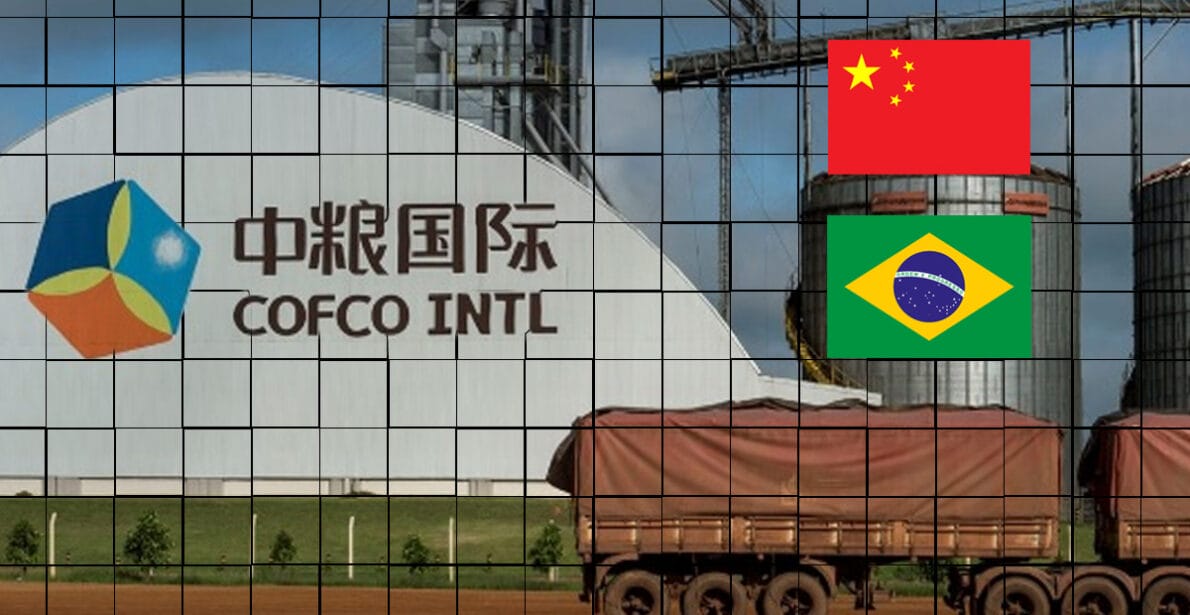

Cofco International, Chinese Giant in Agricultural Trade, Is Consolidating Itself as One of the Major Powers in the Sector in Brazil, Rivaling Traditional Cargill and Bunge.
But what is really behind this surprising success? Discover how the Chinese state-owned company is revolutionizing the Brazilian agricultural market and what its ambitious plans are for the future.
In a decade, Cofco International has become one of the main forces in agribusiness in Brazil, with over 7,200 employees and massive investments. The company is about to inaugurate its own terminal at the Port of Santos, a R$ 1.6 billion project that promises to transform the country’s export logistics.
According to Yunchao Wang, Vice President of Cofco International, in an interview with the newspaper Folha de S.Paulo, the company sees immense potential for sustainable growth in grains, oilseeds, and sugar in Brazil. “Our business is growing year after year, and we are prioritizing investments in geographies and markets with significant opportunities,” Wang stated.
-
Eni Acquires 25% Stake in Chilean Lithium Project, Plans to Invest Up to $225 Million in Eco-Friendly Extraction Method

-
Brazil to Issue “Panda Bonds” in China, Aiming to Raise Up to 5 Billion Yuan at Lower Interest Rates Than Dollar Debt
-
NATO Faces Internal Tensions as U.S. Pushes for Increased Defense Spending, Targeting 5% of GDP by 2035, with Warnings for Countries Near 2% Level
-
Brazil to Introduce B16 Diesel with Increased Soybean Oil Content for Trucks by 2026

Billion-Dollar Investment in the Port of Santos
Cofco International arrived in Brazil ten years ago and, in 2014, acquired Noble Agri, accelerating its expansion. Today, it employs over 7,200 people in Brazil, which represents a significant portion of its 11,000 global employees. The company operates in 36 countries and exports to China and almost every continent, including the Americas, Europe, and Africa.
In terms of revenue, Cofco is already one of the giants in Brazil. According to the annual ranking by the newspaper Valor, released last year, Cofco is the 18th largest company in revenue in the country. In contrast, Cargill holds the 9th position, and Bunge, the 14th. In the previous edition, Cofco did not appear among the top thousand companies.
Continuous Expansion and Diversified Operations
The company continues to expand its operations in Brazil by buying large volumes of soy and corn and cultivating sugarcane.
“We are also developing our processing plant in Rondonópolis (MT), which produces 1.3 million tons of soy and 350,000 tons of biodiesel per year,” Wang detailed. The plant is connected to the Port of Santos by railway, and a pipeline links nearby biodiesel distributors.
In addition to Santos, Cofco is investing in other infrastructures in Brazil. One example is the upgrade to the Catanduva (SP) mill, with an investment of R$ 350 million in a new boiler and transportation infrastructure to link the unit to the port.
Cofco and Its Commitment to Sustainability
Sustainability is also a priority for Cofco. In June, the company’s first cargo ship loaded with “deforestation-free” Brazilian soy arrived at the Port of Tianjin, hailed in Chinese media videos as “a step toward sustainable practices,” as its production “does not cause changes in natural ecosystems.”
Wang stated that the company’s promise is a “deforestation-free” soy supply chain by next year and “conversion-free” by 2030. Before that, Cofco will seek to adapt to the European Union’s deforestation regulations for soy with a “segregated” supply chain from the origin.
Future Perspectives and Market Impact
Guilherme Bastos, coordinator of the FGV Agribusiness Study Center and former president of Conab, sees Cofco’s effort for deforestation-free soy as “more marketing than effective at this early stage,” due to the volume they intend to buy.
However, he confirms that “Cofco has really advanced in terms of logistics structure and its ability to buy grains in Brazil,” emphasizing that the company has a preferred client: China.
Bastos recalls that when the export of corn to China was authorized, Cofco was the first to make the shipment. “Other traders were still hesitant that there would be some kind of incident in the process,” Bastos stated.
Cofco’s power in the sector became evident recently with the PIS/Cofins issue, when the company managed to significantly influence the market. The provisional measure that removed the exemption, affecting contracts related to exports, was eventually reversed.
Wang highlighted at the end of his interview with the newspaper Folha de S.Paulo the strategic importance of Brazil in Cofco’s business. Brazil, the world’s largest producer and exporter of soy, “is the source of most of our commodities and is the country where we operate our own plantations and sugarcane mills,” he said.
Will Cofco’s new investments make Brazil the world’s largest agricultural exporter? Share your thoughts in the comments!


Imagina se Bolsonaro não tivesse barrado a compra de terras por estrangeiros!!!!….