Portuguese
  Spanish


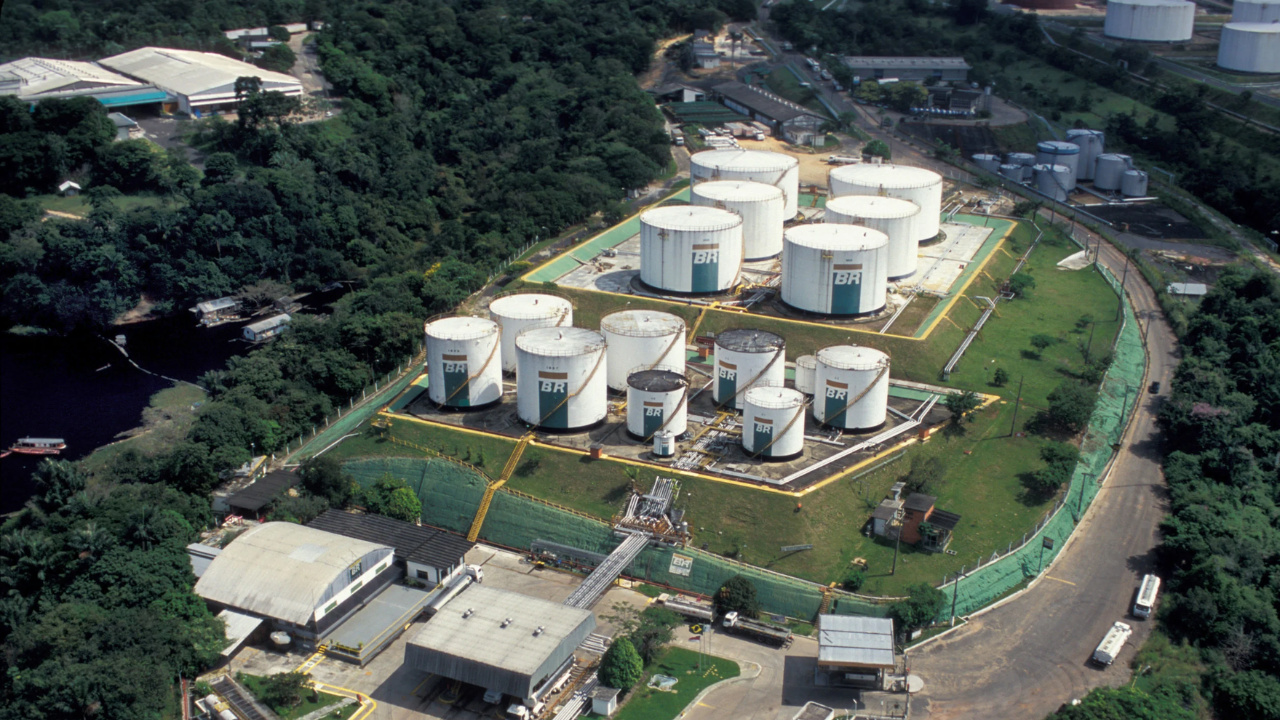


The Manaus Refinery, Privatized Under Bolsonaro, Faces Criticism for Operating Without Refining. Oil Workers Demand Lula Reverse the Sale and Warn of Risks to Energy Sovereignty in Northern Brazil.
The Manaus Refinery (Ream), in Amazonas, has become the center of a national debate involving President Luiz Inácio Lula da Silva, former President Jair Bolsonaro, and entities from the oil sector. Privatized at the end of 2022 during Bolsonaro’s administration, the unit is practically paralyzed, leading to criticism over rising prices and risks to the region’s energy sovereignty.
Last Sunday, representatives of the Oil Workers’ Union of Amazonas (Sindipetro-AM) and the Unique Federation of Oil Workers (FUP) delivered a letter directly to Lula asking the federal government to reverse the sale of the refinery or seek a way to restore Petrobras’s role in the sector.
“Refinery That Doesn’t Refine”: The Main Complaint
According to the oil workers, the Ream, now under the control of Grupo Atem, has ceased to perform its main function: oil refining. Marcus Ribeiro, coordinator of Sindipetro-AM, was direct: “Today we have a refinery that does not refine. This means the failure to fulfill the strategic role of supply.”
-
The Chamber releases R$ 10 billion to hold the price of diesel until December and proves that Brazilian fuel remains tied to Congress.

-
It’s official: Petrobras takes 75% of block 3 in São Tomé and Príncipe and debuts as an offshore operator outside South America.
-
With a record production of nearly 3 million barrels per day, Petrobras resumes importing diesel in July, highlighting the bottleneck in Brazilian refining.
-
Qantas and Airbus Invest in Company Aiming to Convert Unsorted Household Trash into Jet Fuel


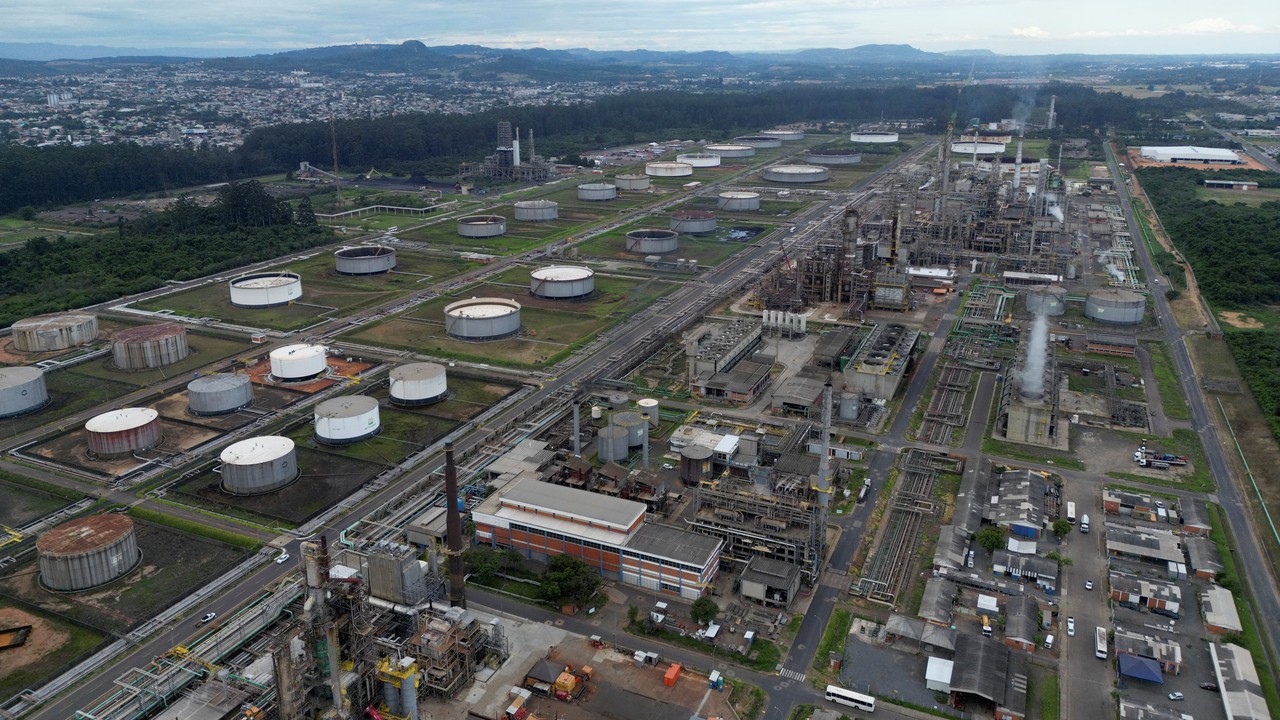
The complaint is reinforced by public documents from the National Agency of Petroleum (ANP), reports from the Institute of Strategic Studies of Oil and Gas (Ineep), and data from the company itself. The unit, which previously processed over 900,000 barrels of oil per month, in 2022, has almost exclusively operated as a logistics base, without significant fuel production.
With the drop in local production, consumers in Amazonas quickly felt the effects on their wallets. According to a survey by Dieese, based on ANP data, gasoline prices in the state rose by 52.6% between 2022 and August 2025. During the same period, the national average was 25.2%.
This imbalance highlights, according to the oil workers, that the privatization did not increase competition or reduce prices, as promised during Bolsonaro’s government. On the contrary, it created a private monopoly that controls refining, importing, and distribution in the region.
ANP Points Out Irregularities in the Operation of the Refinery
In September, the ANP officially notified Ream for operating irregularly. The agency found that, after claiming the need for lengthy maintenance, the company returned only partially to refining and focused on fuel formulation — a practice that does not substitute for processing crude oil.
The ANP’s superintendent, Brunno Atalla, highlighted in an official letter: “The facility authorized as a refinery cannot solely engage in formulation activities.” If the regulation continues to be violated, the unit may face fines, suspension, or even revocation of its operating license.
The sale of the former Isaac Sabbá Refinery (Reman) occurred in December 2022, in the last days of Jair Bolsonaro’s administration. The official justification was to increase competition in the market and lower prices.
However, data from Ineep shows that the effect was the opposite. In 2023, diesel sold by Ream was up to 25% more expensive than that sold by Petrobras’s refineries. In the case of cooking gas, the difference was even more drastic: up to 72% more.
For economist Eric Gil Dantas from Ineep, the situation is a warning: “All privatizations of Petrobras refineries have been disastrous, but the case of Ream is by far the worst. Besides charging more, it has stopped producing. This leads to impoverishment, loss of revenue, and dependence on imports.”
Ream Operates at Low Capacity Since the Sale
Before privatization, in 2022, the refinery operated at 67% of its production capacity. By 2024, this rate plummeted to just over 20%. Nonetheless, Grupo Atem maintained a prominent position in the supply of gasoline and diesel in Amazonas, controlling prices without significant competition.
This reduction caused the company to increase its importation of ready-made derivatives, transforming the refinery into a logistics terminal. For Marcus Ribeiro, this compromises supply and energy security: “The Northern region, which already has high logistical costs, is being penalized twice, for not producing and for relying on imports.”
Another controversy involves the price of the refinery. According to the Brazilian Institute of Oil and Gas (IBP), Grupo Atem obtained around R$ 1.3 billion in tax exemptions through court rulings in the years close to the acquisition. The amount is equivalent to what was paid for the refinery.
In practice, economists say this means the unit was acquired practically at no real cost. “Atem ‘got back’ everything it paid for the refinery in just a few years,” notes Eric Dantas.
Oil Workers Demand Re-nationalization and Await Lula’s Response
In light of this scenario, the letter delivered to Lula requests that Petrobras resumes control of the refinery or, at the very least, establishes an operational partnership to resume refining. “The people of the North need to feel, in practice, the effects of a strong, public Petrobras committed to sovereignty and regional development,” says the document signed by FUP and Sindipetro-AM.
So far, Petrobras has not officially commented on the request. Cade and the Ministry of Mines and Energy also did not respond to inquiries.
Contacted, Grupo Atem denied all allegations that the refinery had turned into a “ground terminal.” In a statement, it claimed that the reduction in production was due to scheduled maintenance on facilities built back in the 1950s.
According to the company, during the adjustment period, there were no interruptions in supply, and provision was guaranteed even amid the most severe droughts ever recorded in the region. Additionally, the company highlighted investments made to modernize its assets and emphasized that it complies with all regulatory standards.
The Political Weight Between Lula and Bolsonaro
The situation of the Manaus refinery also exposes political disputes. For Lula’s allies, the episode is proof that Bolsonaro’s privatization policy was detrimental to the country, especially for regions further from economic centers.
Meanwhile, defenders of the former president argue that the sale was necessary to attract private investments and reduce the state’s presence in the sector. The surge in fuel prices, however, has been used as an argument against this view.
With the pressure from oil workers and popular outrage over rising prices, Lula will have to decide whether to take measures to reverse the privatization or seek alternatives that restore the Northern region’s lost energy autonomy following the sale.